


Hardtail conversion HELP!!!

Stellar HDF Member

Joined: Feb 2006
Posts: 3,035
Likes: 17
From: Houston Texas

The pics look great! That rigid rear section sure makes that 1979 frame look better! Cleans it up a lot. You will have to decide what kind of oil tank you want to use. One of those horseshoe wrap around tanks would look good on it.
Keep the pics coming as you progress.........pg
Keep the pics coming as you progress.........pg

Thread Starter
|
Intermediate
Joined: Apr 2007
Posts: 31
Likes: 2
Thanks PG. The seat pan came in yesterday, looks like it will work. I think I have enough room to put a barrell oil tank with center fill and with built in battery tray under the seat. Does anyone know of a springer kit for my seat? I am not sure how they actually get welded on. Best I figure, the front barrell (hinge)gets welded to the frame and this mounts the front of the seat. In the back would be the springs.......how do I connect the springs to the seat and frame? I've seem spring bungs, do I weld them on both the frame and under the seat? If anyone has a good pic of one, I'd be appreciative.
Rock on old school!
Troy
Rock on old school!
Troy
Stellar HDF Member
Joined: Feb 2006
Posts: 3,035
Likes: 17
From: Houston Texas
Thanks PG. The seat pan came in yesterday, looks like it will work. I think I have enough room to put a barrell oil tank with center fill and with built in battery tray under the seat. Does anyone know of a springer kit for my seat? I am not sure how they actually get welded on. Best I figure, the front barrell (hinge)gets welded to the frame and this mounts the front of the seat. In the back would be the springs.......how do I connect the springs to the seat and frame? I've seem spring bungs, do I weld them on both the frame and under the seat? If anyone has a good pic of one, I'd be appreciative.
Rock on old school!
Troy
Rock on old school!
Troy

Here is what the original seat on the very early Sportster looked like. This fit the early swing arm frame which came with a solo seat in 1957 through 1959.

I made the hardware depicted and fit my Sporty with the internal rods and springs as my frame in 1971 still had the open frame tubes where the early seat posts had been located.
The front end of the seat will simply require you to weld on a barrel sleeve that a 5/16-18 bolt will pass through.
For the springs........

Here is a pic of my 1955 KR Dirt track machine. This bike had the bolt on rear hard tail section and used the old KR seat which was the same as the early Sportsters.
I included the pic so you can see what the springs look like and how they are bolted to the frame. Pretty straight forward. This of course was the factory set up that came on a rigid frame dirt tracker.......pg
First thing to do is get the springs in hand. Then it will require welding on a tab for each spring bottom to bolt up to. This can be a simple piece of angle cut about ¾ inch long and drill a hole in it after welding to the frame.

I tried to include a detail of the spring attachment but it did not come out clear on the blow up of the 40 year old Polaroid print.
Anyway, that is one way to do it at least. The springs you use will dictate how you chose to mount them.........pg
Stellar HDF Member
Joined: Feb 2006
Posts: 3,035
Likes: 17
From: Houston Texas
Here is a hand drawn sketch of what the brackets look like to attach the bottom of the springs to. Weld the bracket onto the frame tube.
The top of the spring will bolt to the seat pan.............pg

The top of the spring will bolt to the seat pan.............pg
Thread Starter
|
Intermediate
Joined: Apr 2007
Posts: 31
Likes: 2
PG - Once again you have come thru!! I am measuring the seat fore and aft (sailor talk) and it looks like rear springs will have to be mounted like you drew in your pic. Seems simple enough. I love all of the fabricating, I have learned so much and the bike is really taking on a whole new look. I'll post pics once the seat is tacked up. Thanks again!
Stellar HDF Member
Joined: Feb 2006
Posts: 3,035
Likes: 17
From: Houston Texas
PG - Once again you have come thru!! I am measuring the seat fore and aft (sailor talk) and it looks like rear springs will have to be mounted like you drew in your pic. Seems simple enough. I love all of the fabricating, I have learned so much and the bike is really taking on a whole new look. I'll post pics once the seat is tacked up. Thanks again!

Here is a pic of a 2 inch spring set you can buy from J&P Cycle Supply. Top bolt goes to the seat pan and the bottom bolt goes to the frame tab you need to weld on.
Get the springs first because the length of the spring will dictate where that bracket(s) need to be welded on.
Fabricating is one of the great joys of doing something yourself as far as I am concerned. A lot of people just shovel money out to a dealer, but with an ironhead the dealer is not going to work on it, so what do you have to do?
Fix it yourself and build it like you want it to look and ride! You will end up feeling very independent about the whole thing when you are finished with the build.
I guarantee you that you are going to draw quite a few interested gawkers when you get it finished and pull into a place where M/C types are gathered.
You are going to compare the interest (you do not) draw with your more modern machine to that which you do draw with the ironhead.
Reason being that most people have never seen a real (old) ironhead before. Yours is a 1979, but it will appear to be much older when you finish it off...........pg

Seasoned HDF Member


Joined: Jun 2005
Posts: 12,946
Likes: 32
From: Colorado Springs, CO
!. Don't mess with the drive sprocket. It is right where it should be.
2. You line up the rear sprocket on the same centerline as the drive sprocket. Here is where you may have to make spacers that slide over the axle to take up the space between the hub and frame on both sides of the hub.
3. Now, you have the hub with the rear sprocket aligned with the front sprocket and the axle shims are in place.
Is the rear tire/rim showing to be offset in the frame? (This was a concern you mentioned) If so, what you need to do is move the wheel over enough to correct the position over the hub.
You do this by first removing the tire from the rim and install the wheel back in the frame.
Make your measurements on how much you need to move the wheel over either left or right.
A wheel has 40 spokes. Each spoke alternately comes off either the left or right side of the rim.
For the explanation let us assume you want to move the rim to the left by some amount.
Starting at the tube nipple, loosen the first spoke on the right a half turn. Then go to the next spoke (which is on the left) and tighten it a half turn. Advance to the next spoke (rightside) and loosen a half turn, go to the next spoke (leftside) and tighten a half turn, etc, etc until you have gone all around the wheel a full turn (covering all 40 spokes).
Check for being centered in the frame. Most likely it will require several trips around the wheel, but keep it to half turns so the spoke adjustment does not get away from you.
Just remember this:
The drive sprocket is a fixed location.
The rear sprocket must align with the drive sprocket.
The hub then sits in place on the axle. Do you need spacers on the axle?
Last of all, and I do mean last........where does the wheel sit in the frame? If centered.....Great! If not, move it over by doing the spoke adjustment. This is how you build a wheel by the way. You have to place the rim over the hub where you want it to be. It does not get there by magic...........pg
2. You line up the rear sprocket on the same centerline as the drive sprocket. Here is where you may have to make spacers that slide over the axle to take up the space between the hub and frame on both sides of the hub.
3. Now, you have the hub with the rear sprocket aligned with the front sprocket and the axle shims are in place.
Is the rear tire/rim showing to be offset in the frame? (This was a concern you mentioned) If so, what you need to do is move the wheel over enough to correct the position over the hub.
You do this by first removing the tire from the rim and install the wheel back in the frame.
Make your measurements on how much you need to move the wheel over either left or right.
A wheel has 40 spokes. Each spoke alternately comes off either the left or right side of the rim.
For the explanation let us assume you want to move the rim to the left by some amount.
Starting at the tube nipple, loosen the first spoke on the right a half turn. Then go to the next spoke (which is on the left) and tighten it a half turn. Advance to the next spoke (rightside) and loosen a half turn, go to the next spoke (leftside) and tighten a half turn, etc, etc until you have gone all around the wheel a full turn (covering all 40 spokes).
Check for being centered in the frame. Most likely it will require several trips around the wheel, but keep it to half turns so the spoke adjustment does not get away from you.
Just remember this:
The drive sprocket is a fixed location.
The rear sprocket must align with the drive sprocket.
The hub then sits in place on the axle. Do you need spacers on the axle?
Last of all, and I do mean last........where does the wheel sit in the frame? If centered.....Great! If not, move it over by doing the spoke adjustment. This is how you build a wheel by the way. You have to place the rim over the hub where you want it to be. It does not get there by magic...........pg
I agree. You bring the wheel to the motor. The motor drive sprocket is the point where everything must meet. Yes, you will have to get inventive with spacers. It's a real pain....but that's what you're in for.
P.S. '79 is the oddball year for sportsters, in that alot of the parts were a one year only deal. not to discourage you, but you will have to fab even more than what you normally would have to.
~Joe
HD Forum Stories
The Best of Harley-Davidson for Lifelong Riders

Jason Momoa Is Turning Classic Harleys Into PHEVs
Verdad Gallardo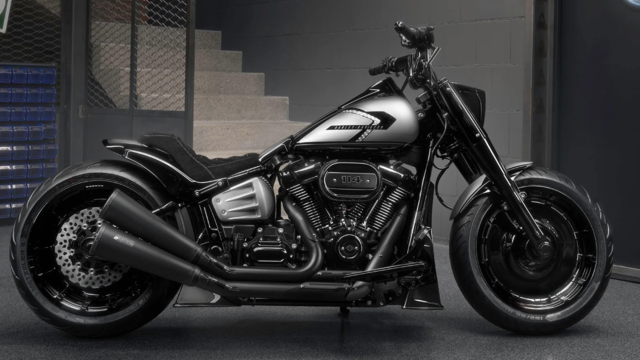
Harley-Davidson Fat Boy Becomes a Dark, Decepticon-Inspired Custom
Verdad Gallardo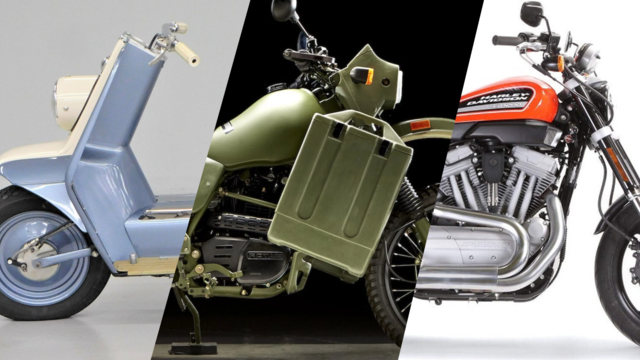
6 Weirdest Harley-Davidsons Ever Sold to the Public
Verdad Gallardo
7 Times Harley-Davidson Chucked Tradition Out the Window
Verdad Gallardo
7 Surprising Harley-Davidson Products that Are Not Motorcycles
Verdad Gallardo
8 Best Harley-Davidson Motorcycles Ever
Pouria Savadkouei
10 Worst Harley-Davidson Motorcycles Ever
Pouria Savadkouei
Killer Custom's Jail Break Is The Breakout That Refused to Blend In
Verdad Gallardo
Crazy Bunderbike Build Looks Amazing, But Is It Impossible to Ride?
Verdad Gallardo
Thread
Thread Starter
Forum
Replies
Last Post
