




TPMS light came on
 TPMS light came on
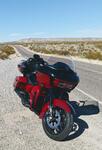
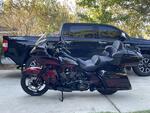
Just got back from a 291 mile run in lovely 70 degree weather. Before I left this morning I checked TP in both tires. Both were 2lbs low so I put 36 in front and 40 in the rear as the owner's manual states. I've noticed that during a ride, the front TP increases to about 42 to 44psi and the rear TP goes up to 48 or 49. This afternoon, the reading on my rear tire simply said Hi. When I pulled into my garage the TPMS indicator Illuminated, presumably to let me know I had excessive pressure in the rear tire. Why would they get so hot. I'm riding 2-up but my wife only weighs a buck 30 and I had no cargo to speak of, so def not overweight. Wondering if I should not inflate to the cold minimums in order to avoid this. Bike is a 2020 Road Glide Limited with 18" Slicer IIs front and rear.
Seasoned HDF Member


Joined: May 2012
Posts: 32,934
Likes: 36,032
From: Carlsbad, CA
That’s what they do. The rear gets much hotter than the front. My TPMS also has temperature ...and they get hot when loaded. That’s why you check with them cold. if you set them when they are hot you’d be in the low 20s when they are cold.
Seasoned HDF Member


Joined: Jan 2008
Posts: 13,674
Likes: 11,463
From: State of Confusion
Just got back from a 291 mile run in lovely 70 degree weather. Before I left this morning I checked TP in both tires. Both were 2lbs low so I put 36 in front and 40 in the rear as the owner's manual states. I've noticed that during a ride, the front TP increases to about 42 to 44psi and the rear TP goes up to 48 or 49. This afternoon, the reading on my rear tire simply said Hi. When I pulled into my garage the TPMS indicator Illuminated, presumably to let me know I had excessive pressure in the rear tire. Why would they get so hot. I'm riding 2-up but my wife only weighs a buck 30 and I had no cargo to speak of, so def not overweight. Wondering if I should not inflate to the cold minimums in order to avoid this. Bike is a 2020 Road Glide Limited with 18" Slicer IIs front and rear.
TriGeezer, yep, I check them cold early this morning and aired them to max cold inflation of 36/40 front/rear. Just seems like the rear tire increased more than normal when it got hot. I've got 1,300 miles on her now and this is the first time the rear tire got so hot.
I noticed the same FR and R increase when warmed up...R gets higher than F and I suspect cuz it's the powered wheel, but haven't experienced the HI or Light come on...not sure about the calibration used but I did notice in my manual they have 2 inflation charts..one for COLD fill below 60 F and one for above that, and want us to use their tables to manually adjust proper Cold fill accordingly...maybe that has something to do with its sensitivity...??? so far I have done just like I always do and go with 36 and 40 Cold regardless but all my checks so far have not been higher than 60 degrees out...that all is going to change pretty fast now though and I'll be interested to see if my TPMS behaves and adjusts differently

Cruiser


Joined: Jan 2008
Posts: 144
Likes: 48
From: Mickleton, NJ
Navy Mustang,
I also have a 2020 Road Glide Limited with the TPMS. I don’t add air to my tires by the TPMS readout. What I have found is these monitors don’t ever read the same as my manual gage. They most always read 35-36 F and 37-38 R when cold, my gauge will read 36 - 40 which I consider close to true psi. During the day while riding the pressures will jump up 4 to 5 psi on front and back as they should.
My opinion/conclusion- don’t inflate your tires using these readouts. Use them as a guide.
I also have a 2020 Road Glide Limited with the TPMS. I don’t add air to my tires by the TPMS readout. What I have found is these monitors don’t ever read the same as my manual gage. They most always read 35-36 F and 37-38 R when cold, my gauge will read 36 - 40 which I consider close to true psi. During the day while riding the pressures will jump up 4 to 5 psi on front and back as they should.
My opinion/conclusion- don’t inflate your tires using these readouts. Use them as a guide.
Seasoned HDF Member
Joined: Jan 2008
Posts: 13,674
Likes: 11,463
From: State of Confusion

Trending Topics
Seasoned HDF Member

Joined: Jan 2007
Posts: 20,616
Likes: 4,440
From: anacoco, la
Navy Mustang,
I also have a 2020 Road Glide Limited with the TPMS. I don’t add air to my tires by the TPMS readout. What I have found is these monitors don’t ever read the same as my manual gage. They most always read 35-36 F and 37-38 R when cold, my gauge will read 36 - 40 which I consider close to true psi. During the day while riding the pressures will jump up 4 to 5 psi on front and back as they should.
My opinion/conclusion- don’t inflate your tires using these readouts. Use them as a guide.
I also have a 2020 Road Glide Limited with the TPMS. I don’t add air to my tires by the TPMS readout. What I have found is these monitors don’t ever read the same as my manual gage. They most always read 35-36 F and 37-38 R when cold, my gauge will read 36 - 40 which I consider close to true psi. During the day while riding the pressures will jump up 4 to 5 psi on front and back as they should.
My opinion/conclusion- don’t inflate your tires using these readouts. Use them as a guide.

HD Forum Stories
The Best of Harley-Davidson for Lifelong Riders

7 Surprising Harley-Davidson Products that Are Not Motorcycles
Verdad Gallardo
8 Best Harley-Davidson Motorcycles Ever
Pouria Savadkouei
10 Worst Harley-Davidson Motorcycles Ever
Pouria Savadkouei
Killer Custom's Jail Break Is The Breakout That Refused to Blend In
Verdad Gallardo
Crazy Bunderbike Build Looks Amazing, But Is It Impossible to Ride?
Verdad Gallardo
Harley-Davidson Reveals Super Cool Cafe Racer Concept
Verdad Gallardo
Engraved Rebellion: Inside Bundnerbike's Glam Rock II
Verdad Gallardo
10 Motorcycles You Should Never Buy
Joe Kucinski
10 Things Harley-Davidson Needs to Fix in 2026
Verdad Gallardo
Cruiser
Joined: Jan 2009
Posts: 165
Likes: 46
From: MI
It all has to do with air density.....hot air = less dense.....cold air more dense.
Tourer
Joined: Dec 2006
Posts: 467
Likes: 203
A higher inflation pressure will result in a stiffer tire and less rolling resistance which will generate less heat when rolling. Thus less chance for overpressure due to tire heat generation at higher ambient temperatures. The trade off is a stiffer ride.