





Night Train springer bobber styled
Ultimate HDF Member

Joined: Jul 2014
Posts: 5,649
Likes: 430
From: MASS_hole

Thanks for the reports on the RB exhaust, love that system, just so expensive
Thanks Splatt!
My regulator looks a bit on the well worn side of things, not something a sand blast and paint could fix.
So I'm going to buy a new one and wondering if there's any point in buying an after market one or just another factory one.
I don't see much point in a higher performing regulator (well so they all seam to state with no comparison tests to show), unless you have a bagger where you've added all the gagets under the sun pulling more continuos amps, right?
Does anyone have any input on this? I know people get a faulty regulator then go buy an aftermarket one with the idea they needed a regulator they states to be better then the factory one, but is there any real evidence that shows its needed on bikes like this, and that it's not just what it is, a faulty regulator that needs replacing? Everything I read on aftermarket regulators, suggests these factory 3 phase regulators in my night train should be plenty
My regulator looks a bit on the well worn side of things, not something a sand blast and paint could fix.
So I'm going to buy a new one and wondering if there's any point in buying an after market one or just another factory one.
I don't see much point in a higher performing regulator (well so they all seam to state with no comparison tests to show), unless you have a bagger where you've added all the gagets under the sun pulling more continuos amps, right?
Does anyone have any input on this? I know people get a faulty regulator then go buy an aftermarket one with the idea they needed a regulator they states to be better then the factory one, but is there any real evidence that shows its needed on bikes like this, and that it's not just what it is, a faulty regulator that needs replacing? Everything I read on aftermarket regulators, suggests these factory 3 phase regulators in my night train should be plenty
Grand HDF Member
Joined: Nov 2012
Posts: 4,997
Likes: 2,083
From: Newport,TN area
Thanks Splatt!
My regulator looks a bit on the well worn side of things, not something a sand blast and paint could fix.
So I'm going to buy a new one and wondering if there's any point in buying an after market one or just another factory one.
I don't see much point in a higher performing regulator (well so they all seam to state with no comparison tests to show), unless you have a bagger where you've added all the gagets under the sun pulling more continuos amps, right?
Does anyone have any input on this? I know people get a faulty regulator then go buy an aftermarket one with the idea they needed a regulator they states to be better then the factory one, but is there any real evidence that shows its needed on bikes like this, and that it's not just what it is, a faulty regulator that needs replacing? Everything I read on aftermarket regulators, suggests these factory 3 phase regulators in my night train should be plenty
My regulator looks a bit on the well worn side of things, not something a sand blast and paint could fix.
So I'm going to buy a new one and wondering if there's any point in buying an after market one or just another factory one.
I don't see much point in a higher performing regulator (well so they all seam to state with no comparison tests to show), unless you have a bagger where you've added all the gagets under the sun pulling more continuos amps, right?
Does anyone have any input on this? I know people get a faulty regulator then go buy an aftermarket one with the idea they needed a regulator they states to be better then the factory one, but is there any real evidence that shows its needed on bikes like this, and that it's not just what it is, a faulty regulator that needs replacing? Everything I read on aftermarket regulators, suggests these factory 3 phase regulators in my night train should be plenty
Might consider a more efficient regulator from Cycle Electric.
Probably same price as HD.
T.
I did check them out, maybe I missed something and correct me if I'm wrong, but from what I remember he explains 3-phase systems work so much more efficient then factory regulators. This would be true with older single phase regulators, which must be what he's refferring to but worded it to sound like all Harley regulators, but these Harley having been using 3-phase systems for years now.
Am I missing something? Because I rarely ever see anything but factory regulators being used on bikes with a lot more going on
To me in Australia, the difference is about $300 for the cycle electric regulator and $150 for stock. Just seams like a lot of word trickry used, which a lot of company's use these days to make sales. So is there any evidence to say that it's any better the stock 3-phase for a night train? Or just the evidence that says 3-phase systems are much more efficent then single phase? Im interested in knowing more about this
Am I missing something? Because I rarely ever see anything but factory regulators being used on bikes with a lot more going on
To me in Australia, the difference is about $300 for the cycle electric regulator and $150 for stock. Just seams like a lot of word trickry used, which a lot of company's use these days to make sales. So is there any evidence to say that it's any better the stock 3-phase for a night train? Or just the evidence that says 3-phase systems are much more efficent then single phase? Im interested in knowing more about this

Road Warrior
Joined: Jun 2013
Posts: 1,781
Likes: 50
From: Louisville, KY
I did check them out, maybe I missed something and correct me if I'm wrong, but from what I remember he explains 3-phase systems work so much more efficient then factory regulators. This would be true with older single phase regulators, which must be what he's refferring to but worded it to sound like all Harley regulators, but these Harley having been using 3-phase systems for years now.
Am I missing something? Because I rarely ever see anything but factory regulators being used on bikes with a lot more going on
To me in Australia, the difference is about $300 for the cycle electric regulator and $150 for stock. Just seams like a lot of word trickry used, which a lot of company's use these days to make sales. So is there any evidence to say that it's any better the stock 3-phase for a night train? Or just the evidence that says 3-phase systems are much more efficent then single phase? Im interested in knowing more about this
Am I missing something? Because I rarely ever see anything but factory regulators being used on bikes with a lot more going on
To me in Australia, the difference is about $300 for the cycle electric regulator and $150 for stock. Just seams like a lot of word trickry used, which a lot of company's use these days to make sales. So is there any evidence to say that it's any better the stock 3-phase for a night train? Or just the evidence that says 3-phase systems are much more efficent then single phase? Im interested in knowing more about this
To control voltage on Harley-Davidson alternators other rectifier regulators dump current to ground. This causes maximum stator current and temperature at all times. Cycle Electric rectifying regulators block current to control voltage. This reduces stator current resulting in lower temperature and less drag on the motor which means more efficient operation.
The Harley regulator uses what is called "Crowbar Regulation", which means it shorts the 3-Phase stator windings when the output voltage reaches the set point of around 13.8 volt. This is less energy efficient, but should not cause damage seeing as the stator is designed to handle this "short circuit" condition.
The Cycle Electric regulators use a "controlled 3-Phase Bridge Rectifier" which interrupts the charging current/voltage when the set point of 13.8v is reached, which is more energy efficient.
I first came across this on a Ducati that I restored - I carefully picked out the potting compound and back engineered the failed rectifier-regulator for this project.
Update:
I do not know for sure that the HD rectifier/regulator is the crowbar type, just presenting an explanation to the claim made on Cycle Electric web site.
Last edited by 1004ron; Jul 22, 2015 at 12:10 PM.
Both regulators are 3-Phase.
The Harley regulator uses what is called "Crowbar Regulation", which means it shorts the 3-Phase stator windings when the output voltage reaches the set point of around 13.8 volt. This is less energy efficient, but should not cause damage seeing as the stator is designed to handle this "short circuit" condition.
The Cycle Electric regulators use a "controlled 3-Phase Bridge Rectifier" which interrupts the charging current/voltage when the set point of 13.8v is reached, which is more energy efficient.
I first came across this on a Ducati that I restored - I carefully picked out the potting compound and back engineered the failed rectifier-regulator for this project.
The Harley regulator uses what is called "Crowbar Regulation", which means it shorts the 3-Phase stator windings when the output voltage reaches the set point of around 13.8 volt. This is less energy efficient, but should not cause damage seeing as the stator is designed to handle this "short circuit" condition.
The Cycle Electric regulators use a "controlled 3-Phase Bridge Rectifier" which interrupts the charging current/voltage when the set point of 13.8v is reached, which is more energy efficient.
I first came across this on a Ducati that I restored - I carefully picked out the potting compound and back engineered the failed rectifier-regulator for this project.
"To control voltage on Harley-Davidson alternators other rectifier regulators..."
This doesn't say it's Harley Davidson regulators, it just says on Harley's, other regulators use the less effect system. This could mean other regulators made for Harley Davidsons. It doesnt clearly state it's the factory Harley regulators, yeah? Or is there info elsewhere that says that Harley regulators are in fact what is lead to believe?
Have no doubt cycle electric make good quality products, just hoping to clarify I'm not wasting money if I bought there regulator
This doesn't say it's Harley Davidson regulators, it just says on Harley's, other regulators use the less effect system. This could mean other regulators made for Harley Davidsons. It doesnt clearly state it's the factory Harley regulators, yeah? Or is there info elsewhere that says that Harley regulators are in fact what is lead to believe?
Have no doubt cycle electric make good quality products, just hoping to clarify I'm not wasting money if I bought there regulator
Night Train springer bobber styled
I have been off for a while. Been dealing with a big move. Man the bike is coming together bad ***!
HD Forum Stories
The Best of Harley-Davidson for Lifelong Riders

7 Times Harley-Davidson Chucked Tradition Out the Window
Verdad Gallardo
7 Surprising Harley-Davidson Products that Are Not Motorcycles
Verdad Gallardo
8 Best Harley-Davidson Motorcycles Ever
Pouria Savadkouei
10 Worst Harley-Davidson Motorcycles Ever
Pouria Savadkouei
Killer Custom's Jail Break Is The Breakout That Refused to Blend In
Verdad Gallardo
Crazy Bunderbike Build Looks Amazing, But Is It Impossible to Ride?
Verdad Gallardo
Harley-Davidson Reveals Super Cool Cafe Racer Concept
Verdad Gallardo
Engraved Rebellion: Inside Bundnerbike's Glam Rock II
Verdad Gallardo
10 Motorcycles You Should Never Buy
Joe Kucinski
Couple new pics with pipe on. Also repainted the oil tank in wrinkle and got that all in with the lines hooked up. Worked on the new coil mount today and bent the tank shift a little closer to the tank.
A good buddy of mine made up a side mount bracket for my number plate while I was using his gear making up the coil mount and front indicator mounts as well as the main on switch and indicator lights panel, will get pics up of these when they're finished.


Grand HDF Member
Joined: Nov 2012
Posts: 4,997
Likes: 2,083
From: Newport,TN area
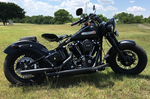
The Cycle Electric regulator for the Softails looks a bit different than stock as well.
The way it looks might affect your decision one-way or the other.
So here's what it looks like on my Slim.

hope this helps,
T.
The way it looks might affect your decision one-way or the other.
So here's what it looks like on my Slim.
hope this helps,
T.