When you click on links to various merchants on this site and make a purchase, this can result in this site earning a commission. Affiliate programs and affiliations include, but are not limited to, the eBay Partner Network.
Wired a 14 gauge wire from sliver stud to pin 30 on starter relay, connected everything back up, hit starter, and now she's cranking. I did put a quart of oil in the tank and have turned it over about 8 times now. No difference in the oil level in the tank. Also probably need to change spart plugs since it tried to fire with fogging oil in the cylinders.
I got one without the diode, when I turned on the switch two click nothing, one click back and I heard the relay click, it's a DC circuit. Diode only allows electricity to flow one direction, no diode it flow either way. Path of least resistance.
Yes, know what a diode does. It also turns AC to DC . Not sure on a relay their why. Should not be any DC going both directions there.
Diodes are in voltage regulator for the AC coming out of alternator. There also in the ECM to prevent damage from someone putting a battery in wrong.
I have also seen them in the relays on my Toyota under hood fues box on the fuel pump relay. In this case, it has no timer. It uses two relays. One works on crank circuit. Other when running from ECM ground.
There in line, so I see that need. Guess same applies in your bike
Last edited by Jackie Paper; Jul 28, 2023 at 03:06 PM.
Yes, know what a diode does. It also turns AC to DC . Not sure on a relay their why. Should not be any DC going both directions there.
Diodes are in voltage regulator for the AC coming out of alternator. There also in the ECM to prevent damage from someone putting a battery in wrong.
Well this is the way it's setup on this bike, one diode in the starter relay. If I remember correctly you have to have four diodes to convert AC to DC. It's called a full bridge rectifier.
Which is what the voltage regulator does in this situation, it comes out the stator as AC and the regulator converts it to DC which then feeds to the circuit breaker and then to the battery to charge it.
Last edited by mikey95hd; Jul 28, 2023 at 03:14 PM.
Just tried starting again, looking inside oil tank with dipstick out and added only one quart to tank. Bike now starts and runs, however don't see the oil flowing in the tank and looks clean when checking with screw driver.
Well this is the way it's setup on this bike, one diode in the starter relay. If I remember correctly you have to have four diodes to convert AC to DC. It's called a full bridge rectifier.
Which is what the voltage regulator does in this situation, it comes out the stator as AC and the regulator converts it to DC which then feeds to the circuit breaker and then to the battery to charge it.
Early Harley's were two phase coming out of alternator. Know mine is three seperate AC lines and I assume 3 phrase.
Now when you are referring to bridge, I assume each line has a diode.
AC/DC/ National Electric Codes was a side classes for my mechanic side.
So I will just go with it. My first response was I know sometimes, a diode can short across rather then burn out. AC coming into DC electronics is not good. Especially modern bikes with ECM and BCM
Appears in your diagram, you have a two phase alternator AC going to DC output and then the voltage regulator.
Those two extra diodes are to not let say to 30 Volt AC become 60 Volt AC and then be DC.
In my higher AMP 3 phase, a bridge would be 6 diodes.
Last edited by Jackie Paper; Jul 28, 2023 at 06:22 PM.
Have you tried taking the negative side (or the ground side) from the starter relay straight back to the negative side of the battery ...they used to ground it to the oil tank which is rubber mounted to the frame (on most softails) ....causing a somewhat bad connection over time ... which has caused the ( dreaded EVO click )
Last edited by springers4ever; Jul 28, 2023 at 06:35 PM.
Have you tried taking the negative side (or the ground side) from the starter relay straight back to the negative side of the battery ...they used to ground it to the oil tank which is rubber mounted to the frame (on most softails) ....causing a somewhat bad connection over time ... which has caused the ( dreaded EVO click )
I looked at the ground it comes out of the plug to the back of the frame mount behind the oil tank...
7 Surprising Harley-Davidson Products that Are Not Motorcycles
Slideshow: The bar-and-shield logo shows up on far more than motorcycles, some of the company's most unexpected products have nothing to do with riding.
Slideshow: From the troubled AMF years to modern misfires, these bikes earned reputations for reliability issues, questionable engineering, or disappointing performance.
Crazy Bunderbike Build Looks Amazing, But Is It Impossible to Ride?
Slideshow: The Swiss custom shop has taken a Harley Softail and stretched it into something so long and low that it looks closer to a rolling sculpture than a conventional motorcycle.
Engraved Rebellion: Inside Bundnerbike's Glam Rock II
Slideshow: A standard cruiser becomes an intricate metal canvas in the hands of a Swiss custom house known for pushing Harley-Davidson platforms far beyond their factory brief.
Slideshow: Harley-Davidson's challenges aren't abstract; they show up in dropping shipments, shrinking dealer traffic, and strategic decisions that aren't yet translating into growth.





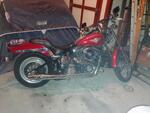




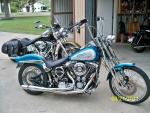
 Negative side ...