



Fuel choice

Road Warrior
Joined: Jul 2007
Posts: 1,898
Likes: 67
From: Saint Amant, Acadiana

Where you get this pseudoknowledge!?
Ethanol has higher octane than gasoline, thus added ethanol increases octane of cheap gasoline, resulting octane is what standard requires.
There may be pre-ignition, yes.
But this is not the pinging which is directly caused by too low octane fuel. This process is different, after fuel-air mixture is compressed and ignite it starts combustion, this is what we want. However, if octane is too low for given engine the last part of this mixture detonates, this is the ping and this is what we do not want.

Cruiser
Joined: Jan 2011
Posts: 158
Likes: 2
 Nothing like learning how to drive stick in that thing, on an inch of ice, with a few million dollars worth of jets parked around you. (of course that stuff would be a terrible idea for road bikes)

Elite HDF Member
Joined: Jul 2010
Posts: 4,828
Likes: 8
I even do not know what to say about this nonsense.
There may be pre-ignition, yes.
But this is not the pinging which is directly caused by too low octane fuel. This process is different, after fuel-air mixture is compressed and ignite it starts combustion, this is what we want. However, if octane is too low for given engine the last part of this mixture detonates, this is the ping and this is what we do not want.
Incidentally, I don't understand why you have to be a rude idiot about this. You clearly misunderstood what I said. I have built several high horsepower race engines, and yes, I know a thing or two about how them internal engine thingers operate.

Elite HDF Member
Joined: Jul 2010
Posts: 4,828
Likes: 8
Please ... stop!
Engines are designed to run certain octane of fuel. Think of this as shoe fit. You do not want it big nor small, it has to be just right.
Our Sportster engine is designed for 92, so that's the correct octane for us.
Running lower octane creates ping, which is detonation, an unwanted process. Depending how severe it is it may destroy piston rings, damage pistons and connecting rod bearings.
Running higher octane than designed for your engine is less dangerous, it just burns a little slower, in extreme cases it may burn your exhaust valves, normally you just lose a tiny bit of fuel economy.
Engines are designed to run certain octane of fuel. Think of this as shoe fit. You do not want it big nor small, it has to be just right.
Our Sportster engine is designed for 92, so that's the correct octane for us.
Running lower octane creates ping, which is detonation, an unwanted process. Depending how severe it is it may destroy piston rings, damage pistons and connecting rod bearings.
Running higher octane than designed for your engine is less dangerous, it just burns a little slower, in extreme cases it may burn your exhaust valves, normally you just lose a tiny bit of fuel economy.
There is absolutely NO truth to the shoe fits theory. It is perfectly fine to run higher octane fuels than what your engine recommends, you will just be throwing your money away to the tune of $.20 or so more per gallon by running higher than needed. The differences between 87 and 93 octane are not anywhere NEAR enough to cause poor burn, nor will it cause burnt valves. Running extremely high octane fuels such as Turbo Blue or other race gas can by theory cause some carbon buildup over a long time of prolonged use, but this is mostly due to the leaded content in the fuel. The biggest issue comes with clogged converters and other emissions equipment, but again this is from the lead content.
Thread Starter
|
Road Master
Joined: Apr 2011
Posts: 911
Likes: 10
From: Wisconsin
When I worked at the airport, I used to drive around a truck with 1200 gallons of 110 in it. Nothing like learning how to drive stick in that thing, on an inch of ice, with a few million dollars worth of jets parked around you. (of course that stuff would be a terrible idea for road bikes)
Nothing like learning how to drive stick in that thing, on an inch of ice, with a few million dollars worth of jets parked around you. (of course that stuff would be a terrible idea for road bikes)DizWolf, what airport you work line at? I used to do lineservice. Flying Citations now
Cruiser
Joined: Jan 2011
Posts: 158
Likes: 2
I was in Buffalo working for Prior at the time. Got pretty good at de-icing dash-8's in a hurry. Heh, had a citation almost blow me into a Caravan I was parking once (again, stupid ice he went full throttle behind me to break his wheels, without mentioning he was leaving). I had fun while working there, but was lured away to play in waterparks. An endless supply of 17 year old lifeguards trumps stewies any day.
HD Forum Stories
The Best of Harley-Davidson for Lifelong Riders
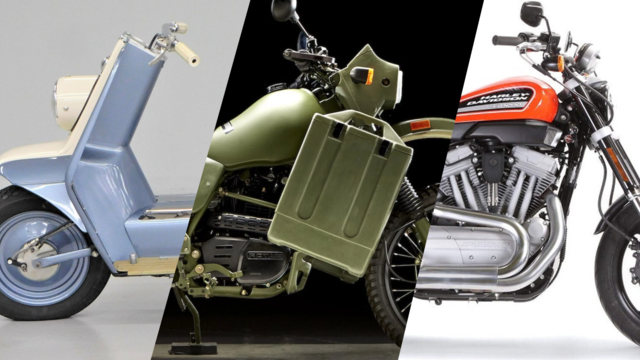
6 Weirdest Harley-Davidsons Ever Sold to the Public
Verdad Gallardo
7 Times Harley-Davidson Chucked Tradition Out the Window
Verdad Gallardo
7 Surprising Harley-Davidson Products that Are Not Motorcycles
Verdad Gallardo
8 Best Harley-Davidson Motorcycles Ever
Pouria Savadkouei
10 Worst Harley-Davidson Motorcycles Ever
Pouria Savadkouei
Killer Custom's Jail Break Is The Breakout That Refused to Blend In
Verdad Gallardo
Crazy Bunderbike Build Looks Amazing, But Is It Impossible to Ride?
Verdad Gallardo
Harley-Davidson Reveals Super Cool Cafe Racer Concept
Verdad Gallardo
Engraved Rebellion: Inside Bundnerbike's Glam Rock II
Verdad Gallardo
Thread
Thread Starter
Forum
Replies
Last Post
Redlegvzv
General Harley Davidson Chat
27
Nov 24, 2015 05:49 AM
