







Why use pushrods?

Cruiser
Joined: Dec 2008
Posts: 214
Likes: 0
From: Peterborough, Canada

Actually no. I can't, but I do see many Harley clones around here, but I really get kick out of the metric clone riders with there Harley jackets.

Road Master
Joined: May 2008
Posts: 762
Likes: 14
From: Bellevue, NE

Grand HDF Member


Joined: May 2008
Posts: 4,585
Likes: 673
From: Rolla
Camaro, Corvette, SUV's, and pickups.
The C4 ZR-1 (1990-1995) used a double overhead cam engine (LT5).
The pushrod engines are just a simpler less expensive engine, fully capable of high performance.
NASCAR is still using pushrod engines, and they put out plenty of HP.
Thanks for the input guys. I'm not against the pushrods and after all the research I've done about doing a cam swap, I'm glad I don't have to pull the tank and take the top end apart to do it. Didn't know about the Chevy engines still using pushrods.
After some of the dyno sheets I've seen it's obvious these engines will still produce, just curious why things are done the way they are done.
After some of the dyno sheets I've seen it's obvious these engines will still produce, just curious why things are done the way they are done.
Outstanding HDF Member
Joined: Nov 2010
Posts: 2,627
Likes: 3
From: S.E. Va
Not sure if this is the motor I saw in a magazine, that guy had the whole bike put together and it ran, but if it came to this I'd rather have push rods.
http://108.163.194.210/~dbbpcom/dbbp...smo/desmo.html
http://108.163.194.210/~dbbpcom/dbbp...smo/desmo.html

Ultimate HDF Member
Joined: Jun 2009
Posts: 6,932
Likes: 4
From: 46th State, USA
I have often wondered why someone has come up with a well-timed electronic solenoid to operate the valves. It would take the mechanical load off of the engine. The only potential draw-back would be that electronic solenoid would draw a lot of amps to open and close the valves.
HD Forum Stories
The Best of Harley-Davidson for Lifelong Riders
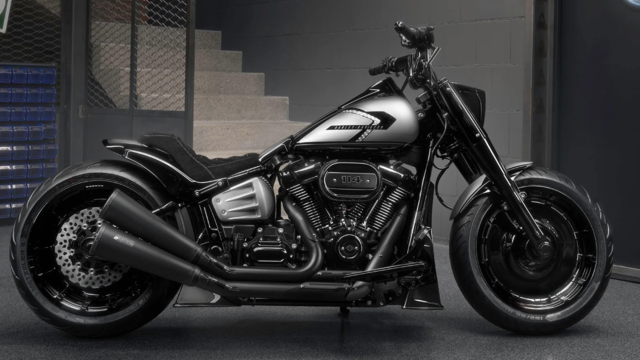
Harley-Davidson Fat Boy Becomes a Dark, Decepticon-Inspired Custom
Verdad Gallardo
6 Weirdest Harley-Davidsons Ever Sold to the Public
Verdad Gallardo
7 Times Harley-Davidson Chucked Tradition Out the Window
Verdad Gallardo
7 Surprising Harley-Davidson Products that Are Not Motorcycles
Verdad Gallardo
8 Best Harley-Davidson Motorcycles Ever
Pouria Savadkouei
10 Worst Harley-Davidson Motorcycles Ever
Pouria Savadkouei
Killer Custom's Jail Break Is The Breakout That Refused to Blend In
Verdad Gallardo
Crazy Bunderbike Build Looks Amazing, But Is It Impossible to Ride?
Verdad Gallardo
Harley-Davidson Reveals Super Cool Cafe Racer Concept
Verdad Gallardo
Seasoned HDF Member

Joined: Mar 2010
Posts: 38,690
Likes: 6,474
From: Honah Lee
This sound is not the push rods. This is actually caused by the 315° later, then there is a 405° gap until the first cylinder fires again since the Harley motor shares a common crank pin. You would think they would be top and bottom and would be if the motor was flat but by having the 45 degree make one lag the other. Most later FI bike idle above 1000 rpm and it's really hard to even here it. This actually is shared by others. However most metrics have clam shell bearings on 180 seperate pins with a balance lobe between them to help with balance and smoothness. Harley started out as a washing machine engine design 180 index before electricity and spaced it at 45 to fit in the bycycle frame!? HA? most of the above it true however....When the first FI system came out you had to idle it fast enough so system to maintain a reliable idle. My 04 is slow to the point it hunts at least 75-100 rpm and idle below 1000 would not be reliable. Bet the really new system could be idled down to give the potato po sound of yesterday. Remember the oil jests do not work at idle and only come in at 12-15lbs of oil pressure above idle so as not to over-oil they cylinders at idle (at speed the oil is a coolant since the engine has pleanty of lubrication) This kind of engineering would have to be modified slight to get a potato po idle with out causing other problems.
Solinoid valves and a Harley V twin at 19,000 rpm. Wonder what that would sound like? Maybe wet French fries in hot oil.
Last edited by Jackie Paper; Apr 29, 2012 at 09:29 AM.

Road Master
Joined: Apr 2012
Posts: 1,096
Likes: 17
From: San Jose
I have often wondered why someone has come up with a well-timed electronic solenoid to operate the valves. It would take the mechanical load off of the engine. The only potential draw-back would be that electronic solenoid would draw a lot of amps to open and close the valves.