





sag with stock air shocks

Thread Starter
|
Road Captain
Joined: May 2011
Posts: 505
Likes: 1
From: Houston
 sag with stock air shocks
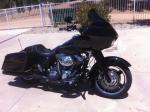
I've been reading a bunch about proper sag with air shocks (I have an RKC with 12" rear shocks) and realized that my shocks aren't sagging at all when I sit down!
I'm kind of short and every little bit helps, and apparently I had another 0.5"-1" that I didn't know I had. Maybe I'm not as heavy as the expected Harley rider, but it looks like I didn't get any sag until I let ALL the air out of the shocks. I weigh about 180 lbs and with no air in the shocks the bike felt like it actually settled down some when I sat on it...can I ride without any air in the shocks? I realize that it's not really "no air"...it's actually the same as atmospheric pressure so in theory there's still air in there to compress, but is it enough? I haven't had a chance to take it out with no air in the shocks yet but thought I'd get an answer first - I certainly wouldn't go riding around with deflated tires.
I will be replacing them eventually with something better...but trying to make the best of it for now.
I'm kind of short and every little bit helps, and apparently I had another 0.5"-1" that I didn't know I had. Maybe I'm not as heavy as the expected Harley rider, but it looks like I didn't get any sag until I let ALL the air out of the shocks. I weigh about 180 lbs and with no air in the shocks the bike felt like it actually settled down some when I sat on it...can I ride without any air in the shocks? I realize that it's not really "no air"...it's actually the same as atmospheric pressure so in theory there's still air in there to compress, but is it enough? I haven't had a chance to take it out with no air in the shocks yet but thought I'd get an answer first - I certainly wouldn't go riding around with deflated tires.
I will be replacing them eventually with something better...but trying to make the best of it for now.
Stellar HDF Member
Joined: Nov 2004
Posts: 3,156
Likes: 41
From: So Cal
That was one of the reasons that realized that I needed to get rid of my stock shocks. I ride solo and weigh about 210 and even with 0 psi in the shocks they were topped out . There is no way the suspension can be effective if it is riding topped out most of the time.

Road Captain
Joined: Feb 2012
Posts: 507
Likes: 5
From: Florida
It's not the air but the spring pre-load that determine sag. In other words, lighter riders should use shocks with less preload; heavier riders need more preload. Less load allows the shock's springs to react to smaller bumps. The spring's preload determines how much the entire shock sinks from the rider's weight. For the shocks to do its designed function, it must sag about 1/4 to 1/3 of its total travel. As an example, if the shocks have 3.5" of travel, it needs to sag about 0.75" to 1.0" when the rider settles into the saddle. The shocks needs to work both above and below its initial ride height. With no travel available at rebound from a bump, it will top out, suddently stop rebound damping and pitch the rider off the seat.
Last edited by CWO USN; Jun 19, 2012 at 02:47 PM.

Road Captain
Joined: Jan 2009
Posts: 519
Likes: 1
From: woburn,ma
That's why i got rid of my stockers and went with progressive 440's.I alsoweight about 180 and had no sag with the stock shocks.Now withe the new one's ihave them set and get about 1/4" of sag,and a much better ride.

Outstanding HDF Member
Joined: Jan 2011
Posts: 2,590
Likes: 31
From: Western Illinois, land of bad roads, and corrupt politicians
The sag on shocks should be about 1/3 or the total throw. In other words, if your shock has 3 inches of total throw, you should have around 1 inch of sag with you, and any luggage, and your passenger if you have one.
And the sag is the difference between the shocks fully extended on a lift, and with you and yours on the bike.
If you don't have enough sag, think about what happens when you hit a dip (tire goes down into the dip), and the shock has no DOWNWARD travel. The whole bike goes into the dip, and when you come out of the dip, the bike bottoms out.
And the sag is the difference between the shocks fully extended on a lift, and with you and yours on the bike.
If you don't have enough sag, think about what happens when you hit a dip (tire goes down into the dip), and the shock has no DOWNWARD travel. The whole bike goes into the dip, and when you come out of the dip, the bike bottoms out.
Last edited by shooter5074; Jun 19, 2012 at 02:56 PM.

Intermediate
Joined: Sep 2010
Posts: 41
Likes: 0
From: Salem, OR
I guess it's new shock time, my 170 frame doesn't even move those stockers. Thanks for the info!
Trending Topics
Outstanding HDF Member
Joined: Jan 2011
Posts: 2,590
Likes: 31
From: Western Illinois, land of bad roads, and corrupt politicians
But the shocks are designed for big folks. One size doesn't fit all. Shocks should be valved and sprung for your riding weight, and type of riding.
HD Forum Stories
The Best of Harley-Davidson for Lifelong Riders

7 Surprising Harley-Davidson Products that Are Not Motorcycles
Verdad Gallardo
8 Best Harley-Davidson Motorcycles Ever
Pouria Savadkouei
10 Worst Harley-Davidson Motorcycles Ever
Pouria Savadkouei
Killer Custom's Jail Break Is The Breakout That Refused to Blend In
Verdad Gallardo
Crazy Bunderbike Build Looks Amazing, But Is It Impossible to Ride?
Verdad Gallardo
Harley-Davidson Reveals Super Cool Cafe Racer Concept
Verdad Gallardo
Engraved Rebellion: Inside Bundnerbike's Glam Rock II
Verdad Gallardo
10 Motorcycles You Should Never Buy
Joe Kucinski
10 Things Harley-Davidson Needs to Fix in 2026
Verdad Gallardo
Former Sponsor
Joined: May 2012
Posts: 140
Likes: 0
From: Bobcaygeon
if you are considering making a change - STEP up and go with a fully automatic speed sensitive hydraulic suspension system - Drops you 2.5 inches at stop ( flat foot control) and raises back to factory height once above 13 MPH. As quite a few of the members can now attest - Its worth the money to buy the right suspension the first time.

Thread
Thread Starter
Forum
Replies
Last Post
Kilokato
2014-2024 Touring Models
33
May 17, 2015 08:40 PM