




 ......


Engineers

Road Captain
Joined: Sep 2007
Posts: 500
Likes: 2
From: Springfield Ohio

If you decide to go with stainless screen, get enough to make a few covers. 300 series stainless tends to be brittle and wont take much re-bending. It is often used for automotive exhaust plates and spacers because it is more corrosion resistant than bare steel, but is barely stainless and will rust in time, particularly in the presence of elevated heat.
As far as the opening, .0625" is 1/16 inch. I'd say you're plenty safe up to .125" [1/8 inch].
As far as the opening, .0625" is 1/16 inch. I'd say you're plenty safe up to .125" [1/8 inch].

Cruiser
Joined: Jan 2013
Posts: 165
Likes: 7
From: NC
In terms of the free area ratio, it is very simplistic and misleading to assume a 50% ratio equates to 50% air flow, that is simply not the case. In fact, I would suggest that you would be closer to seeing no reduction than you would to seeing a 50% reduction. What will happen is that in the area of the screen the air will accelerate through the screen and then decelerate once it is through the screen. There will be a marginal air pressure increase on the front face of the mesh.
In terms of mechanical strength, providing you leave sufficient gap between the screen and the rad you should be fine (I would suggest 1/2" as a rough guide). By the time the stone has broken through the mesh (if it even does) you will have dissipated that much energy that I doubt there will be sufficient energy left to damage the rad. Worst case you may need to cut another piece of screen and replace. The tensile strength of stainless braid is incredibly high.
In terms if 316 vs 304, agree with above, 316 is stronger but both are perfectly adequate for your application
In terms of mechanical strength, providing you leave sufficient gap between the screen and the rad you should be fine (I would suggest 1/2" as a rough guide). By the time the stone has broken through the mesh (if it even does) you will have dissipated that much energy that I doubt there will be sufficient energy left to damage the rad. Worst case you may need to cut another piece of screen and replace. The tensile strength of stainless braid is incredibly high.
In terms if 316 vs 304, agree with above, 316 is stronger but both are perfectly adequate for your application
I also have to agree strongly that the 50% coverage will not relate to 50% reduction in airflow. After all, air filters do work and probably have greater than 50% coverage.
I would go with the 316 for the slightly better corrosion resistance and for being somewhat stronger (more for corrosion since you're in Vermont), the price difference is probably marginal between the two. You'll have far more labor in making the piece and mounting it properly than the difference in the cost of the two materials in the same area.
Cruiser
Joined: Jan 2013
Posts: 165
Likes: 7
From: NC
Just did the comparison, Corrosion-Resistant 304 SS Woven Wire Cloth 3 X 3 Mesh, .063" Wire Diameter is $28.69 for a 12" x 24" piece and Super-Corrosion-Resistant 316 SS Wire Cloth Woven, 3 X 3 Mesh, .063" Wire Diameter is $39.06. No brainer.

Elite HDF Member
Joined: Sep 2007
Posts: 4,928
Likes: 69
From: Near Myrtle Beach, SC
Your solution is to stop that rock before it can get to the oil cooler. Your answer is an extended front fender flap OR relocate a different oil cooler up on the one of the fork tubes.

Tourer
Joined: Jul 2011
Posts: 267
Likes: 0
From: Virginia
Rick,
Use the 304 Grade of Stainless Steel. It is a general purpose industrial grade. Where as the 316 Stainless Steel is used for manufacturing food processing and medical processing equipment/machinery. The 304 is tougher and has better wear resistance. Where as the 316 is held to a higher level of metalurgical compsitional purity thereby costing more to manufacture.
Use the 304 Grade of Stainless Steel. It is a general purpose industrial grade. Where as the 316 Stainless Steel is used for manufacturing food processing and medical processing equipment/machinery. The 304 is tougher and has better wear resistance. Where as the 316 is held to a higher level of metalurgical compsitional purity thereby costing more to manufacture.

Stellar HDF Member


Joined: Aug 2012
Posts: 2,664
Likes: 184
From: Indiana, USA
First I would suggest that your cooler is designed for 100% open area and the screens you have proposed will be taking away your coolers ability to cool the oil. I don't see where you have identified the wire Guage or dimeter but have specified opening sizes with 25% to 52% open area. Imagine if you will that your oil is a huge heat sink and the more restrictive you cooler screen is the less the cooler is able to cool the oil. Also the oil will continue to have heat added by the motor and eponentially the heat stored in the oil will overtake the coolers abilities. FYI the followign chart is provided but I would really think about the disadvantages of restricting your coolers air flow.

HD Forum Stories
The Best of Harley-Davidson for Lifelong Riders
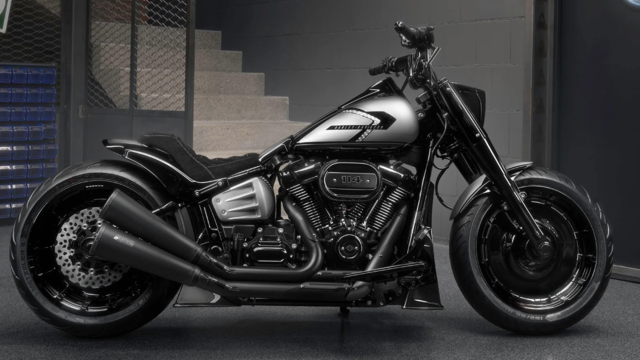
Harley-Davidson Fat Boy Becomes a Dark, Decepticon-Inspired Custom
Verdad Gallardo
6 Weirdest Harley-Davidsons Ever Sold to the Public
Verdad Gallardo
7 Times Harley-Davidson Chucked Tradition Out the Window
Verdad Gallardo
7 Surprising Harley-Davidson Products that Are Not Motorcycles
Verdad Gallardo
8 Best Harley-Davidson Motorcycles Ever
Pouria Savadkouei
10 Worst Harley-Davidson Motorcycles Ever
Pouria Savadkouei
Killer Custom's Jail Break Is The Breakout That Refused to Blend In
Verdad Gallardo
Crazy Bunderbike Build Looks Amazing, But Is It Impossible to Ride?
Verdad Gallardo
Harley-Davidson Reveals Super Cool Cafe Racer Concept
Verdad Gallardo

Club Member

Joined: Jun 2007
Posts: 45,429
Likes: 2,898
From: Bedford UK
Setting aside why you feel the need for an engineer or an oil cooler, where is this being installed on your bike? Can we have a photo or link, so we can size up the problem? deflecting debris using baffles is more desirable than part covering the cooler with a screen, I suggest.