



Touring Rear Wheel Offset??

Thread Starter
|
HDF Community Team


Joined: Jun 2006
Posts: 12,782
Likes: 2,610
From: san antonio


Originally Posted by Thickraybans
My fender is 7" wide. I had to deflate the tire so I could get the wheel (stock width) and caliper into the swing arm, it was a PITA. Once in, there was plenty of room in the fender.
Originally Posted by Thickraybans
Also a 160 on the stock wheel is squeezed on and runs a little narrower than it would on a wider rim. Think it would fit with a wider wheel, once you got all the components in the swing arm and up in the fender. Wouldn't be a fun job.
Thanks for the reply; good to know.

Road Captain
Joined: Aug 2011
Posts: 575
Likes: 4
From: SouthWestern Ontario
I think you have a plan that will work fine.
These are not like sport bikes that a rider is more apt to "throw" into a tight left hander and immediately after "throw" into a right hand turn. In this case the rider is expecting the same reaction turning either way on exact opposite turns. In-line alignment is more critical in the sport bike world but we are less likely to notice any difference with a slight offset. If you started comparing bikes, there would be slight variations found which is considered the norm.
Thats not to say you can't make it better, for handling as well as appearance. If handling is the ultimate goal, you can set it up quite nicely using a flat level build platform that is measured in a square grid pattern. I used everything from plumb bobs to laser lines to zero in on my "at home" optimal handling attempt. Of course I had the additional task of rebuilding the swingarm so it allowed the wheel/tire to travel vertically exact as well.
I installed the Progressive stabilizing link as a failsafe after insuring the bushings/bearings were up to par.
New Progressive 944s are a slight improvement over the stock air shocks (you get what you pay for).
Don't overlook the importance of the motor mounts as well. Keeping the reciprocating forces as vertical and as inline as possible is paramount. Lastly, do a fall away test and make sure the head bearings are working well.
Great handling on a budget.
These are not like sport bikes that a rider is more apt to "throw" into a tight left hander and immediately after "throw" into a right hand turn. In this case the rider is expecting the same reaction turning either way on exact opposite turns. In-line alignment is more critical in the sport bike world but we are less likely to notice any difference with a slight offset. If you started comparing bikes, there would be slight variations found which is considered the norm.
Thats not to say you can't make it better, for handling as well as appearance. If handling is the ultimate goal, you can set it up quite nicely using a flat level build platform that is measured in a square grid pattern. I used everything from plumb bobs to laser lines to zero in on my "at home" optimal handling attempt. Of course I had the additional task of rebuilding the swingarm so it allowed the wheel/tire to travel vertically exact as well.
I installed the Progressive stabilizing link as a failsafe after insuring the bushings/bearings were up to par.
New Progressive 944s are a slight improvement over the stock air shocks (you get what you pay for).
Don't overlook the importance of the motor mounts as well. Keeping the reciprocating forces as vertical and as inline as possible is paramount. Lastly, do a fall away test and make sure the head bearings are working well.
Great handling on a budget.
Thread Starter
|
HDF Community Team
Joined: Jun 2006
Posts: 12,782
Likes: 2,610
From: san antonio
I think you have a plan that will work fine.
These are not like sport bikes that a rider is more apt to "throw" into a tight left hander and immediately after "throw" into a right hand turn. In this case the rider is expecting the same reaction turning either way on exact opposite turns. In-line alignment is more critical in the sport bike world but we are less likely to notice any difference with a slight offset. If you started comparing bikes, there would be slight variations found which is considered the norm.
Thats not to say you can't make it better, for handling as well as appearance. If handling is the ultimate goal, you can set it up quite nicely using a flat level build platform that is measured in a square grid pattern. I used everything from plumb bobs to laser lines to zero in on my "at home" optimal handling attempt. Of course I had the additional task of rebuilding the swingarm so it allowed the wheel/tire to travel vertically exact as well.
I installed the Progressive stabilizing link as a failsafe after insuring the bushings/bearings were up to par.
New Progressive 944s are a slight improvement over the stock air shocks (you get what you pay for).
Don't overlook the importance of the motor mounts as well. Keeping the reciprocating forces as vertical and as inline as possible is paramount. Lastly, do a fall away test and make sure the head bearings are working well.
Great handling on a budget.
These are not like sport bikes that a rider is more apt to "throw" into a tight left hander and immediately after "throw" into a right hand turn. In this case the rider is expecting the same reaction turning either way on exact opposite turns. In-line alignment is more critical in the sport bike world but we are less likely to notice any difference with a slight offset. If you started comparing bikes, there would be slight variations found which is considered the norm.
Thats not to say you can't make it better, for handling as well as appearance. If handling is the ultimate goal, you can set it up quite nicely using a flat level build platform that is measured in a square grid pattern. I used everything from plumb bobs to laser lines to zero in on my "at home" optimal handling attempt. Of course I had the additional task of rebuilding the swingarm so it allowed the wheel/tire to travel vertically exact as well.
I installed the Progressive stabilizing link as a failsafe after insuring the bushings/bearings were up to par.
New Progressive 944s are a slight improvement over the stock air shocks (you get what you pay for).
Don't overlook the importance of the motor mounts as well. Keeping the reciprocating forces as vertical and as inline as possible is paramount. Lastly, do a fall away test and make sure the head bearings are working well.
Great handling on a budget.
I am now thinking I will center the wheel and check alignment after; however, I am confused about machining the rear caliper. It appears that the material should be removed from the outside of the caliper but the caliper "registers" on the swing arm tab. I was concerned that removing material from the outside of the caliper might cause the caliper to "****" inward when the axle is torqued. Removing material from the inside of the caliper moves the wheel but then rotor and caliper don't align and the only way to align moves the wheel back where it was.
I appreciate the help.
Road Captain
Joined: Aug 2011
Posts: 575
Likes: 4
From: SouthWestern Ontario
The easiest way in my view is to first center the wheel within the swingarm & struts. I use a long 1/2" extention for this purpose but you can use the actual axle. It just makes it easier to slide the wheel from side to side. Now you can measure and cut your left side spacer making sure you have sufficient swingarm and belt clearance. Keep in mind that clearance needs to be addressed through the entire range of swingarm travel. You may need to trim/grind a bit off the left side frame bracketry if there is any interference. Once the left side spacer is mocked up in place you can determine how much needs to be milled from the inner side of the caliper in order to center it on the rotor. It may be necessary to trim some from the caliper pad on the swingarm as well. Once the caliper is centered on the rotor all that is left is, measure and cut a right side spacer. Hope that helps somewhat but keep in mind that your build is a lot different than mine and I'm trying to visualize what you will encounter. I'm sure it will become obvious to you what needs to be done to accomplish this job. Good luck!
Last edited by Recycled; Jun 3, 2014 at 09:17 AM.
Thread Starter
|
HDF Community Team
Joined: Jun 2006
Posts: 12,782
Likes: 2,610
From: san antonio
The easiest way in my view is to first center the wheel within the swingarm & struts. I use a long 1/2" extention for this purpose but you can use the actual axle. It just makes it easier to slide the wheel from side to side. Now you can measure and cut your left side spacer making sure you have sufficient swingarm and belt clearance. Keep in mind that clearance needs to be addressed through the entire range of swingarm travel. You may need to trim/grind a bit off the left side frame bracketry if there is any interference. Once the left side spacer is mocked up in place you can determine how much needs to be milled from the inner side of the caliper in order to center it on the rotor. It may be necessary to trim some from the caliper pad on the swingarm as well. Once the caliper is centered on the rotor all that is left is, measure and cut a right side spacer. Hope that helps somewhat but keep in mind that your build is a lot different than mine and I'm trying to visualize what you will encounter. I'm sure it will become obvious to you what needs to be done to accomplish this job. Good luck!
Road Captain
Joined: Aug 2011
Posts: 575
Likes: 4
From: SouthWestern Ontario
Sounds logical. If the math works out and you can draw it on paper, fitting the entire assembly within the given parameters, it will fit fine.
From your picture it is hard to tell how much of your rear wheel offset is attributed to an actual offset or if the fender or strut assemblies are off to one side making the offset look worse than it really is. That stuff is just hung from the frame and any centering measurements need to be taken from the frame itself. I would remove the fender and strut uprights before centering the wheel.
That is another thing to consider. I am sure an alternate method of mounting the rear fender, such as I did, will allow the rear fender to be forcefully widened without being noticable if you needed to. An 18" wheel/tire is a bit more of a challenge to mount than a 16" from what I hear.
From your picture it is hard to tell how much of your rear wheel offset is attributed to an actual offset or if the fender or strut assemblies are off to one side making the offset look worse than it really is. That stuff is just hung from the frame and any centering measurements need to be taken from the frame itself. I would remove the fender and strut uprights before centering the wheel.
That is another thing to consider. I am sure an alternate method of mounting the rear fender, such as I did, will allow the rear fender to be forcefully widened without being noticable if you needed to. An 18" wheel/tire is a bit more of a challenge to mount than a 16" from what I hear.
Thread Starter
|
HDF Community Team
Joined: Jun 2006
Posts: 12,782
Likes: 2,610
From: san antonio
Sounds logical. If the math works out and you can draw it on paper, fitting the entire assembly within the given parameters, it will fit fine.
From your picture it is hard to tell how much of your rear wheel offset is attributed to an actual offset or if the fender or strut assemblies are off to one side making the offset look worse than it really is. That stuff is just hung from the frame and any centering measurements need to be taken from the frame itself. I would remove the fender and strut uprights before centering the wheel.
That is another thing to consider. I am sure an alternate method of mounting the rear fender, such as I did, will allow the rear fender to be forcefully widened without being noticable if you needed to. An 18" wheel/tire is a bit more of a challenge to mount than a 16" from what I hear.
From your picture it is hard to tell how much of your rear wheel offset is attributed to an actual offset or if the fender or strut assemblies are off to one side making the offset look worse than it really is. That stuff is just hung from the frame and any centering measurements need to be taken from the frame itself. I would remove the fender and strut uprights before centering the wheel.
That is another thing to consider. I am sure an alternate method of mounting the rear fender, such as I did, will allow the rear fender to be forcefully widened without being noticable if you needed to. An 18" wheel/tire is a bit more of a challenge to mount than a 16" from what I hear.
I am checking alignment before taking the next step. Have worked out a way to string line check with the bike on the lift. If there is not an alignment issue, I will have to exercise one of the three options listed above to move the wheel enough toward the center to provide comfortable tire to fender clearance; most likely will trim the caliper axle boss; I figure I can take about .200" off before the caliper hits the anti-rotation bracket. If there is an alignment issue; correcting it should move the wheel toward the center.
I wouldn't be having the problem if the stock wheel had been centered in the swing arm but it wasn't; the luck of the Milwaukee draw.
 Thanks again for your insight.

Club Member


Joined: Jun 2007
Posts: 45,429
Likes: 2,898
From: Bedford UK

IIRC, the '07 touring bikes had wider fenders; not sure. I know that the fender clearance appears to be the controlling issue for tire size. Pretty sure I could get a 160 in there with no belt/pulley clearance issues but doubtful that a 160 would clear the fender on the left side, eve with the wheel centered. Haven't given up yet though.
HD Forum Stories
The Best of Harley-Davidson for Lifelong Riders

Jason Momoa Is Turning Classic Harleys Into PHEVs
Verdad Gallardo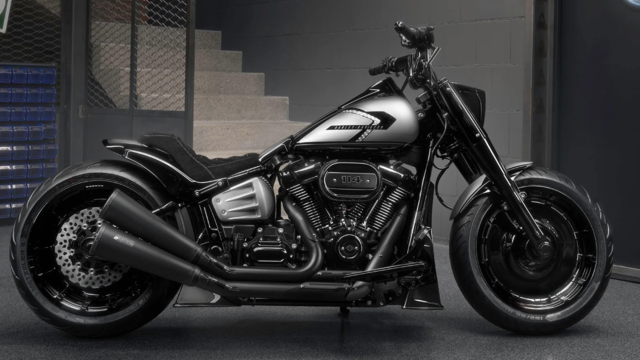
Harley-Davidson Fat Boy Becomes a Dark, Decepticon-Inspired Custom
Verdad Gallardo
6 Weirdest Harley-Davidsons Ever Sold to the Public
Verdad Gallardo
7 Times Harley-Davidson Chucked Tradition Out the Window
Verdad Gallardo
7 Surprising Harley-Davidson Products that Are Not Motorcycles
Verdad Gallardo
8 Best Harley-Davidson Motorcycles Ever
Pouria Savadkouei
10 Worst Harley-Davidson Motorcycles Ever
Pouria Savadkouei
Killer Custom's Jail Break Is The Breakout That Refused to Blend In
Verdad Gallardo
Crazy Bunderbike Build Looks Amazing, But Is It Impossible to Ride?
Verdad Gallardo
Thread
Thread Starter
Forum
Replies
Last Post