When you click on links to various merchants on this site and make a purchase, this can result in this site earning a commission. Affiliate programs and affiliations include, but are not limited to, the eBay Partner Network.
....................
When I called my local HD dealer, he was less than helpful. Told me what I really needed to do was come trade in on a new model. I asked him why would I want one of your oil-sumping computer glides?......
I want to get everything buttoned up today so I'm ready for when the clutch arrives next week.
In another thread, Schex posted a pic from a service manual that said you needed to put same RTV on the back side of the inner where the "wet" bolts that hold it on go througj.
My FSM doesn't talk about that, and there wasn't any on the inner when I took it off.
I installed the inner before I saw that post from Schex.
So the question is do I pull it off now and reinstall with some RTV while I can, or just leave it? I'm inclined to go with the RTV unless someone has a reason that's a bad idea.
I've done them with and without (in the early days), never had a problem (leak) either way. However if you decide to totally un-bolt it and do RTV on the backside, change the big o-ring on the engine, yes again. Unlike most applications, no matter how good they look, once they have been disturbed they're subject to leak. part# 11147B about 3 bucks.
Second option - unscrew them one at a time and "feed" RTV on the shoulder as you push them back in till the the threads start. Torque and let them totally dry and pick off the excess from around the lock plates.
OK, I'm going to be the "nay" sayer... and I hope all you guys are 100% correct and I am 100% wrong (or unnecessary overkill) ...
I would have put some silicone sealer in the areas circled. It looks like some sealer was there before based on Omaha's earlier pics (or is the black stuff grime?) I can see some residue black silicone sealer (or grime) on the female threads and even see some on the top right (rear most upper female bolt hole just above the belt).
I admit I am not familiar with your model, and my bike is a later model where the manual calls for sealant on those areas. It was there from the factory my fist time in the primary. I am not a fan of this either but perhaps a compromise would be to remove each "wet" bolt (the ones with the locking tabs) one at a time, clean the bolt, tab and inner primary area with brake clean, and apply sealer to the underside of each bolt head and locking tab.
I would hate to have you go thru all the recent work only to have to go in again.
Omaha,
my 85 flhtc has a crack on the seal seat of the engine case. I use a case saver gasket to stop it from leaking. The gasket seems to work better than the RTV.
I always seal them with a thick enough bead around the shank right below the head of the bolts and never had a leak, it's pretty obvious those bolts are a potential leak.
Slideshow: Jason Momoa's latest restoration project blends 1920s Harley-Davidsons with modern electric technology, creating some of the most unusual hybrid motorcycles ever built.
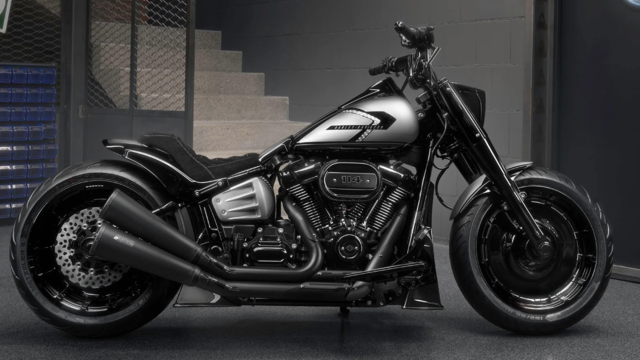
Harley-Davidson Fat Boy Becomes a Dark, Decepticon-Inspired Custom
Slideshow: Killer Custom's latest build relies on styling changes rather than performance upgrades, giving the cruiser an entirely different personality.
7 Surprising Harley-Davidson Products that Are Not Motorcycles
Slideshow: The bar-and-shield logo shows up on far more than motorcycles, some of the company's most unexpected products have nothing to do with riding.
Slideshow: From the troubled AMF years to modern misfires, these bikes earned reputations for reliability issues, questionable engineering, or disappointing performance.
Crazy Bunderbike Build Looks Amazing, But Is It Impossible to Ride?
Slideshow: The Swiss custom shop has taken a Harley Softail and stretched it into something so long and low that it looks closer to a rolling sculpture than a conventional motorcycle.