When you click on links to various merchants on this site and make a purchase, this can result in this site earning a commission. Affiliate programs and affiliations include, but are not limited to, the eBay Partner Network.
Yea i know when Rowe went out they kibble came to being and its money so Goodson who is expensive but hi quality went to kibble
at that time being a dealer with them they offered us a deal for inventory so we bought what we used in all of it - kibble is sold everyplace so prices are better
not a real fan of kibble yes they work but the stem diameters are never the same - we check anyway but one wonders what quality control is
today. The shop is all old stuff so kibble works in stainless and cast iron guides rubber seals and off set to retainers for 450 lift cams - i like the seats they sell some of the guys own both new and old - but go someplace else for the new stuff evo forward dont even own the tooling for twinkies much less any other Harley’s
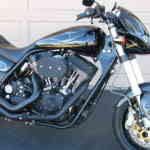
in 95 we went buell road. Racing as a my shop sponsored team in 98 and again 2000 we had accomplished 3 national championships in 5 years
you learn a lot as the engine is only one small piece of the puzzle - would post a picture or two but the ninnies cry oh no not again - we seen that before why do you keep posting mean stuff - while they never did anything meaningful in life - other then push a electric start button
Good luck with your new project
Last edited by johnjzjz; Dec 18, 2022 at 07:19 AM.
I really appreciate reading and learning about engine builds with threads like these; I will never have the tooling and know-how to do this kind of precision myself, but I find it bloody interesting to learn about how it should be done properly.
One big one and a bunch of small ones. The big one is that it is a head holder. It's about a 7 inch piece of 3/4 hex 303 stainless with a 14x1.25 thread on it. With it screwed into the plug hole, it can be clamped into a vise to allow for porting, chamber shaping, lapping valves, whatever. It acts a hole plug for volume checking, flow bench work. It also acts as a stand for hold the head at an angle when CCing.
I've rotated this head plus a number of other on this bench. The flow characteristics change based on rotation. Rotating 180 still means that the port faces towards the inside of the bench. Looking down from the top, from the center of the cylinder, the front cylinder hooks right while the rear hooks left. If there is any rotational flow inside the cylinder caused by the flow bench, it can affect flow. The problem is that the plenum in the bench is way too small and if you look at the flow characteristics of the bench, the exhaust passage tends to rotate flow in the clockwise direction before flowing into the cylinder. The fins help to correct this.. A good buddy says I'm cheating.. Maybe.. What would be better would be to make a plenum on top of the plenum with vanes to straighten the flow. I'm too lazy to build one. Intake is more important than exhaust and the inlet, when testing intakes, is wide open. I use the bench maybe once a year to optimize something. Rest of the time it sits.
Before they even had flow benches they did it live in the early 60s had a chance to learn from WW2 guys who raced open wheel bommer drop gas tanks racers
alloy heads were a new thing - so they added a dye to the fuel - then removed the heads after a race and the dark stains was what need to be removed from the ports - being spotless and race gas intake and exhaust would show it off 3 or 4 races is what it took to get a set totally done for that engine combo
With an 84cc combustion chamber, 113 ci displacement and 0.010 trimmed off the top of the cylinders, I'll have an 11 to 1 CR. The motor started fine at 10.8 but it struggled. Time to install compression releases. With the help of WFOlarry, I installed them.
Plate leftover from another fixture..
Locate center of sparkplug hole. Angle of plug about 24 degrees from vertical.
Use a center cutting endmill to spot-face the fin. Then used a 3/32 trill to drill through into the chamber.. Faced the hole to 3/4 inch though the top fin and into the second then drilled the hole to tap to 10mm and tapped.
7 Surprising Harley-Davidson Products that Are Not Motorcycles
Slideshow: The bar-and-shield logo shows up on far more than motorcycles, some of the company's most unexpected products have nothing to do with riding.
Slideshow: From the troubled AMF years to modern misfires, these bikes earned reputations for reliability issues, questionable engineering, or disappointing performance.
Crazy Bunderbike Build Looks Amazing, But Is It Impossible to Ride?
Slideshow: The Swiss custom shop has taken a Harley Softail and stretched it into something so long and low that it looks closer to a rolling sculpture than a conventional motorcycle.
Engraved Rebellion: Inside Bundnerbike's Glam Rock II
Slideshow: A standard cruiser becomes an intricate metal canvas in the hands of a Swiss custom house known for pushing Harley-Davidson platforms far beyond their factory brief.
Slideshow: Harley-Davidson's challenges aren't abstract; they show up in dropping shipments, shrinking dealer traffic, and strategic decisions that aren't yet translating into growth.