



Unedited: Adding a second relay to fix the dreaded click

2nd Gear
Joined: Jun 2012
Posts: 6
Likes: 0
From: WI

Ok here goes. I am a bonified 12v electrical idiot! Give me something with 120/220 and I'm fine. All this stuff with relays, parallels, etc just doesn't make sense. You mentioned cleaning/greasing the plunger on the solenoid. How is this done?

Seasoned HDF Member


Joined: May 2008
Posts: 21,174
Likes: 12,744
From: South Carolina
Disconnect the battery, remove the end cover on the solenoid. You will see what needs to be replaced. The starter can remain installed on the bike.
Seasoned HDF Member
Joined: May 2008
Posts: 21,174
Likes: 12,744
From: South Carolina
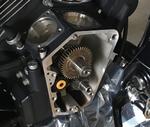
There is nothing special about the starters used in modern Harleys since `89. These starters are common automotive units used in a lot of small cars.
Seasoned HDF Member


Joined: Jun 2010
Posts: 9,332
Likes: 3,873
From: Upstate New York
Not if you plan to change the ground contact. I know because I tried a couple of years ago. I was able to change the positive contact (the top one) on the softail by grinding down a socket to fit, but there's no room between the starter and the tranny to get the ground terminal off without pulling the starter.
Maybe there's more room on the short primary (dresser) but there's not room on a Softail.
Thanks guys! This looks like the fix I've been looking for for 15 years.
Maybe there's more room on the short primary (dresser) but there's not room on a Softail.
Thanks guys! This looks like the fix I've been looking for for 15 years.
Seasoned HDF Member
Joined: Jun 2010
Posts: 9,332
Likes: 3,873
From: Upstate New York
One more thing: does anybody know the part number for the female spade terminal that goes into the relay connector on a '94 Softail? I'm looking at the parts book, but can't determine which terminal is the right one from the pictures.
Seasoned HDF Member
Joined: Jun 2010
Posts: 9,332
Likes: 3,873
From: Upstate New York
After sleeping on this, I came up with one more concern. You are adding or re-wiring a relay so the solenoid can draw current directly from the battery, bypassing all the voltage robbing connections, switches and terminals. This is fine, as long as the relay works properly.
Relays, however, are electromechanical devices. They contain a small solenoid, a set of contacts (similar to breaker points) and a return spring. Should the relay fail, and the points not separate when the relay solenoid is de-energized (by releasing the starter button), the starter will continue to crank the engine over, and shutting off the ignition will not stop it, since the starter solenoid is being fed directly by the battery, because you bypassed the ignition switch. This will continue until the starter burns up, the battery runs down, or you remember to pull the fuse you put in the line from the battery to the relay (hopefully you remembered this).
Relay failures are relatively rare, but not unknown, so it's something to be aware of.
Relays, however, are electromechanical devices. They contain a small solenoid, a set of contacts (similar to breaker points) and a return spring. Should the relay fail, and the points not separate when the relay solenoid is de-energized (by releasing the starter button), the starter will continue to crank the engine over, and shutting off the ignition will not stop it, since the starter solenoid is being fed directly by the battery, because you bypassed the ignition switch. This will continue until the starter burns up, the battery runs down, or you remember to pull the fuse you put in the line from the battery to the relay (hopefully you remembered this).
Relay failures are relatively rare, but not unknown, so it's something to be aware of.
HD Forum Stories
The Best of Harley-Davidson for Lifelong Riders

7 Surprising Harley-Davidson Products that Are Not Motorcycles
Verdad Gallardo
8 Best Harley-Davidson Motorcycles Ever
Pouria Savadkouei
10 Worst Harley-Davidson Motorcycles Ever
Pouria Savadkouei
Killer Custom's Jail Break Is The Breakout That Refused to Blend In
Verdad Gallardo
Crazy Bunderbike Build Looks Amazing, But Is It Impossible to Ride?
Verdad Gallardo
Harley-Davidson Reveals Super Cool Cafe Racer Concept
Verdad Gallardo
Engraved Rebellion: Inside Bundnerbike's Glam Rock II
Verdad Gallardo
10 Motorcycles You Should Never Buy
Joe Kucinski
10 Things Harley-Davidson Needs to Fix in 2026
Verdad Gallardo
Road Warrior
Joined: Sep 2006
Posts: 1,826
Likes: 87
From: Cookson, Ok
After sleeping on this, I came up with one more concern. You are adding or re-wiring a relay so the solenoid can draw current directly from the battery, bypassing all the voltage robbing connections, switches and terminals. This is fine, as long as the relay works properly.
Relays, however, are electromechanical devices. They contain a small solenoid, a set of contacts (similar to breaker points) and a return spring. Should the relay fail, and the points not separate when the relay solenoid is de-energized (by releasing the starter button), the starter will continue to crank the engine over, and shutting off the ignition will not stop it, since the starter solenoid is being fed directly by the battery, because you bypassed the ignition switch. This will continue until the starter burns up, the battery runs down, or you remember to pull the fuse you put in the line from the battery to the relay (hopefully you remembered this).
Relay failures are relatively rare, but not unknown, so it's something to be aware of.
Relays, however, are electromechanical devices. They contain a small solenoid, a set of contacts (similar to breaker points) and a return spring. Should the relay fail, and the points not separate when the relay solenoid is de-energized (by releasing the starter button), the starter will continue to crank the engine over, and shutting off the ignition will not stop it, since the starter solenoid is being fed directly by the battery, because you bypassed the ignition switch. This will continue until the starter burns up, the battery runs down, or you remember to pull the fuse you put in the line from the battery to the relay (hopefully you remembered this).
Relay failures are relatively rare, but not unknown, so it's something to be aware of.

Thread Starter
|
Road Captain
Joined: May 2011
Posts: 684
Likes: 9
From: Indian Head, PA
After sleeping on this, I came up with one more concern. You are adding or re-wiring a relay so the solenoid can draw current directly from the battery, bypassing all the voltage robbing connections, switches and terminals. This is fine, as long as the relay works properly.
Relays, however, are electromechanical devices. They contain a small solenoid, a set of contacts (similar to breaker points) and a return spring. Should the relay fail, and the points not separate when the relay solenoid is de-energized (by releasing the starter button), the starter will continue to crank the engine over, and shutting off the ignition will not stop it, since the starter solenoid is being fed directly by the battery, because you bypassed the ignition switch. This will continue until the starter burns up, the battery runs down, or you remember to pull the fuse you put in the line from the battery to the relay (hopefully you remembered this).
Relay failures are relatively rare, but not unknown, so it's something to be aware of.
Relays, however, are electromechanical devices. They contain a small solenoid, a set of contacts (similar to breaker points) and a return spring. Should the relay fail, and the points not separate when the relay solenoid is de-energized (by releasing the starter button), the starter will continue to crank the engine over, and shutting off the ignition will not stop it, since the starter solenoid is being fed directly by the battery, because you bypassed the ignition switch. This will continue until the starter burns up, the battery runs down, or you remember to pull the fuse you put in the line from the battery to the relay (hopefully you remembered this).
Relay failures are relatively rare, but not unknown, so it's something to be aware of.
Not saying it couldn't happen, but you'll probably never see it. Also as an emergency plan if you want one, reach down and unplug the small wire from the solenoid.