






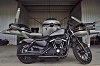



already dropped it

Extreme HDF Member

Joined: Jan 2017
Posts: 10,790
Likes: 19,651
From: On the move

New riders need to take it slow and spend a lot of time practicing the fundamentals they've learned from a formal riding class before getting out into traffic.
Sounds like the bike took the brunt of the damage. All new riders should start off riding a safe used bike with some love marks on it.
Sounds like you made it farther than this guy before dropping your new harley...
Sounds like the bike took the brunt of the damage. All new riders should start off riding a safe used bike with some love marks on it.
Sounds like you made it farther than this guy before dropping your new harley...
Last edited by RET_SCPO; Sep 11, 2018 at 02:07 PM.

Road Captain
Joined: Aug 2018
Posts: 690
Likes: 121
From: On my motorcycle
Amen!

Seasoned HDF Member


Joined: Feb 2006
Posts: 5,352
Likes: 648
From: Vegas, baby!
Well, if you truly are a good motorcycle rider, and you got that way in the absence of competent formal rider training, then that would make you extremely unusual.
And what "steps" are you referring to, specifically?
So if you had never obtained any formal training in computer programming, how likely is it that you would have ever just "figured out" on your own and become a good programmer?
I get tired of seeing motorcyclists who thought they were "good riders", dying for lack of competent formal rider training. Human life has great value, and we each have a responsibility to be a good steward of it.
And what "steps" are you referring to, specifically?
So if you had never obtained any formal training in computer programming, how likely is it that you would have ever just "figured out" on your own and become a good programmer?
I get tired of seeing motorcyclists who thought they were "good riders", dying for lack of competent formal rider training. Human life has great value, and we each have a responsibility to be a good steward of it.
Formal training? I have seen the classes at a HD dealer and at the community college. I watched the exercises and saw the instructors speaking with class members but I never saw a cage on the course or any hazard that a rider faces in daily riding. There is a huge difference between seeing an orange cone that needs to be avoided and an unexpected, moving, obstacle.
I get tired of speaking with new riders that assume having passed a class means they are fully prepared to face what they are attempting. No I couldn't have written a computer program without taking a class first. But I equate the things I learned in college with telling a new rider "this is the clutch, throttle, brake, etc."
Last edited by rjg883c; Sep 11, 2018 at 06:40 PM.
Road Captain
Joined: Aug 2018
Posts: 690
Likes: 121
From: On my motorcycle
Actually some of us, there was as time it was most of us, because there wasn't any 'formal training' became good riders and didn't die. Most of us that were successful, long term, without formal training didn't attempt to learn on a scooter that was too big or ride in too challenging an environment until getting some experience.
It is critically important to understand the difference between becoming a good rider, and simply avoiding the laws of statistical probability over time. They have absolutely nothing to do with each other. I encounter motorcyclists all the time, who've been "riding" for 50 years, but don't even know which way to push the handlebars to get the motorcycle to turn in the direction intended. The only reason they're alive, is because no one has killed them yet. They have no role in their own survival.
And learning has almost nothing to do with the size or the power of the motorcycle that someone learns on. My Hayabusa was my first street motorcycle, and my learning curve was pretty much a vertical line.
Formal training? I have seen the classes at a HD dealer and at the community college. I watched the exercises and saw the instructors speaking with class members but I never saw a cage on the course or any hazard that a rider faces in daily riding. There is a huge difference between seeing an orange cone that needs to be avoided and an unexpected, moving, obstacle.
I get tired of speaking with new riders that assume having passed a class means they are fully prepared to face what they are attempting. No I couldn't have written a computer program without taking a class first. But I equate the things I learned in college with telling a new rider "this is the clutch, throttle, brake, etc."
I get tired of speaking with new riders that assume having passed a class means they are fully prepared to face what they are attempting. No I couldn't have written a computer program without taking a class first. But I equate the things I learned in college with telling a new rider "this is the clutch, throttle, brake, etc."
Seasoned HDF Member
Joined: Feb 2006
Posts: 5,352
Likes: 648
From: Vegas, baby!
No, not really. Prior to the advent of readily-available competent rider training, good riders were even more rare than they are today.
It is critically important to understand the difference between becoming a good rider, and simply avoiding the laws of statistical probability over time. They have absolutely nothing to do with each other. I encounter motorcyclists all the time, who've been "riding" for 50 years, but don't even know which way to push the handlebars to get the motorcycle to turn in the direction intended. The only reason they're alive, is because no one has killed them yet. They have no role in their own survival.
And learning has almost nothing to do with the size or the power of the motorcycle that someone learns on. My Hayabusa was my first street motorcycle, and my learning curve was pretty much a vertical line.
Those classes that you're seeing, are just the tip of the iceberg in terms of rider training- the "Kindergarten" of rider training. Those classes are for taking people who've never been on a motorcycle before, and getting them qualified to operate an asthmatic air-cooled 2-valve pushrod-operated mini-chopper with bias-ply tires in an empty parking lot. Those basic classes are in NO WAY the "end" of one's rider training. There are MAGNITUDES of formal education beyond that.
It is critically important to understand the difference between becoming a good rider, and simply avoiding the laws of statistical probability over time. They have absolutely nothing to do with each other. I encounter motorcyclists all the time, who've been "riding" for 50 years, but don't even know which way to push the handlebars to get the motorcycle to turn in the direction intended. The only reason they're alive, is because no one has killed them yet. They have no role in their own survival.
And learning has almost nothing to do with the size or the power of the motorcycle that someone learns on. My Hayabusa was my first street motorcycle, and my learning curve was pretty much a vertical line.
Those classes that you're seeing, are just the tip of the iceberg in terms of rider training- the "Kindergarten" of rider training. Those classes are for taking people who've never been on a motorcycle before, and getting them qualified to operate an asthmatic air-cooled 2-valve pushrod-operated mini-chopper with bias-ply tires in an empty parking lot. Those basic classes are in NO WAY the "end" of one's rider training. There are MAGNITUDES of formal education beyond that.
Do you really believe riders that haven't been formally trained are only alive because "no one has killed them yet. They have no role in their own survival"?
Or a better question is how do you assess that someone is a 'good rider'? Is it really that important to be able to explain "don't even know which way to push the handlebars to get the motorcycle to turn in the direction intended", even know the name of the action(terminology), or being able to ride? Is that really how you determine who is a good rider, because they have taken a class?
And as far as motorcycle size, I was referring to the fact that a smaller, lighter and less powerful, motorcycle is easier for as new rider to control, And not as likely to scare a new rider and end their riding 'career' before it gets started. At least that is what I've seen over the last 50 years.
That is why learning on a dirt bike is nice, the crashes don't hurt as much and are easier to survive.
Last edited by ChickinOnaChain; Sep 22, 2018 at 04:48 PM. Reason: Multiple posts
Extreme HDF Member
Joined: Jan 2017
Posts: 10,790
Likes: 19,651
From: On the move
When I started riding 35 years ago I had no formal training. I was self taught and coached by friends who rode and I thought I was figuring things out pretty well on my own. I rode for a few years before I had my first drop. I'll never forget that day. I was going too fast into a turn and I panicked and grabbed the front brake. Everyone who rides knows exactly how that ends.... I fixed my Yamaha Maxim and continued to ride for a few more years before selling the bike to a buddy of mine.
Fast forward several years (without riding) I had a friend who was selling his bike for financial reasons so I bought it to help him out and so I could get back on two wheels. Being older and wiser I figured this time around I would take an MSF class. Best damn thing I ever did. The class isn't designed to make anyone an expert rider but as anyone who has taken the rider courses will tell you, the classes teach you the basic riding fundamentals that would take years to learn without being shown proper technique. I wonder how many riders out there who've never taken a class can do a figure 8 inside of a 20 foot box? Some would ask why that's an important skill to have and it's not about being able to control a bike in a 20 foot box, It's about having complete control of your motorcycle. The skills a new rider learns during a riders course are vital to long term success out on the road. It's all about knowing how to make your motorcycle do exactly what you need it to do when you need it to do it.
I am a much better rider in my second carnation of riding then during my first thanks to formal training. I found the training so advantageous that I ended up taking several more to include the advanced riders course and was eventually asked to be an MSF instructor, which I declined.
The question of whether or not a person with no formal training can ever be an expert rider is difficult to answer. I do believe that it would take a lot longer for a person with no formal training to master the skills taught in rider skills and fundamental courses. This was well proven watching riders with years of experience having to take the mandatory rider courses when I was still on active duty. I never met a rider who took one of the courses who said they didn't learn anything and who didn't enhance their skills. I've seen many "experienced riders struggle to maneuver their bikes through many of the slow maneuvering exercises.
Most states I know of have so much faith in the MSF program that they even give you your endorsement after successfully completing a class. There's a reason for that.
Fast forward several years (without riding) I had a friend who was selling his bike for financial reasons so I bought it to help him out and so I could get back on two wheels. Being older and wiser I figured this time around I would take an MSF class. Best damn thing I ever did. The class isn't designed to make anyone an expert rider but as anyone who has taken the rider courses will tell you, the classes teach you the basic riding fundamentals that would take years to learn without being shown proper technique. I wonder how many riders out there who've never taken a class can do a figure 8 inside of a 20 foot box? Some would ask why that's an important skill to have and it's not about being able to control a bike in a 20 foot box, It's about having complete control of your motorcycle. The skills a new rider learns during a riders course are vital to long term success out on the road. It's all about knowing how to make your motorcycle do exactly what you need it to do when you need it to do it.
I am a much better rider in my second carnation of riding then during my first thanks to formal training. I found the training so advantageous that I ended up taking several more to include the advanced riders course and was eventually asked to be an MSF instructor, which I declined.
The question of whether or not a person with no formal training can ever be an expert rider is difficult to answer. I do believe that it would take a lot longer for a person with no formal training to master the skills taught in rider skills and fundamental courses. This was well proven watching riders with years of experience having to take the mandatory rider courses when I was still on active duty. I never met a rider who took one of the courses who said they didn't learn anything and who didn't enhance their skills. I've seen many "experienced riders struggle to maneuver their bikes through many of the slow maneuvering exercises.
Most states I know of have so much faith in the MSF program that they even give you your endorsement after successfully completing a class. There's a reason for that.
Last edited by RET_SCPO; Sep 12, 2018 at 11:39 AM.
HD Forum Stories
The Best of Harley-Davidson for Lifelong Riders

7 Times Harley-Davidson Chucked Tradition Out the Window
Verdad Gallardo
7 Surprising Harley-Davidson Products that Are Not Motorcycles
Verdad Gallardo
8 Best Harley-Davidson Motorcycles Ever
Pouria Savadkouei
10 Worst Harley-Davidson Motorcycles Ever
Pouria Savadkouei
Killer Custom's Jail Break Is The Breakout That Refused to Blend In
Verdad Gallardo
Crazy Bunderbike Build Looks Amazing, But Is It Impossible to Ride?
Verdad Gallardo
Harley-Davidson Reveals Super Cool Cafe Racer Concept
Verdad Gallardo
Engraved Rebellion: Inside Bundnerbike's Glam Rock II
Verdad Gallardo
10 Motorcycles You Should Never Buy
Joe Kucinski


Seasoned HDF Member


Joined: Jan 2015
Posts: 16,021
Likes: 7,147
From: Sandy Eggo's North County
Originally Posted by anthony_b.
...I was always told, "There are two kinds of Harleys, those that have been dropped & those that are going to get dropped."*
*this of course doesn't apply to Trikes
*this of course doesn't apply to Trikes