When you click on links to various merchants on this site and make a purchase, this can result in this site earning a commission. Affiliate programs and affiliations include, but are not limited to, the eBay Partner Network.
And practice does not make perfect. Reinforcing bad habits, or becoming more experienced at not knowing how to ride, is not helpful. It is PERFECT practice that makes perfect.
The more you ride, the more you'll get used to your bike's "feedback". I 've been riding for a few years and with my job, I'm only home for one month every three and a half months. I'm lucky that I live pretty much in south Florida and I can ride all year round. Every time I get on my bike this is how my Guardian Angel feels....
I wonder how many riders out there who've never taken a class can do a figure 8 inside of a 20 foot box?
All licensed Nevada riders had to do a figure 8 before getting their license. And there weren't classes for learning how to ride motorcycles years ago.
I'm a relatively new rider and the first bike I've ever owned is my current 18 ride glide ultra, a huge bike that demands proper respect and form. To say I had a STEEP learning curve is an understatement (I had some experience with dirt bikes). Today, I feel very confident riding (after about 2000 miles) in good conditions (dry roads and good weather). The first 250 miles was a sh-t show, as I probably dropped the bike about six times and almost broke my foot once (all uber slow speed drops, e.g., gas stations and parking lots). I was such a noob I dropped my bike leaning it on the wrong side of the kick stand. That's how bad I was. Now, I don't come close to dropping the bike and I'm rarely nervous with any situation that I face on a day to day basis.. What I did and my suggestions:
1) Practice practice practice. Each week you should be hitting large parking lots and doing drills with cones and such, preferably with an EXPERIENCED and PATIENT rider who can provide you tips. Practice low speed maneuvers, avoidance maneuvers and parking.
3) Find a good riding partner who is patient. This is pretty important. If you ride with people who are trying to push you too hard, that could be a problem. Find someone who is comfortable "waiting for you," who can help you pick routes based on your skills, and who will play "traffic cop" when necessary. My partner had no problem pulling over and demanding a cager stop while I do a difficult maneuver (e.g., u-turn). A rider who will say, "see ya, wouldn't want to be ya" and is hell bent on taking twisties hard and saying you simply need to catch up is not who you want to roll with. Find a patient and experienced friend to ride with (in my case, my dad, who is a motorcycle instructor, and my GF's dad, who has been riding for 40+ years).
3) Visit these forums everyday and learn. I always check the crash and safety tip threads to learn. I also post questions (e.g., in touring sub-forum I asked about tips for riding in the rain). These forums are great with a wealth of knowledge. Use it.
4) Pick up a bunch of secondary materials, e.g., Ride Like a Pro Video series, and the numerous manuals and books available offline and online.
5) Take a riding course and continue to take them throughout your riding "career."
6) Plan your routes. Before I head out, I visualize every road, turn and hill that I will likely face BEFORE I get on the bike. If you know a tough turn on a steep hill is a part of your future ride, do "mental reps" on how you are going to approach BEFORE you get there. Planning your ride is half the battle.
7) Learn to pick the bike up yourself. It can be done. I dropped at a 4 way stop, and yes, it was embarrassing, but I dusted myself off and picked my bike up by myself with proper form. Plenty of youtube videos on how to do it. Flagging down people to help you pick up the bike is dangerous. Learn to do it yourself.
8) Did I say practice practice practice?
9) Read your owners manual frequently. Learn how to use your bike. Learn how it operates. I even picked up the service manual. I want to be able to trouble shoot and identify problems as they occur, and being familiar with all the features of my bike helps in that regard.
10) Always think about proper form when riding, even when you're not riding. I frequently remind myself…head up…look in the direction I'm heading — check my mirrors frequently — always have an escapee route — lay off the front brake especially when front wheel is turned —— learn to use the back foot brake — keep my distance — identify threats (e.g., texting soccer mom) — flash headlights and brake lights. I think about this stuff, before, during and after I ride.
Not an exhaustive live, but just my 2 cents. Now that I have some experience, I love riding and basically look for any excuse to ride. Once "it clicked" on the safety and slow speed stuff my riding enjoyment went up exponentially.
When I started riding 35 years ago I had no formal training. I was self taught and coached by friends who rode and I thought I was figuring things out pretty well on my own. I rode for a few years before I had my first drop. I'll never forget that day. I was going too fast into a turn and I panicked and grabbed the front brake. Everyone who rides knows exactly how that ends.... I fixed my Yamaha Maxim and continued to ride for a few more years before selling the bike to a buddy of mine.
Fast forward several years (without riding) I had a friend who was selling his bike for financial reasons so I bought it to help him out and so I could get back on two wheels. Being older and wiser I figured this time around I would take an MSF class. Best damn thing I ever did. The class isn't designed to make anyone an expert rider but as anyone who has taken the rider courses will tell you, the classes teach you the all of the basic riding fundamentals that would take years to learn without being shown proper technique. I wonder how many riders out there who've never taken a class can do a figure 8 inside of a 20 foot box? Some would ask why that's an important skill to have and it's not about being able to control a bike in a 20 foot box, It's about having complete control of your motorcycle. The skills a new rider learns during a riders course are vital to long term success out on the road. It's all about knowing how to make your motorcycle do exactly what you need it to do when you need it to do it.
I am a much better rider in my second carnation of riding then during my first thanks to formal training. I found the training so advantageous that I ended up taking several more to include the advanced riders course and was eventually asked to be an MSF instructor, which I declined.
The question of whether or not a person with no formal training can ever be an expert rider is difficult to answer. I do believe that it would take a lot longer for a person with no formal training to master the skills taught in rider skills and fundamental courses. This was well proven watching riders with years of experience having to take the mandatory rider courses when I was still on active duty. I never met a rider who took one of the courses who said they didn't learn anything and who didn't enhance their skills. I've seen many "experienced riders struggle to maneuver their bikes through many of the slow maneuvering exercises.
Most states I know of have so much faith in the MSF program that they even give you your endorsement after successfully completing a class. There's a reason for that.
I would've coached with you anytime. You just nailed what it means to be a ridercoach. Well done.
3) Visit these forums everyday and learn. I always check the crash and safety tip threads to learn. I also post questions (e.g., in touring sub-forum I asked about tips for riding in the rain). These forums are great with a wealth of knowledge. Use it.
4) Pick up a bunch of secondary materials, e.g., Ride Like a Pro Video series, and the numerous manuals and books available offline and online.
5) Take a riding course and continue to take them throughout your riding "career."
10) Always think about proper form when riding, even when you're not riding. I frequently remind myself…head up…look in the direction I'm heading — check my mirrors frequently — always have an escapee route — lay off the front brake especially when front wheel is turned —— learn to use the back foot brake — keep my distance — identify threats (e.g., texting soccer mom) — flash headlights and brake lights. I think about this stuff, before, during and after I ride.
maybe I'm misunderstanding....you put the kicker down and leaned the bike right instead of left?
Yep LOL. Was literally my first stop at a gas station. It was mostly a mind fart as I was so stressed about getting into the station at such a low speed on this gigantic bike I had just purchased.
Was riding with a grizzled Harley veteran w/ a nice classic ride and he just laughed at me and said, "you got a loooooong way to go but we'll get you straight…."
Fast forward today, and even though I have less than 6 months experience I don't even come close to making such stupid mistakes. Good teachers, a ton of practice on abandoned parking lots, visiting these forums, and getting ride time and good training roads. Today, if there is any break in the rain, I'm riding and enjoying myself (while being safe).
Dad (40+ years of riding experience) said the guys (or gals) who become statistics or lose interest quickly are the ones with egos and the ones who don't pace themselves and learn by sucking it up and not going to fast on what he/she can handle. I thought that was good advice.
Took me about 250 miles to get my sea legs.
Last edited by wolverinehusky; Sep 12, 2018 at 09:05 PM.
Most states I know of have so much faith in the MSF program that they even give you your endorsement after successfully completing a class. There's a reason for that.
The class is good, but it takes more than the minimum required to pass, to be a safe rider. The RC trainer I had asked an interesting question about the people who passed the course we taught in training -- how do you feel about sharing the road with them?
7 Surprising Harley-Davidson Products that Are Not Motorcycles
Slideshow: The bar-and-shield logo shows up on far more than motorcycles, some of the company's most unexpected products have nothing to do with riding.
Slideshow: From the troubled AMF years to modern misfires, these bikes earned reputations for reliability issues, questionable engineering, or disappointing performance.
Crazy Bunderbike Build Looks Amazing, But Is It Impossible to Ride?
Slideshow: The Swiss custom shop has taken a Harley Softail and stretched it into something so long and low that it looks closer to a rolling sculpture than a conventional motorcycle.
Engraved Rebellion: Inside Bundnerbike's Glam Rock II
Slideshow: A standard cruiser becomes an intricate metal canvas in the hands of a Swiss custom house known for pushing Harley-Davidson platforms far beyond their factory brief.
Slideshow: Harley-Davidson's challenges aren't abstract; they show up in dropping shipments, shrinking dealer traffic, and strategic decisions that aren't yet translating into growth.




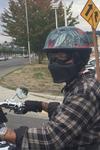







 My Guardian Angel....