


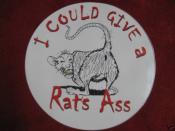
 Freedom of choice people, freedom of choice. Government regulation is worst answer to any question.


"novelty helmets riskier for bikers" news article so cal

Thread Starter
|
Ultimate HDF Member
Joined: Mar 2007
Posts: 7,465
Likes: 15
From: Corona, Ca
 "novelty helmets riskier for bikers" news article so cal
http://www.pe.com/localnews/inland/s...4.2a2c453.html
NEWS ARTICLE
A month ago, a motorcyclist braked and skidded when Interstate 10 traffic suddenly stopped in front of him. The rider's face -- unprotected by a turtle-shell helmet -- hit the concrete. He died at the scene.
Authorities can't say whether the novelty helmet was to blame for 49-year-old Jamie Dodge's death on a stretch of freeway in Banning. But they warn of the dangers of helmets that aren't federally certified like the one worn by the Cathedral City man.
Despite the risks, many bikers shun approved helmets because they're too heavy, block their vision or make it harder to hear approaching vehicles. They prefer smaller, lighter helmets that don't cover the entire face and say they should be legal. Law officers and others say these helmets should be kept off the roads and see no reason for motorcyclists to expose themselves to greater danger by not choosing a full-face helmet.
"I always rode without a helmet until the law started," said Norman Fernandez, a biker and attorney who practices in Riverside. "Sure, the law is there to protect you, but it comes down to freedom of choice."
When a bill mandating helmet use was introduced in California in the early 1970s, Fernandez, 47, who lives in the High Desert near San Bernardino County, said many bikers turned to novelty helmets to bypass the law.
Today, nearly 10 percent of all helmets worn in the state are not certified by the U.S. Department of Transportation, according to the National Highway Traffic Safety Administration. But bikers can only be cited if their helmet has a fake department-approval sticker or if they are not wearing one at all, California Highway Patrol Lt. Mike Soubirous said.
Story continues below
Click to enlarge
After officers began citing for the illegal helmets, a federal ruling said there was no way to prove that buyers knew the gear was unsafe, he said.
"So the law is practically unenforceable," Soubirous said. "But, we often see the negative result of the choice to ride with only a half-shell on."
Novelty helmets often resemble a military helmet and don't extend low enough to protect the face. They also lack an inner lining and strong rivets. Safety-approved helmets -- designated by an official sticker on the back -- feature a hard outer shell, more inside lining, a face shield and a chin protector.
Data inconclusive
Though the latest National Highway Traffic and Safety Administration research shows that California has the highest per capita rate of motorcyclists killed nationwide, that doesn't necessarily mean illegal helmets are to blame, CHP spokeswoman Jamie Coffee said.
The data show that 560 people died as a result of motorcycle accidents in California in 2008, the most recent statistics available. Still, statistics don't specify the type of helmet worn in each case, she said.
Loma Linda University Medical Center neurologist Dr. Sarah Uffindell said a legal helmet offers a certain level of protection to the skull, but no helmet can protect the brain inside the skull. Injuries can still occur as the brain reverberates back and forth inside the skull.
"We know that even if your head doesn't hit anything, rapid deceleration or acceleration can cause the different densities in the brain to slow down at different rates," she said. "Because different tissues are slowing down at different rates, there's only so much stretch your brain can withstand before tearing or shearing as fibers rip apart from each other."
A biker can suffer traumatic brain injury even if there is no skull injury. But there is not enough data to say whether more people survive injuries better with either type of helmet, Uffindell said. Still, helmets with more insulation may help people with less severe injuries and protect them from dying, she said.
Tony Jaime, executive director of ABATE, a statewide motorcyclist advocacy group with local chapters in Riverside, San Bernardino, Hemet and Banning, said the issue isn't the helmet but government's intrusion into how bikers dress.
"We advocate freedom of choice," he said. "We're not discouraging people from wearing helmets, but they give people a false sense of security. While it may not be very wise to go without one, it certainly encourages people to get rider training."
The group has lobbied for bills that would end the helmet requirement and contended that the department's testing standards are not very high. The group suggests that riders concentrate on maintaining their riding skills and update them every three to five years, Jaime said.
"If you're going to ride, you're very vulnerable and unprotected anyways," Jaime said. "No, skills alone won't prevent an accident, but we staunchly believe that rider training can better help riders avoid crashes."
Safety vs. choice
Most motorcyclists know that novelty helmets are illegal and unsafe but choose to wear them anyway, said Hong Zhang, director of education at Snell Memorial Foundation, a Sacramento-based nonprofit organization that independently tests helmet safety and posts the results online.
Snell certifies more than 3,500 helmets, conducting face shield, chin strap as well as nine different impact tests. Only those helmets that pass every test will be certified, Zhang said.
While it is not illegal to sell novelty helmets, most motorcycle shops don't want the liability, said Renegade Classics Riverside outlet store owner Cory Miller, who sells several models of novelty helmets.
Miller said he makes sure people know when they buy a uncertified helmet that they shouldn't use it as protective gear.
"Bikers continually choose to wear them because they like the better hearing ability, lightweight feel and less wind resistance," he said. "The other big part is because they can simply get away with it."
The appeal of uncertified helmets can be strong.
Biker lawyer Fernandez, a University of La Verne graduate, said he realized the value a helmet can hold when he was a kid.
When he first rode a bicycle, at 5 years old, he fell off his bike onto the driveway. He credits the helmet for sparing him from injury.
As an adult, he likes to choose between both types of helmets because risk goes hand-in-hand with riding a motorcycle.
"As a biker, it's not if you're going to go down, it's when," he said. "So I'm all for helmets, but you should be able to do what you want."
Reach Allison McKinnon at amckinnon@PE.com
NEWS ARTICLE
A month ago, a motorcyclist braked and skidded when Interstate 10 traffic suddenly stopped in front of him. The rider's face -- unprotected by a turtle-shell helmet -- hit the concrete. He died at the scene.
Authorities can't say whether the novelty helmet was to blame for 49-year-old Jamie Dodge's death on a stretch of freeway in Banning. But they warn of the dangers of helmets that aren't federally certified like the one worn by the Cathedral City man.
Despite the risks, many bikers shun approved helmets because they're too heavy, block their vision or make it harder to hear approaching vehicles. They prefer smaller, lighter helmets that don't cover the entire face and say they should be legal. Law officers and others say these helmets should be kept off the roads and see no reason for motorcyclists to expose themselves to greater danger by not choosing a full-face helmet.
"I always rode without a helmet until the law started," said Norman Fernandez, a biker and attorney who practices in Riverside. "Sure, the law is there to protect you, but it comes down to freedom of choice."
When a bill mandating helmet use was introduced in California in the early 1970s, Fernandez, 47, who lives in the High Desert near San Bernardino County, said many bikers turned to novelty helmets to bypass the law.
Today, nearly 10 percent of all helmets worn in the state are not certified by the U.S. Department of Transportation, according to the National Highway Traffic Safety Administration. But bikers can only be cited if their helmet has a fake department-approval sticker or if they are not wearing one at all, California Highway Patrol Lt. Mike Soubirous said.
Story continues below
Click to enlarge
After officers began citing for the illegal helmets, a federal ruling said there was no way to prove that buyers knew the gear was unsafe, he said.
"So the law is practically unenforceable," Soubirous said. "But, we often see the negative result of the choice to ride with only a half-shell on."
Novelty helmets often resemble a military helmet and don't extend low enough to protect the face. They also lack an inner lining and strong rivets. Safety-approved helmets -- designated by an official sticker on the back -- feature a hard outer shell, more inside lining, a face shield and a chin protector.
Data inconclusive
Though the latest National Highway Traffic and Safety Administration research shows that California has the highest per capita rate of motorcyclists killed nationwide, that doesn't necessarily mean illegal helmets are to blame, CHP spokeswoman Jamie Coffee said.
The data show that 560 people died as a result of motorcycle accidents in California in 2008, the most recent statistics available. Still, statistics don't specify the type of helmet worn in each case, she said.
Loma Linda University Medical Center neurologist Dr. Sarah Uffindell said a legal helmet offers a certain level of protection to the skull, but no helmet can protect the brain inside the skull. Injuries can still occur as the brain reverberates back and forth inside the skull.
"We know that even if your head doesn't hit anything, rapid deceleration or acceleration can cause the different densities in the brain to slow down at different rates," she said. "Because different tissues are slowing down at different rates, there's only so much stretch your brain can withstand before tearing or shearing as fibers rip apart from each other."
A biker can suffer traumatic brain injury even if there is no skull injury. But there is not enough data to say whether more people survive injuries better with either type of helmet, Uffindell said. Still, helmets with more insulation may help people with less severe injuries and protect them from dying, she said.
Tony Jaime, executive director of ABATE, a statewide motorcyclist advocacy group with local chapters in Riverside, San Bernardino, Hemet and Banning, said the issue isn't the helmet but government's intrusion into how bikers dress.
"We advocate freedom of choice," he said. "We're not discouraging people from wearing helmets, but they give people a false sense of security. While it may not be very wise to go without one, it certainly encourages people to get rider training."
The group has lobbied for bills that would end the helmet requirement and contended that the department's testing standards are not very high. The group suggests that riders concentrate on maintaining their riding skills and update them every three to five years, Jaime said.
"If you're going to ride, you're very vulnerable and unprotected anyways," Jaime said. "No, skills alone won't prevent an accident, but we staunchly believe that rider training can better help riders avoid crashes."
Safety vs. choice
Most motorcyclists know that novelty helmets are illegal and unsafe but choose to wear them anyway, said Hong Zhang, director of education at Snell Memorial Foundation, a Sacramento-based nonprofit organization that independently tests helmet safety and posts the results online.
Snell certifies more than 3,500 helmets, conducting face shield, chin strap as well as nine different impact tests. Only those helmets that pass every test will be certified, Zhang said.
While it is not illegal to sell novelty helmets, most motorcycle shops don't want the liability, said Renegade Classics Riverside outlet store owner Cory Miller, who sells several models of novelty helmets.
Miller said he makes sure people know when they buy a uncertified helmet that they shouldn't use it as protective gear.
"Bikers continually choose to wear them because they like the better hearing ability, lightweight feel and less wind resistance," he said. "The other big part is because they can simply get away with it."
The appeal of uncertified helmets can be strong.
Biker lawyer Fernandez, a University of La Verne graduate, said he realized the value a helmet can hold when he was a kid.
When he first rode a bicycle, at 5 years old, he fell off his bike onto the driveway. He credits the helmet for sparing him from injury.
As an adult, he likes to choose between both types of helmets because risk goes hand-in-hand with riding a motorcycle.
"As a biker, it's not if you're going to go down, it's when," he said. "So I'm all for helmets, but you should be able to do what you want."
Reach Allison McKinnon at amckinnon@PE.com

Road Warrior
Joined: Sep 2008
Posts: 1,858
Likes: 0
From: Phoenix, AZ
If I don't wear a helmet someone will tell me to wear one.
If I wear a novelty, someone will tell me to wear a DOT
If I wear a DOT someone will tell me to wear a full face
If I wear a full face someone will tell me motorcycles are death traps.
There is always a freakin' idiot out there that feels the need to tell me what to do.
Guess what! I also RUN WITH SCISSORS!!
If I wear a novelty, someone will tell me to wear a DOT
If I wear a DOT someone will tell me to wear a full face
If I wear a full face someone will tell me motorcycles are death traps.
There is always a freakin' idiot out there that feels the need to tell me what to do.
Guess what! I also RUN WITH SCISSORS!!
Thread Starter
|
Ultimate HDF Member
Joined: Mar 2007
Posts: 7,465
Likes: 15
From: Corona, Ca
if i don't wear a helmet someone will tell me to wear one.
If i wear a novelty, someone will tell me to wear a dot
if i wear a dot someone will tell me to wear a full face
if i wear a full face someone will tell me motorcycles are death traps.
There is always a freakin' idiot out there that feels the need to tell me what to do.
guess what! I also run with scissors!!
If i wear a novelty, someone will tell me to wear a dot
if i wear a dot someone will tell me to wear a full face
if i wear a full face someone will tell me motorcycles are death traps.
There is always a freakin' idiot out there that feels the need to tell me what to do.
guess what! I also run with scissors!!
Trending Topics

Road Master
Joined: Aug 2009
Posts: 868
Likes: 4
From: Warwick, RI
HD Forum Stories
The Best of Harley-Davidson for Lifelong Riders

8 Best Harley-Davidson Motorcycles Ever
Pouria Savadkouei
10 Worst Harley-Davidson Motorcycles Ever
Pouria Savadkouei
Killer Custom's Jail Break Is The Breakout That Refused to Blend In
Verdad Gallardo
Crazy Bunderbike Build Looks Amazing, But Is It Impossible to Ride?
Verdad Gallardo
Harley-Davidson Reveals Super Cool Cafe Racer Concept
Verdad Gallardo
Engraved Rebellion: Inside Bundnerbike's Glam Rock II
Verdad Gallardo
10 Motorcycles You Should Never Buy
Joe Kucinski
10 Things Harley-Davidson Needs to Fix in 2026
Verdad Gallardo
Southpaw Super Glide: A Left-Hand-Drive 1979 Harley FXE Built to Fit the Rider
Verdad Gallardo
Cruiser
Joined: Apr 2008
Posts: 238
Likes: 18
From: Canada
I was thinking the same thing. Personally, I use either a half-helmet or sometimes a 3/4 helmet, and BOTH are DOT approved. 3 years ago, I actually "road tested" a half-helmet, crashing my head onto the pavement after a deer ran into me. (It worked... I'm still here!) So there are legitimate helmets which are not full-faced.