


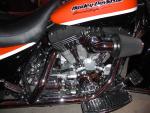



99 RK timing issue

Thread Starter
|
Cruiser
Joined: Dec 2007
Posts: 140
Likes: 6
From: Lake Jackson TX.
 99 RK timing issue
I have a 99 RK with 43k miles. Bike runs great but at a low speed cruise, it has a bit of a spit back through that intake. I'm told this is one of the first style FI. and this is a timing issue. I gutted the stock pipes and I can smell it running just a touch rich, which I don't mind because they run a bit lean from the factory. Anyway, I'm told this is a timing issue with these earlier ignition. Is this true and can anyone direct me where to find a procedure to set the timing. I have build cars and trucks all my life, but bikes seen a bit different

Seasoned HDF Member


Joined: Mar 2010
Posts: 38,595
Likes: 6,435
From: Honah Lee
Be sure to check the MM fuel injection to make sure the settings are correct. It's like a crude computer controlled card and works great when correct and is completely adjusted and set with a volt/ohm resistance meter and a vacuum pump. Good on youtube setup for it.
I am looking your ignition setup for your 99 in a service manual. Make sure the vacuum control is on there and the line is good condition. That controls the ignition at cruise. Ed below is right. The VOS is only on carb models.
I am looking your ignition setup for your 99 in a service manual. Make sure the vacuum control is on there and the line is good condition. That controls the ignition at cruise. Ed below is right. The VOS is only on carb models.
Last edited by Jackie Paper; Mar 25, 2018 at 09:56 AM.
Jeff - timing is not adjustable on Twin Cam unless you have an aftermarket ignition module or tuner.
If the bike carbureted or fuel injected? The post above starts off talking about EFI then references a carbureted EVO VOEs system which a Twin Cam does not have.
Carbureted Twin Cams run a manifold pressure sensor to tell the ignition module the engine load.
If the bike carbureted or fuel injected? The post above starts off talking about EFI then references a carbureted EVO VOEs system which a Twin Cam does not have.
Carbureted Twin Cams run a manifold pressure sensor to tell the ignition module the engine load.
Thread Starter
|
Cruiser
Joined: Dec 2007
Posts: 140
Likes: 6
From: Lake Jackson TX.
It's FUEL INJECTION. How does it reference a EVO.....pardon my brash, but you lost me on saying it referenced an EVO... It's a TC 88
Last edited by Jeff Dodson; Mar 25, 2018 at 08:39 PM.
The EVO comment was referring to the post talking about vacuum lines where this was stated "Make sure the vacuum control is on there and the line is good condition. That controls the ignition at cruise" which Ripsaw went back and stated I was correct. Thanks Ripsaw. I was hoping to catch you before you went looking for vacuum lines.
I stated that TCs dont have that -EVOs do and it goes to a VOEs sensor. As I stated, TC uses a MAP sensor.
So - unless you have a tuner or Power Commander - no - you can't adjust the timing. However, with Marellis, timing isn't the cause of your spitting.
Last edited by Ed Ramberger; Mar 25, 2018 at 09:16 PM.
Fair enough - I've been getting fed up with the forums lately because many people are just rude so I took it a little too seriously.
On a MM, I would check the following:
Intake leak - very common. A LITTLE carb cleaner at the seals will tell you right away - don't spray so much that it gets sucked back into the intake - use the extension tube and little squirts around the manifold where it attaches to the head.
If the spitting started after you removed the baffles, it's actually a little lean at idle and an adjustment to the base TP usually clears it up. With the hot and cold idle screws backed out, a TC likes .195v. Some manuals state .225v but that was a misprint and pertains to EVO MM.
Look to see if someone picked the epoxy out of the air bleed screws in the intake - those should factory sealed and be left alone.
TP sensors on the early ones also occasionally go bad but you can easily check that by back probing the sensor and checking it through it's sweep with a voltmeter.
If you do adjust the TP or base idle screw up, you will have to go through the idle relearn process - it is easy and I can help you through that much easier than the manual.
Also, check the nut on the bell crank of the throttle body - they get loose and actually sometimes come off.
If the bike is really spitting at speed, I would recommend a fuel pressure test done under load (WOT while riding or on a dyno - not at idle) A TP adjustment won't really help with one spitting at light cruise speed but an intake leak could do that.
With that mileage you're going to be due for a fuel filter as well.
On a MM, I would check the following:
Intake leak - very common. A LITTLE carb cleaner at the seals will tell you right away - don't spray so much that it gets sucked back into the intake - use the extension tube and little squirts around the manifold where it attaches to the head.
If the spitting started after you removed the baffles, it's actually a little lean at idle and an adjustment to the base TP usually clears it up. With the hot and cold idle screws backed out, a TC likes .195v. Some manuals state .225v but that was a misprint and pertains to EVO MM.
Look to see if someone picked the epoxy out of the air bleed screws in the intake - those should factory sealed and be left alone.
TP sensors on the early ones also occasionally go bad but you can easily check that by back probing the sensor and checking it through it's sweep with a voltmeter.
If you do adjust the TP or base idle screw up, you will have to go through the idle relearn process - it is easy and I can help you through that much easier than the manual.
Also, check the nut on the bell crank of the throttle body - they get loose and actually sometimes come off.
If the bike is really spitting at speed, I would recommend a fuel pressure test done under load (WOT while riding or on a dyno - not at idle) A TP adjustment won't really help with one spitting at light cruise speed but an intake leak could do that.
With that mileage you're going to be due for a fuel filter as well.
Last edited by Ed Ramberger; Mar 25, 2018 at 09:34 PM.
Trending Topics
Thread Starter
|
Cruiser
Joined: Dec 2007
Posts: 140
Likes: 6
From: Lake Jackson TX.
Ok.... I'm going to toy around with it tomorrow. Hope I don't screw anything up.... bikes are definitely different from cars
HD Forum Stories
The Best of Harley-Davidson for Lifelong Riders

7 Surprising Harley-Davidson Products that Are Not Motorcycles
Verdad Gallardo
8 Best Harley-Davidson Motorcycles Ever
Pouria Savadkouei
10 Worst Harley-Davidson Motorcycles Ever
Pouria Savadkouei
Killer Custom's Jail Break Is The Breakout That Refused to Blend In
Verdad Gallardo
Crazy Bunderbike Build Looks Amazing, But Is It Impossible to Ride?
Verdad Gallardo
Harley-Davidson Reveals Super Cool Cafe Racer Concept
Verdad Gallardo
Engraved Rebellion: Inside Bundnerbike's Glam Rock II
Verdad Gallardo
10 Motorcycles You Should Never Buy
Joe Kucinski
10 Things Harley-Davidson Needs to Fix in 2026
Verdad Gallardo
Thread Starter
|
Cruiser
Joined: Dec 2007
Posts: 140
Likes: 6
From: Lake Jackson TX.
Oh yea and the spitting, it's always done it. In fact, I put new plugs in it and gutting the mufflers actually lessened the spitting. It's very minor now but still a bit irritating.
where would the fuel filter be. I was under the impression there was just a screen inside the tank
where would the fuel filter be. I was under the impression there was just a screen inside the tank
Oh yea and the spitting, it's always done it. In fact, I put new plugs in it and gutting the mufflers actually lessened the spitting. It's very minor now but still a bit irritating.
where would the fuel filter be. I was under the impression there was just a screen inside the tank
where would the fuel filter be. I was under the impression there was just a screen inside the tank
Do you know if the bike is stock - it really helps to know what we are starting with.