When you click on links to various merchants on this site and make a purchase, this can result in this site earning a commission. Affiliate programs and affiliations include, but are not limited to, the eBay Partner Network.
I suspect that if the ignition fires where the marks line up you are likely way too advanced. On a centrifugal advance mech you need to rotate to full advance while aligning the marks.. If setting the ignition with the ignition not advanced, the marks should line up when the T for front is in the righthand side of the window.. That's where I've been setting it statically on my 65 pan..
I don't know jack about the ignition but if it's single fire you may have the plug wires crossed.
I suspect that if the ignition fires where the marks line up you are likely way too advanced. On a centrifugal advance mech you need to rotate to full advance while aligning the marks.. If setting the ignition with the ignition not advanced, the marks should line up when the T for front is in the righthand side of the window.. That's where I've been setting it statically on my 65 pan..
I don't know jack about the ignition but if it's single fire you may have the plug wires crossed.
Oh, my goodness… what a dummy I am…
So, I should be gently turning the rotor against the springs before lining up the marks? I just checked and indeed the rotor will turn, stretching its springs, clockwise a few degrees before snapping back smartly if I let go.
If so, then I didn’t understand his instructions. He shows the marks lined up in a photo in step 11… but there are no fingers holding the rotor against the spring tension. So, I had assumed by ‘align the marks in the advanced position’ that he meant the flywheel had to be in the advanced position—or with the timing mark showing in the hole per the manual—before aligning the marks on the rotor and sensor.
To be fair to me, a better technical writer would have written (for an auto-advance dizzy—which is the kit I bought from him):
“After positioning the flywheel timing mark per the manual for your year model, turn the distributor rotor against the spring tension to its full advance position—or clockwise as looking down at the distributor. Now, rotate the distributor body to align the white marks on the rotor and sensor. Release the rotor without moving the distributor body, and tighten the distributor adjustment bolt.”
The writer would also have shown fingers holding rotor in the photo…
About to head out to the shop to stop the overflow issue on the Super E, and then adjust the timing: #1 on compression stroke > position flywheel mark in R/H edge of window > turn auto-advance rotor clockwise fully and hold > turn dizzy to align white marks on rotor and sensor > release rotor and tighten dizzy body.
However, just got a call from owner of Right Side Electric Start owner, Russ, who told me that his setup is easily converted to hydraulic (he just never got around to it). 1-3/8” internal slave working with 5/8” master—which I believe is what I’ve got operating my El Cheapo hydraulic kicker cover now.
It could be that with the timing not excessively advanced (for goodness sake), I won’t be tempted by the prospect of an e-start as I approach my ‘70s. But it’s nice to know that the option is available—and my next-door machinist could easily turn the required steel sleeve to press into the well where the RSES ball-and-ramp clutch actuation presently resides, and net the 1-3/8” bore for the slave piston.
Best of all, with hydraulic slave, one isn’t limited to a 2-into-1 exhaust due to the clutch cable emerging from the cover…
Yup, that was it—excessive advance. She started on the second kick, no kicking back. Here is what the photo accompanying Step 11 in the E-Beyond instructions should show…. Instead, it shows the marks just magically lined up with I guess an invisible hand overcoming the advance springs…
Anyway, this afternoon I followed the S&S new engine procedure to bed in the rings—or begin that process. Four cycles of steadily increasing temps, 150, 160, 170, and 180~85, each time letting her cool down to room (garage) temperature in between (I eventually put a fan on the engine to speed that up).
Zero oil leaks, good pressure, no wet-sumping—just a little burp of excess presumably from when I coated the bottom end bearings, and pressurized the rockers briefly using my hand-lever oil can inserted into the fittings on the heads before installing the lines. But most of it was scavenged back into the tank.
Engine has an occasional miss on the front cylinder, so when it cools down I’ll tighten the rubber bands at the manifold, snug the carb-to-manifold bolts, double-check the valve adjustment and scrutinize the plugs. They aren’t new but looked fine, so I used ‘em. Perhaps I should spring for a set of new plugs…
Tomorrow, I’ll do the next prescribed stage: a 50-mile jaunt (or various runs amounting to 50 miles), varying the speed and remaining under 60 mph, no lugging, no extended stop-n-go, no WOT, keeping rpms under 2,500 (have to be by ear as I have no tach). Basically, just up and down the two-lane blacktop and frontage roads near my place.
Then they want you to change the oil at 50 miles, drive modestly for another 500 miles, then operate normally—but without hammering it, or dyno runs, sidecars, etc. for the balance of 1,000. So, three oil changes at 50, 500, and 1,000.
Anyone have different experience with ring break-in procedure?
Finally: I finally found a solution I like to the kicker pedal vibrating out to the side. I used a ‘wave’ washer, and that seems to provide a nice, adjustable amount of friction to balance easy deployment and staying put. But I guess we’ll see tomorrow!
Last edited by NM Pan-shovel; Apr 28, 2025 at 07:03 PM.
Big yes on the wavy washer, even if you have to persuade it a bit going in. Little use they settle down. Killing me with that 62 dilemma, I should those problems.
Big yes on the wavy washer, even if you have to persuade it a bit going in. Little use they settle down. Killing me with that 62 dilemma, I should those problems.
Cool, glad to hear the wavy washer is the way to go.
Yeah, we’ll see whether I end up on the horns of a dilemma re: the El Paso Pan. It’s always possibly that the widow changes her mind if she gets wind that the bike’s really for me and not my neighbor, and lists it for auction. Ultimately, I’ve got the ’51 and if I wanted to revert to OEM configuration could do that—and it’s a sweet ride as is.
Here is how the plugs look at the end of the fourth ring bedding heat cycle. Not too bad.
This morning, I snugged the T-bolt clamps on the O-ring eliminator kit—which seems to be sealing well—and the carb-to-manifold allen screws. Double-checked the valve adjustments, seem fine. I hadn’t touched the idle adjustments when rebuilding the Super E, and it was idling fine during the last heat cycle, which you’re supposed to gently vary rpms from idle to 2,500.
TwiZted: when I was talking to Russ about the RSES setup, which is easily converted to hydraulic to avoid the cable from the ball-and-ramp fouling my upper/rear pipe, I confirmed what he said in one of the installation videos on his website. That is, the sole complaint he’s gotten is people say the ball-and-ramp clutch release leaves their clutches not quite fully released and creeping at stop lights.
In addition to eliminating a not-flat pressure plate, he notes that contrary to what is all over the web, with these caged, pancake-style throwout bearings, all that’s needed is ~.007” freeplay at the rod’s adjustment end to avoid damaging them. So, he says on his video that gently bottoming out the screw—which is 3/8-24 pitch—then backing out one flat yields right around .007” freeplay. Indeed, I had been setting my adjustment closer to 1/4 turn on the screw with the Speed Dealer hydro kicker cover.
I do appear to be getting ~.060” movement now, so am hoping when I go for my first ride today or tomorrow, that I will find the clutch creep I was complaining about was simply the result of too loose a freeplay adjustment. I didn’t realize the difference between 1/4 turn and one flat would make that kind of difference—but we’ll see…
Last point re; the RSES. I mentioned that Russ recommends a 5/8” master and mine is 11/16”. If I remember correctly, a smaller master yields lower effort but the lever has to travel farther to net [x] movement at the slave. So, my 11/16” master would work fine, and the effort is so low right now that I’m doubting I’d find a small increase from the 1/16” difference in the master to be an issue… that is, if I buy one of his units to have on the shelf for when I’m too old to kick over a 74” motor…
No. 1 cylinder
no 2 cylinder
Last edited by NM Pan-shovel; Apr 29, 2025 at 01:42 PM.
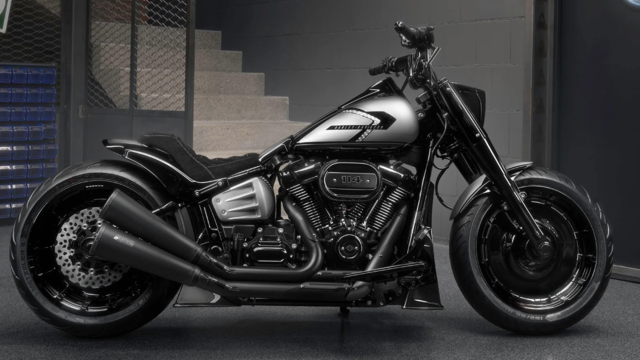
Harley-Davidson Fat Boy Becomes a Dark, Decepticon-Inspired Custom
Slideshow: Killer Custom's latest build relies on styling changes rather than performance upgrades, giving the cruiser an entirely different personality.
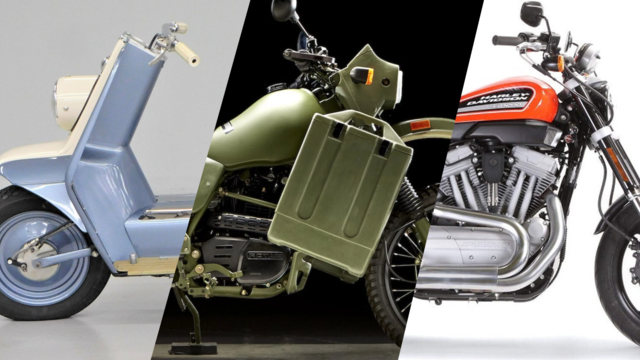
7 Surprising Harley-Davidson Products that Are Not Motorcycles
Slideshow: The bar-and-shield logo shows up on far more than motorcycles, some of the company's most unexpected products have nothing to do with riding.
Slideshow: From the troubled AMF years to modern misfires, these bikes earned reputations for reliability issues, questionable engineering, or disappointing performance.
Crazy Bunderbike Build Looks Amazing, But Is It Impossible to Ride?
Slideshow: The Swiss custom shop has taken a Harley Softail and stretched it into something so long and low that it looks closer to a rolling sculpture than a conventional motorcycle.
Engraved Rebellion: Inside Bundnerbike's Glam Rock II
Slideshow: A standard cruiser becomes an intricate metal canvas in the hands of a Swiss custom house known for pushing Harley-Davidson platforms far beyond their factory brief.