







New 1970

Thread Starter
|
Novice
Joined: Sep 2018
Posts: 16
Likes: 2
From: connecticut
 New 1970
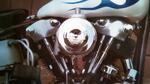
Hello all looking for tips. This Wednesday I go to see and if right pick up a 1970 FLH that has been through a ground up restoration. It is a matching numbers bike. What things should I look for to ensure authenticity?
Thanks Denis
Thanks Denis
Grand HDF Member
Joined: Dec 2014
Posts: 4,890
Likes: 553
From: USA
The most important factor is authenticating your VIN numbers. Your frame and engine must match exactly, no exceptions. VIN for a 1970 FLH starts with 2A = FLH 1200, ends with H0 = 1970, and has a production number 10000+ If the VINs do not match exactly, game over. Parts can be replaced but no wiggle room on your matching numbers....and those matching numbers must match the registration/title.
The only legal VIN on Harleys after 1970 is on the frame, no exceptions...it is the law. For my 1971 FLH, my frame VIN starts with 2A, ends with H1, and has a production number 10000+...However, my engine does not match the frame since I have a stroker, but my legal VIN is on the frame and matches my registration/title. No longer original but still legal.
If you pick up the bike, post some pics on here and the forum experts will pick it apart....in a good way.
The only legal VIN on Harleys after 1970 is on the frame, no exceptions...it is the law. For my 1971 FLH, my frame VIN starts with 2A, ends with H1, and has a production number 10000+...However, my engine does not match the frame since I have a stroker, but my legal VIN is on the frame and matches my registration/title. No longer original but still legal.
If you pick up the bike, post some pics on here and the forum experts will pick it apart....in a good way.
Last edited by hscic; Jun 23, 2019 at 05:36 AM.
Seasoned HDF Member


Joined: Jul 2014
Posts: 8,606
Likes: 3,375
From: Cental, MI
Some strange logic right there... since the last generator Bottom big twin was 1969... and 1970 was the first year Cone Bottom...
Such logic requires an explaination to me anyway..
If the reference is to AMF??? it was actually 1968... the engine changed in 1969 in a few small ways..
And... it is accepted knowledge that AMF Saved H-D...I am Proud of the AMF Logo on my '74 - 74"
Such logic requires an explaination to me anyway..
If the reference is to AMF??? it was actually 1968... the engine changed in 1969 in a few small ways..
And... it is accepted knowledge that AMF Saved H-D...I am Proud of the AMF Logo on my '74 - 74"
Last edited by Racepres; Jun 23, 2019 at 07:06 AM.
Seasoned HDF Member


Joined: Oct 2005
Posts: 7,499
Likes: 3,717
From: Santa Klaus County, Cali
Subdenis ...in some states both motor and frame vin must match in order for it to avoid being considered a ‘special construction bike.
Also a ground up restoration can carry several different connotations for different people. Sometimes it means correctly restored as it would come from the factory; sometimes it means someone took the bike and turned it into a chrome *****.
The term “restoration” is probably one of the most overused words and often incorrectly applied to older bikes that have been brought back to life.
As stated a correct VIN is most important and would be a deal breaker if not correct.
The next big thing to me is how the bike was brought back to life and by whom. You want to see receipts for the work done and have the seller point you to who did the work and upgrades (if any). I am not inclined to take someone’s word that engine, tranny, or electrical work was done if there is nothing to back the claims up.
You want to see how the bike does on a “cold” start. Only way to do that is to check the heads. If the owner ran the bike before you got there you have no way of knowing if it took him 3 minutes or 3 hours to get it running.
Take a walk around the bike and take a look at the bike in general. Look at fasteners, nuts and bolts. Anything loose or appear as though someone took a monkey wrench to the part? Look for any electrical wiring that appears as though it was assembled by a first grader. What is the condition of the paint and chrome?
Have the owner start it, ride it up and down the bock and have him apply the brakes (front and rear seperately). Stock brakes weren’t the best back then but the front end shouldn’t take a dive on you.
Do all the electrical components function properly...head lights, tail lights, brake lights, turn signals and idiot dash lights.
You might search for pics of stock 1070 FLH bikes on the web so you have a general idea of what a factory bike would look like.
Old iron takes more “routine” maintenance than the new stuff out there today. Do you the skill set to do the maintenance? Farming the work out to an indie can get costly real fast.
Also a ground up restoration can carry several different connotations for different people. Sometimes it means correctly restored as it would come from the factory; sometimes it means someone took the bike and turned it into a chrome *****.
The term “restoration” is probably one of the most overused words and often incorrectly applied to older bikes that have been brought back to life.
As stated a correct VIN is most important and would be a deal breaker if not correct.
The next big thing to me is how the bike was brought back to life and by whom. You want to see receipts for the work done and have the seller point you to who did the work and upgrades (if any). I am not inclined to take someone’s word that engine, tranny, or electrical work was done if there is nothing to back the claims up.
You want to see how the bike does on a “cold” start. Only way to do that is to check the heads. If the owner ran the bike before you got there you have no way of knowing if it took him 3 minutes or 3 hours to get it running.
Take a walk around the bike and take a look at the bike in general. Look at fasteners, nuts and bolts. Anything loose or appear as though someone took a monkey wrench to the part? Look for any electrical wiring that appears as though it was assembled by a first grader. What is the condition of the paint and chrome?
Have the owner start it, ride it up and down the bock and have him apply the brakes (front and rear seperately). Stock brakes weren’t the best back then but the front end shouldn’t take a dive on you.
Do all the electrical components function properly...head lights, tail lights, brake lights, turn signals and idiot dash lights.
You might search for pics of stock 1070 FLH bikes on the web so you have a general idea of what a factory bike would look like.
Old iron takes more “routine” maintenance than the new stuff out there today. Do you the skill set to do the maintenance? Farming the work out to an indie can get costly real fast.
Last edited by panz4ever; Jun 23, 2019 at 11:14 AM.
Thread Starter
|
Novice
Joined: Sep 2018
Posts: 16
Likes: 2
From: connecticut
Thanks. Engine rebuilt, transmission rebuilt and all parts, cleaned, polished or replaced. Good tips in your post thanks, Dneis
Trending Topics
Grand HDF Member
Joined: Dec 2014
Posts: 4,890
Likes: 553
From: USA
I think you are already missing a number lol
HD Forum Stories
The Best of Harley-Davidson for Lifelong Riders

7 Surprising Harley-Davidson Products that Are Not Motorcycles
Verdad Gallardo
8 Best Harley-Davidson Motorcycles Ever
Pouria Savadkouei
10 Worst Harley-Davidson Motorcycles Ever
Pouria Savadkouei
Killer Custom's Jail Break Is The Breakout That Refused to Blend In
Verdad Gallardo
Crazy Bunderbike Build Looks Amazing, But Is It Impossible to Ride?
Verdad Gallardo
Harley-Davidson Reveals Super Cool Cafe Racer Concept
Verdad Gallardo
Engraved Rebellion: Inside Bundnerbike's Glam Rock II
Verdad Gallardo
10 Motorcycles You Should Never Buy
Joe Kucinski
10 Things Harley-Davidson Needs to Fix in 2026
Verdad Gallardo
Stellar HDF Member
Joined: Jan 2013
Posts: 2,747
Likes: 419
From: Vermont
Subdenis ...in some states both motor and frame vin must match in order for it to avoid being considered a ‘special construction bike.
Also a ground up restoration can carry several different connotations for different people. Sometimes it means correctly restored as it would come from the factory; sometimes it means someone took the bike and turned it into a chrome *****.
The term “restoration” is probably one of the most overused words and often incorrectly applied to older bikes that have been brought back to life.
As stated a correct VIN is most important and would be a deal breaker if not correct.
The next big thing to me is how the bike was brought back to life and by whom. You want to see receipts for the work done and have the seller point you to who did the work and upgrades (if any). I am not inclined to take someone’s word that engine, tranny, or electrical work was done if there is nothing to back the claims up.
You want to see how the bike does on a “cold” start. Only way to do that is to check the heads. If the owner ran the bike before you got there you have no way of knowing if it took him 3 minutes or 3 hours to get it running.
Take a walk around the bike and take a look at the bike in general. Look at fasteners, nuts and bolts. Anything loose or appear as though someone took a monkey wrench to the part? Look for any electrical wiring that appears as though it was assembled by a first grader. What is the condition of the paint and chrome?
Have the owner start it, ride it up and down the bock and have him apply the brakes (front and rear seperately). Stock brakes weren’t the best back then but the front end shouldn’t take a dive on you.
Do all the electrical components function properly...head lights, tail lights, brake lights, turn signals and idiot dash lights.
You might search for pics of stock 1070 FLH bikes on the web so you have a general idea of what a factory bike would look like.
Old iron takes more “routine” maintenance than the new stuff out there today. Do you the skill set to do the maintenance? Farming the work out to an indie can get costly real fast.
Also a ground up restoration can carry several different connotations for different people. Sometimes it means correctly restored as it would come from the factory; sometimes it means someone took the bike and turned it into a chrome *****.
The term “restoration” is probably one of the most overused words and often incorrectly applied to older bikes that have been brought back to life.
As stated a correct VIN is most important and would be a deal breaker if not correct.
The next big thing to me is how the bike was brought back to life and by whom. You want to see receipts for the work done and have the seller point you to who did the work and upgrades (if any). I am not inclined to take someone’s word that engine, tranny, or electrical work was done if there is nothing to back the claims up.
You want to see how the bike does on a “cold” start. Only way to do that is to check the heads. If the owner ran the bike before you got there you have no way of knowing if it took him 3 minutes or 3 hours to get it running.
Take a walk around the bike and take a look at the bike in general. Look at fasteners, nuts and bolts. Anything loose or appear as though someone took a monkey wrench to the part? Look for any electrical wiring that appears as though it was assembled by a first grader. What is the condition of the paint and chrome?
Have the owner start it, ride it up and down the bock and have him apply the brakes (front and rear seperately). Stock brakes weren’t the best back then but the front end shouldn’t take a dive on you.
Do all the electrical components function properly...head lights, tail lights, brake lights, turn signals and idiot dash lights.
You might search for pics of stock 1070 FLH bikes on the web so you have a general idea of what a factory bike would look like.
Old iron takes more “routine” maintenance than the new stuff out there today. Do you the skill set to do the maintenance? Farming the work out to an indie can get costly real fast.
But most advertisered restorations around these parts are just fluff and buff craigs list stuff. Nice but not AMCA stuff.
Grand HDF Member
Joined: Dec 2014
Posts: 4,890
Likes: 553
From: USA
As stated, drum front and rear.....mechanic drum front hydraulic drum rear....1971 was the last year of the drum brake. Lighting i.e. Passing lamps, taillight, etc was made by "Guide"...not Harley Davidson/AMF as some may think. No AMF sticker unless the dealership put it on...I believe 1972 was the first year the AMF tank sticker/emblem came from factory. I also believe kickstart was an option so it may or may not have one.
Last edited by hscic; Jun 23, 2019 at 12:36 PM.