When you click on links to various merchants on this site and make a purchase, this can result in this site earning a commission. Affiliate programs and affiliations include, but are not limited to, the eBay Partner Network.
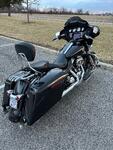
I was dreading putting the fork springs back in my '09 Streetglide because of how much trouble I had last time putting the cap nut back on while compressing the spring. I know there are a lot of different ways to do it but this is what I came up with today. I put an old towel on the garage floor, laid the wrench for the cap nut on it and put the cap nut in the open end of the wrench upside down. I then held the spring inside the fork (already assembled with new seals and bushings but no oil) and turned it upside down and lined it up on top of the nut. After folding a towel a couple of times and putting it on the bottom end of the fork leg, I put one foot on the wrench, put the cushioned fork leg under my arm like a crutch and leaned down to compress the spring. I then turned the fork with one hand and it screwed down onto the nut. I don't have a vice or a special socket for the nut so this was my simple solution.
To do the forks correctly, the oil has to be put in with the tube collapsed and no spring, then the oil level is set at a certain distance from the top of the tube. Then the tube is extended and assembled.
I made a tube clamp, just like what is pictured in the manual, from a piece of flat steel stock you can buy at a hardware store or Lowes/Menards etc. Cut it, bent it to shape in a vice and glued strips of rubber in the bends that contact the tube then put bolts and nuts at each end to clamp it together on the tube. I then put the whole unit in an arbor press and ran the ram down to the top of the tube cap with the fill cap screwed into it, pressing it down to contact the threads. Then I could use the wrench to tighten it into the tube. No gymnastics needed. A hydraulic press would work too. The clamp allows the fork to bridge the arbor base opening or the hydraulic press arms.
To do it right, as pointed out above, it's a measurement of fluid from the top without the spring inside. Also need to pump the forks up and down a few times (without the spring in them) to get fluid past the damper rod.
I assume the OP assembled the forks dry and them put fluid in based on volume thru the hole in the fork caps. The easy way to get fork top caps on is to fill and measure as described in the service manual. Then, before putting in the spring, take the fork top cap and engage the threads just slightly and mark the fork tube and the cap with a Sharpie. Put the spring in and put a socket on the fork cap (all you want is a flat surface for your hand). Put the line on the fork cap slightly behind the line on the fork tube and press down (while holding the fork tube) and turn the fork cap slightly and engage the threads.
Screw it the rest of the way down and do final torque when they're mounted in the triple trees. I'm older and don't have the hand strength I did 30 or 40 years ago and this works for me every time. If you go to all the trouble of rebuilding a set of damper rod forks, might as well make sure the fluid level is right (by measurement) given the balance between air gap and fluid level is how they work.
One time I did this, I had a high bench for reloading, I stuck the shock on my floor jack (or bottle jack) and jacked it up under the bench with the cap compressing the spring until I had it catch the threads, I turned the fork tube until it started a couple of threads.
7 Surprising Harley-Davidson Products that Are Not Motorcycles
Slideshow: The bar-and-shield logo shows up on far more than motorcycles, some of the company's most unexpected products have nothing to do with riding.
Slideshow: From the troubled AMF years to modern misfires, these bikes earned reputations for reliability issues, questionable engineering, or disappointing performance.
Crazy Bunderbike Build Looks Amazing, But Is It Impossible to Ride?
Slideshow: The Swiss custom shop has taken a Harley Softail and stretched it into something so long and low that it looks closer to a rolling sculpture than a conventional motorcycle.
Engraved Rebellion: Inside Bundnerbike's Glam Rock II
Slideshow: A standard cruiser becomes an intricate metal canvas in the hands of a Swiss custom house known for pushing Harley-Davidson platforms far beyond their factory brief.
Slideshow: Harley-Davidson's challenges aren't abstract; they show up in dropping shipments, shrinking dealer traffic, and strategic decisions that aren't yet translating into growth.











 Installing fork springs