When you click on links to various merchants on this site and make a purchase, this can result in this site earning a commission. Affiliate programs and affiliations include, but are not limited to, the eBay Partner Network.
I've seen significant differences from cold to hot and then I've seen smaller variations. The leakdown test is just one data point that should be used in concert with other diagnostic tools when troubleshooting or making condition evaluations. I find the biggest values are as a baseline reading on a new engine and when performing a condition assessment it can instantly indicate where the leakage is at. If you're also performing a compression test, don't forget to adjust for density altitude at the time of the test.
Originally Posted by General Hangover
Sorry - I don't understand this. Can you explain a little bit further? Are you talking about the air pressure in the environment in which you're doing the test? For example in the mountains or at the sea?
Yes... that's what he is saying...
The chart shows how the altitude above sea level will affect the results of a compression test...
Example: per the chart, at 7500 ft elevation, your compression will read 20% lower than at sea level...
That's exactly right, the altitude or more specifically, density altitude will make a difference in the compression pressure (and so will cranking RPM). So to compare readings to a manual or to other folks across the nation, you need to adjust the reading to get any value out of it Similar to dyno numbers on HP and torque, the atmospheric pressure affects the outcome and typically dyno results are calculated to normalize them to sea level on a standard day.
Not sure where to get density altitude info? Look in the phone book for the nearest airport ATIS (or ASOS/AWOS) phone number. It's what pilots use when doing their pre-flight planning and many stations have a phone number to call as well as broadcasting on a specific aviation radio frequency. It will get your readings closer to actual standard day readings. I live near Flagstaff at an elevation or 7,000" ASL (above sea leval) but the density altitude in the summer can be over 9,000' so my compression (or intake manifold vacuum readings) can be significantly different than someone in Florida. If you are unaware of this, you could mistakenly think you have an engine problem when you really don't.
I know it’s been awhile since I started this thread, but life is busy. I want to post the results of my compression and leak down tests done on my engine cold and after it’s up to operating temperature. This test also shows how air density from cold weather affects engine compression. I live in South Dakota and do a lot of driving for work. My fuel mileage goes down slightly in the winter because the air is more dense so the cars ECM has to add more fuel to get the right AFR.
First a little information on my engine. It’s a 103 twin cam built up to a 107 using a Zippers Performance sport kit. I also replaced the crank with an S&S crank. The rear cylinder did not break in as well as I would have liked but it is still just within Harleys specifications for a 103 twin cam and it runs really well. I’m going to runs these tests again at the end of the season this year. More than likely I will remove the cylinders, have them ball honed, put on new rings and break it in again next spring.
The cold engine test was done in December when the outside air temperature was in the low 20’s. The warm engine test was done a few weeks ago when the outside air temperature was in the mid 70,s. You can see the the cold test has a higher compression due to the higher air density but the percentage of difference between the two cylinders remains very close. In the cold test the rear cylinder is 98.6% of the front cylinder compression and in the warm test the rear cylinder is 98% of the front cylinder compression. I found it interesting the difference in compression air temperature can make at the same altitude. If I plug my engine and altitude figures into Big Boyz compression calculator I get a result of 104 psi cold cranking compression, which is very close to my actual results of the warm engine test with an outside air temperature in the mid 70’s.
The test results.
Cold engine with outside air temperature in the low 20’s
Compression - Front - 215psi.
- Rear - 212psi.
Leak Down - Front - 4%
- Rear - 10%
Warm engine with outside air temperature in the mid 70’s
Compression - Front - 203psi.
- Rear - 199psi.
Leak Down - Front - 5%
- Rear - 10%
In conclusion, I can’t see where engine temperature is much of a factor in doing engine compression and leak down testing. Again, the compression test results might appear different because of engine temperature but it’s the outside air temperature that makes the difference. The ratio of the difference in compression between the two cylinders remains the same in both tests. A person might as well let the engine cool down and avoid burnt fingers when doing these tests. Also, if you want to check your results against a compression calculator like Big Boyz, run the tests in warm weather to get an accurate result.
Slideshow: Jason Momoa's latest restoration project blends 1920s Harley-Davidsons with modern electric technology, creating some of the most unusual hybrid motorcycles ever built.
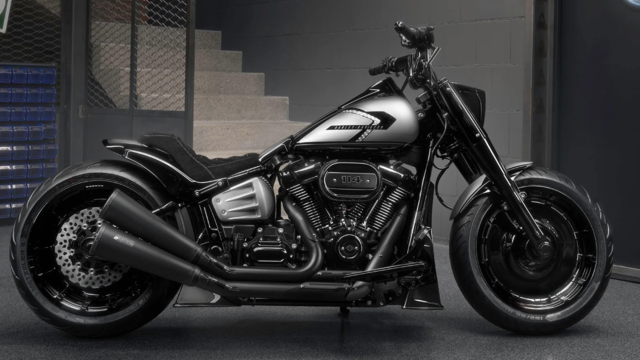
Harley-Davidson Fat Boy Becomes a Dark, Decepticon-Inspired Custom
Slideshow: Killer Custom's latest build relies on styling changes rather than performance upgrades, giving the cruiser an entirely different personality.
7 Surprising Harley-Davidson Products that Are Not Motorcycles
Slideshow: The bar-and-shield logo shows up on far more than motorcycles, some of the company's most unexpected products have nothing to do with riding.
Slideshow: From the troubled AMF years to modern misfires, these bikes earned reputations for reliability issues, questionable engineering, or disappointing performance.
Crazy Bunderbike Build Looks Amazing, But Is It Impossible to Ride?
Slideshow: The Swiss custom shop has taken a Harley Softail and stretched it into something so long and low that it looks closer to a rolling sculpture than a conventional motorcycle.