



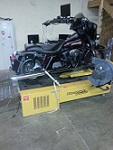

DYNO Numbers for Baggers???

WOT is the easiest part of the whole tune. I start all my tuning runs as 2000 RPM's from 25% throttle position to wide open. 20% and below I start at idle. To HEATWAVE, 2000 to 3000 on a dyno sheet is not where a rider typically spends his time. Most dyno sheets are showing you a wide open throttle pass, and usually in 4th gear.

Member
Joined: Jul 2009
Posts: 4,310
Likes: 1,079
You're kidding right? My goodness...first you're confused about top end speed and now you're going to suggest dyno-tuning "is mostly for peak hp #s". Hardly!! Dyno-tuning ...(unless you're getting ripped -off) is about ensuring smooth throttle response across the power band and maximizing the available torque and HP IN ALL RPM ranges. And yes it should also result in ensuring peak hp is optimized at WOT.
But if you think that dyno-tuning is mostly about Peak HP and WOT then you have alot to learn.
Member
Joined: Jul 2009
Posts: 4,310
Likes: 1,079
WOT is the easiest part of the whole tune. I start all my tuning runs as 2000 RPM's from 25% throttle position to wide open. 20% and below I start at idle. To HEATWAVE, 2000 to 3000 on a dyno sheet is not where a rider typically spends his time. Most dyno sheets are showing you a wide open throttle pass, and usually in 4th gear.
For a guy that supposedly does tuning you seem to have some big gaps in your knowledge. I can assure with absolute certainty that any HD ridden by anyone...and that includes you will have more time spent passing through and operating between 2-3krpms than anyone other range. PERIOD.
I use DJ Powervision for monitoring my engine, logging data runs, tuning etc. From the many dataruns on the PV and the years of data runs I've collected using the SEPST for tuning my other bike, there's is absolutely no doubt in my statement above.
In fact after a 15min run or a 2hr datarun, the primary "hits" of a fuel injected bike's data will be be between 2000-3000rpms and between 20-60 KPa on the throttle.
In fact the hits to the cells in this region will generall be 10x more than any other region of a fuel-injected bike's fuel map (unless your bike only operates at the drag strip).
And I ride my bike hard and the facts are are undeniable. The average guy rides far less agressively than I do and will probably be more like 15x in the 2-3K range vs the rest of the fuel map. Just a simple fact of acceleration and deceleration and if you have lot's of low-end torque you'll spend even more time in this range....even you whether you want to believe it or not. Most newer HDs operate below 3k rpms in 6th gear below 75mph so on the higway, if you run in 6th gear you'll be spending most of you're operating tim between 2-3krpms. Even in the twisties you'll be surprised how many times you drop below 3000rpms as you pull in the clutch and then let it back out. The data is irrefutable.
Last edited by Heatwave; Oct 9, 2011 at 05:06 PM.

Tourer
Joined: Jun 2010
Posts: 457
Likes: 0
+1 on what should be the easiest observation. HarleyTuner has provided lots of good information throughout this thread though... 
For a guy that supposedly does tuning you seem to have some big gaps in your knowledge. I can assure with absolute certainty that any HD ridden by anyone...and that includes you will have more time spent passing through and operating between 2-3krpms than anyone other range. PERIOD.
I use DJ Powervision for monitoring my engine, logging data runs, tuning etc. From the many dataruns on the PV and the years of data runs I've collected using the SEPST for tuning my other bike, there's is absolutely no doubt in my statement above.
In fact after a 15min run or a 2hr datarun, the primary "hits" of a fuel injected bike's data will be be between 2000-3000rpms and between 20-60 KPa on the throttle.
In fact the hits to the cells in this region will generall be 10x more than any other region of a fuel-injected bike's fuel map (unless your bike only operates at the drag strip).
And I ride my bike hard and the facts are are undeniable. The average guy rides far less agressively than I do and will probably be more like 15x in the 2-3K range vs the rest of the fuel map. Just a simple fact of acceleration and deceleration and if you have lot's of low-end torque you'll spend even more time in this range....even you whether you want to believe it or not. Most newer HDs operate below 3k rpms in 6th gear below 75mph so on the higway, if you run in 6th gear you'll be spending most of you're operating tim between 2-3krpms. Even in the twisties you'll be surprised how many times you drop below 3000rpms as you pull in the clutch and then let it back out. The data is irrefutable.
I use DJ Powervision for monitoring my engine, logging data runs, tuning etc. From the many dataruns on the PV and the years of data runs I've collected using the SEPST for tuning my other bike, there's is absolutely no doubt in my statement above.
In fact after a 15min run or a 2hr datarun, the primary "hits" of a fuel injected bike's data will be be between 2000-3000rpms and between 20-60 KPa on the throttle.
In fact the hits to the cells in this region will generall be 10x more than any other region of a fuel-injected bike's fuel map (unless your bike only operates at the drag strip).
And I ride my bike hard and the facts are are undeniable. The average guy rides far less agressively than I do and will probably be more like 15x in the 2-3K range vs the rest of the fuel map. Just a simple fact of acceleration and deceleration and if you have lot's of low-end torque you'll spend even more time in this range....even you whether you want to believe it or not. Most newer HDs operate below 3k rpms in 6th gear below 75mph so on the higway, if you run in 6th gear you'll be spending most of you're operating tim between 2-3krpms. Even in the twisties you'll be surprised how many times you drop below 3000rpms as you pull in the clutch and then let it back out. The data is irrefutable.
For a guy that supposedly does tuning you seem to have some big gaps in your knowledge. I can assure with absolute certainty that any HD ridden by anyone...and that includes you will have more time spent passing through and operating between 2-3krpms than anyone other range. PERIOD.
I use DJ Powervision for monitoring my engine, logging data runs, tuning etc. From the many dataruns on the PV and the years of data runs I've collected using the SEPST for tuning my other bike, there's is absolutely no doubt in my statement above.
In fact after a 15min run or a 2hr datarun, the primary "hits" of a fuel injected bike's data will be be between 2000-3000rpms and between 20-60 KPa on the throttle.
In fact the hits to the cells in this region will generall be 10x more than any other region of a fuel-injected bike's fuel map (unless your bike only operates at the drag strip).
And I ride my bike hard and the facts are are undeniable. The average guy rides far less agressively than I do and will probably be more like 15x in the 2-3K range vs the rest of the fuel map. Just a simple fact of acceleration and deceleration and if you have lot's of low-end torque you'll spend even more time in this range....even you whether you want to believe it or not. Most newer HDs operate below 3k rpms in 6th gear below 75mph so on the higway, if you run in 6th gear you'll be spending most of you're operating tim between 2-3krpms. Even in the twisties you'll be surprised how many times you drop below 3000rpms as you pull in the clutch and then let it back out. The data is irrefutable.
I use DJ Powervision for monitoring my engine, logging data runs, tuning etc. From the many dataruns on the PV and the years of data runs I've collected using the SEPST for tuning my other bike, there's is absolutely no doubt in my statement above.
In fact after a 15min run or a 2hr datarun, the primary "hits" of a fuel injected bike's data will be be between 2000-3000rpms and between 20-60 KPa on the throttle.
In fact the hits to the cells in this region will generall be 10x more than any other region of a fuel-injected bike's fuel map (unless your bike only operates at the drag strip).
And I ride my bike hard and the facts are are undeniable. The average guy rides far less agressively than I do and will probably be more like 15x in the 2-3K range vs the rest of the fuel map. Just a simple fact of acceleration and deceleration and if you have lot's of low-end torque you'll spend even more time in this range....even you whether you want to believe it or not. Most newer HDs operate below 3k rpms in 6th gear below 75mph so on the higway, if you run in 6th gear you'll be spending most of you're operating tim between 2-3krpms. Even in the twisties you'll be surprised how many times you drop below 3000rpms as you pull in the clutch and then let it back out. The data is irrefutable.
Like i said, I guess I just worded my responce poorly, I was talking about the info that you see on a dyno printout, Nothing that you see on a 100% throttle run on a dyno represents cruising, that was the point I was trying to get across. Thank you for the kind words.
Road Warrior
Joined: Aug 2010
Posts: 1,788
Likes: 5
From: Tennessee
Like i said, I guess I just worded my responce poorly, I was talking about the info that you see on a dyno printout, Nothing that you see on a 100% throttle run on a dyno represents cruising, that was the point I was trying to get across. Thank you for the kind words.
Outstanding HDF Member
Joined: Oct 2007
Posts: 3,437
Likes: 15
Like i said, I guess I just worded my responce poorly, I was talking about the info that you see on a dyno printout, Nothing that you see on a 100% throttle run on a dyno represents cruising, that was the point I was trying to get across. Thank you for the kind words.
HD Forum Stories
The Best of Harley-Davidson for Lifelong Riders

7 Surprising Harley-Davidson Products that Are Not Motorcycles
Verdad Gallardo
8 Best Harley-Davidson Motorcycles Ever
Pouria Savadkouei
10 Worst Harley-Davidson Motorcycles Ever
Pouria Savadkouei
Killer Custom's Jail Break Is The Breakout That Refused to Blend In
Verdad Gallardo
Crazy Bunderbike Build Looks Amazing, But Is It Impossible to Ride?
Verdad Gallardo
Harley-Davidson Reveals Super Cool Cafe Racer Concept
Verdad Gallardo
Engraved Rebellion: Inside Bundnerbike's Glam Rock II
Verdad Gallardo
10 Motorcycles You Should Never Buy
Joe Kucinski
10 Things Harley-Davidson Needs to Fix in 2026
Verdad Gallardo
Member
Joined: Jul 2009
Posts: 4,310
Likes: 1,079
You mis reading my point, we are discussing dyno sheets, dyno sheets show a 100% (wide open throttle) pass usually in 4th gear. You are correct that cruising ranges on a HD are between 2000 and 3000 RPM's. But they are between 7 and 15% throttle position, not wide open throttle. In an earlier post you made a point that it wold be nice if (someones) dyno started at 2000 RPM's and not 3000 RPM's, you stated because it is better to see what the bike is doing at cruising. Tuning a bike on a dyno is alot differn't than data collecting with your power vision.
Being able to pass a truck on a highway (WOT from cruising speed) is a whole lot more convenient when you don't have to drop a gear or at worst, you only need to drop a single gear.
A WOT dyno chart will absolutely show the owner if the tuning has been optimized in the ranges the rider is in most often. In fact after years of reading dyno charts, I have never read one that only started at 3000 rpms...NEVER. Why a tuner would find that useful is beyond me and of no real value to the owner without the WOT performance between 2-3000. And I made no references to wanting to know the performance below 3000rpms because that's where we "cruise". In fact I didn't make any reference other than suggesting it would be good to see the performance between 2-3000rpms. And it would be, which is why every chart on this entire thread starts somewhere below 3000rpms.
Of course the dyno's posted are peak #s at WOT. But wouldn't you want to know if you bike was well tuned so that you could "whack" the throttle from a cruisng speed and not have it stumble or leave ponies on the table? A good tuner should provide the customer with charts at varying operationing levels such as cruising and WOT. And newer bikes (throttle-by-wire) will show the performance in KPa, not TP.
Any time you want to "walk back" your view about Dyno charts is fine by me, but there's no legitimate reason for deleting off the 2-3000rpm range from a peak performance dyno chart. None...which is why no one else does it!
Last edited by Heatwave; Oct 9, 2011 at 08:24 PM.
Seems like you're always looking to pick an argument. I stated that it would be helpful to see the dyno chart results from 2-3000rpms. Obviously its at WOT but understanding whether the engine is optimized to deliver strong performance between 2000-3000rpms at WOT is just as important and I would suggest far more important that the absolute peak #s at WOT.
A WOT dyno chart will absolutely show the owner if the tuning has been optimized in the ranges the rider is in most often. In fact after years of reading dyno charts, I have never read one that only started at 3000 rpms...NEVER. Why a tuner would find that useful is beyond me and of no real value to the owner without the WOT performance between 2-3000. And I made no references to wanting to know the performance below 3000rpms because that's where we "cruise". In fact I didn't make any reference other than suggesting it would be good to see the performance between 2-3000rpms. And it would be, which is why every chart on this entire thread starts somewhere below 3000rpms.
Of course the dyno's posted are peak #s at WOT. But wouldn't you want to know if you bike was well tuned so that you could "whack" the throttle from a cruisng speed and not have it stumble or leave ponies on the table? A good tuner should provide the customer with charts at varying operationing levels such as cruising and WOT. And newer bikes (throttle-by-wire) will show the performance in KPa, not TP.
Any time you want to "walk back" your view about Dyno charts is fine by me, but there's no legitimate reason for deleting off the 2-3000rpm range from a peak performance dyno chart. None...which is why no one else does it!