



Do you know what EITMS is?

Elite HDF Member
Joined: Apr 2006
Posts: 3,948
Likes: 54
From: The Burgh

The front cylinder head temp is what is used by the EITMS and there's a sensor in the front jug.

Grand HDF Member


Joined: Dec 2008
Posts: 3,721
Likes: 372
From: Tonopah Az
I just had to go out and see if mine worked. Turn ignition on shut off switch on roll throttle off hold for a few seconds and presto it flashed cruise light first to red did it again and flashed green.
This place is awesome.
This place is awesome.

Member
Joined: Jul 2009
Posts: 4,310
Likes: 1,079
I am sure with the right computer setup you could make changes to it, but at some point the engine needs to operate in a certain range.
In all honesty, I cannot tell the difference at stop lights. The rumble changes, the odor shows up but I don't feel a cool breeze between my legs. You are sitting there in 90 degree weather on 110 degree asphalt with 100% humidity and a 280 degree motor between your legs. Would it matter if it was 262, 250 or 200?
Mid-frame air deflectors make more of a difference IMHO.
In all honesty, I cannot tell the difference at stop lights. The rumble changes, the odor shows up but I don't feel a cool breeze between my legs. You are sitting there in 90 degree weather on 110 degree asphalt with 100% humidity and a 280 degree motor between your legs. Would it matter if it was 262, 250 or 200?
Mid-frame air deflectors make more of a difference IMHO.
No real benefit to the rider although I guess you could make an argument that the heat from a 280 engine feels more uncomfortable than an engine at 260 degrees. EITMS is a good thing from both an engine and oil longevity pov.

Extreme HDF Member
Joined: Dec 2007
Posts: 13,402
Likes: 941
From: Illinois
It cuts the injector to the rear cylinder 100%. If it did not the fuel would burn up the converter real fast. If you want to see a hot Harley that would be one.
I makes the rear cylinder simply an air pump which will cool the rear cylinder down.
This system was first introduced in the 06 Street Bob. It is described in the owners manual.
In my 2010 Ultra Classic owners manual it states that it cuts the rear fuel injector off when the rear head reaches 385 degrees. That would strongly suggest that the front cylinder and the oil temp has nothing to do with the activation. It is the rear cylinder that runs hotter than the front so it would only be logical to place the sensor there.
I makes the rear cylinder simply an air pump which will cool the rear cylinder down.
This system was first introduced in the 06 Street Bob. It is described in the owners manual.
In my 2010 Ultra Classic owners manual it states that it cuts the rear fuel injector off when the rear head reaches 385 degrees. That would strongly suggest that the front cylinder and the oil temp has nothing to do with the activation. It is the rear cylinder that runs hotter than the front so it would only be logical to place the sensor there.
Last edited by lh4x4; Aug 4, 2010 at 03:12 PM.
Road Captain
Joined: Oct 2010
Posts: 683
Likes: 3
From: Florida
This was an interesting old thread. I've also read that there is a consensus that this mode was created primarily for rider comfort (eliminating hot thighs) from heat coming off the rear cylinder.
The front cylinder is still going to be running pretty hot since it's cooling fins are not connected to the rear cyclinder. The only thing I would use this mode for would be a signal it's time to turn my engine off (or get moving).
The front cylinder is still going to be running pretty hot since it's cooling fins are not connected to the rear cyclinder. The only thing I would use this mode for would be a signal it's time to turn my engine off (or get moving).

Road Warrior
Joined: Aug 2009
Posts: 1,889
Likes: 104
From: Mississippi
Has nothing to do with oil temp...Based on engine temp...On touring models the owner can enable and disable...Not all dealers enable at initial set up.

Tourer
Joined: Aug 2009
Posts: 439
Likes: 1
From: Orange Co, California
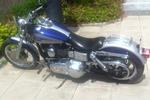
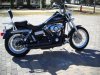
And on softails, they have to enable it at the dealer with their computer, or disable. I recommend enabling it. I turned mine on when I got both bikes pictured and have never disabled it.
Tourer
Joined: Aug 2009
Posts: 439
Likes: 1
From: Orange Co, California
Heck, looks like they added it to the 2011 Dyna line too.
HD Forum Stories
The Best of Harley-Davidson for Lifelong Riders

7 Surprising Harley-Davidson Products that Are Not Motorcycles
Verdad Gallardo
8 Best Harley-Davidson Motorcycles Ever
Pouria Savadkouei
10 Worst Harley-Davidson Motorcycles Ever
Pouria Savadkouei
Killer Custom's Jail Break Is The Breakout That Refused to Blend In
Verdad Gallardo
Crazy Bunderbike Build Looks Amazing, But Is It Impossible to Ride?
Verdad Gallardo
Harley-Davidson Reveals Super Cool Cafe Racer Concept
Verdad Gallardo
Engraved Rebellion: Inside Bundnerbike's Glam Rock II
Verdad Gallardo
10 Motorcycles You Should Never Buy
Joe Kucinski
10 Things Harley-Davidson Needs to Fix in 2026
Verdad Gallardo
Road Captain
Joined: Oct 2010
Posts: 683
Likes: 3
From: Florida
You can see it work at http://www.harley-davidson.com/en_US...html#/features - select Comfort, then EITMS. One still shot and one small video. THey used to have a video that claimed the rear cyl would pump cool (outside air) temp through the system and bring down the exhaust temp of the front cyl, but I cannot find that anymore.
Heck, looks like they added it to the 2011 Dyna line too.
Heck, looks like they added it to the 2011 Dyna line too.
Yes I've seen that web link, it mostly talks about lowering rear cyl temp for rider comfort. As you said the other video is not longer there but for the llife of me I can't see how that is going to cool the front cyl or the front exhaust. Even if the oil is cooled by the rear cyl shut down, in the Twin Cam the oil is not circulated in the heads where all the heat is. At best it's splashed up inside the piston to the cyl walls and I believe the TC still has a wrist pin oil spurt. I don't have a problem with the Heat Management. I just don't think I would really want to run my engine once it kicks it. This is all interesting read though.
I run a lenale fan to deal with heat so I don't sweat all this really. There is a test done by a guy (on this fourm) where the lenale fan kept his bike out of heat mode. It blows air on the heads where the heat is.