



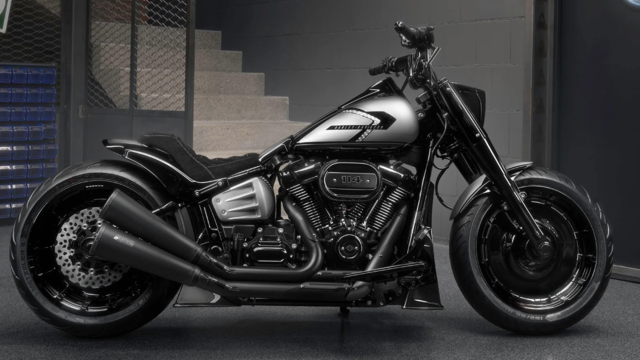
1999 FLHT Electra Glide Value

Thread Starter
|
Stage II
Joined: Feb 2012
Posts: 2
Likes: 0
From: Vancouver
 1999 FLHT Electra Glide Value
I've seen several posts and ads but trying to find the current value for 1999 FLHT Electra Glide Standard with 130,000kms on it. It has recently had the cams and bearing redone while the 95ci kit was installed. This bike has all service records (well maintained). Never dropped and riden mostly hwy. Paint and accessories in excellent cond. After market pipes, bars, light lenses changed also.
Can anyone tell me what I should be paying for this in Canadian dollars. They want $8000. Kelly Blue says $7190 for stock... Is 8k reasonable considering the 95ci kit and cams were done?
Just seeing many varied prices out there. $8500 for one with 130,000 miles and then I've seen the same bike stock sell for $8900 with 30,000 miles. so many variables but I REALLY WANT A BAGGER!!
Can anyone tell me what I should be paying for this in Canadian dollars. They want $8000. Kelly Blue says $7190 for stock... Is 8k reasonable considering the 95ci kit and cams were done?
Just seeing many varied prices out there. $8500 for one with 130,000 miles and then I've seen the same bike stock sell for $8900 with 30,000 miles. so many variables but I REALLY WANT A BAGGER!!
Road Master
Joined: Aug 2010
Posts: 770
Likes: 3
From: Wabash
Not sure what the conversion is to Canadian money but heres aspect ratio for you......1997 stock Electra Glides with 30,00 miles can sell for 10,000....got mine for 9,000.........the dealers are selling these older 97-99 bikes in upwards of 20% over the NADA book resale values.....you will get them cheaper from an outright person to person sale than a dealer...assuming your price was from a dealer and all the upgrades are as you say I would say you are doing better than most....the bottom line is a bike is not worth what someone is asking it is worth what someone is willing to pay for it....if you think its a good deal then it is.....based on the information you provided I would say yes your deal seems fair. If thats a dealer price and you offer 7200 and they want 8000 they will probably selll it to you assuming its not a comissioned sale on consignment.......if the dealer owns it offer 7200 and drive it home.
Last edited by Joboo1966; Feb 13, 2012 at 09:21 PM.
Thread Starter
|
Stage II
Joined: Feb 2012
Posts: 2
Likes: 0
From: Vancouver
Not sure what the conversion is to Canadian money but heres aspect ratio for you......1997 stock Electra Glides with 30,00 miles can sell for 10,000....got mine for 9,000.........the dealers are selling these older 97-99 bikes in upwards of 20% over the NADA book resale values.....you will get them cheaper from an outright person to person sale than a dealer...assuming your price was from a dealer and all the upgrades are as you say I would say you are doing better than most....the bottom line is a bike is not worth what someone is asking it is worth what someone is willing to pay for it....if you think its a good deal then it is.....based on the information you provided I would say yes your deal seems fair. If thats a dealer price and you offer 7200 and they want 8000 they will probably selll it to you assuming its not a comissioned sale on consignment.......if the dealer owns it offer 7200 and drive it home.
Road Master
Joined: Dec 2011
Posts: 772
Likes: 1
From: Springfield Illinois
I bike shopped for 2 months in person and online. If you take you time you can get a WAY better deal. I almost jumped the gun a few times...Keep looking you will know when you found a deal and the bike will call you lol

Extreme HDF Member
Joined: Sep 2010
Posts: 14,744
Likes: 402
From: Phoenix '53, '88, '09 Big Twins
WAIT- it's a DIFFERENT MOTOR !!!
You need to become a little familiar with models and variations.
such as the twin cam 88" motor replaced the evo ( 80") motor in 1999, new transmission case and a frame change at that time
the 1999 was the first year for the motor with a number of problems/ revisions to cam bearing, cam bolt, cam drive, pinion bearing etc- any of which could send shrapnel through the motor
another thing the older the bike, the more "work" or "modifications" it may have had over the years making it more difficult to diagnose and work on. most dealers are not much interested in helping with a 10 year old bike and may not stock parts for older bikes.
- that means you need to get a good relationship with an indy who'll work on your bike, is capable and interested in dealing with the goofy ( such as the early EFI) and will order in parts for you--- which could lead to downtime.
You may find a better deal if you shop in WA and import it yourself.
Mike
Road Captain
Joined: Sep 2010
Posts: 574
Likes: 3
From: AB Canada
I've seen several posts and ads but trying to find the current value for 1999 FLHT Electra Glide Standard with 130,000kms on it. It has recently had the cams and bearing redone while the 95ci kit was installed. This bike has all service records (well maintained). Never dropped and riden mostly hwy. Paint and accessories in excellent cond. After market pipes, bars, light lenses changed also.
Can anyone tell me what I should be paying for this in Canadian dollars. They want $8000. Kelly Blue says $7190 for stock... Is 8k reasonable considering the 95ci kit and cams were done?
Just seeing many varied prices out there. $8500 for one with 130,000 miles and then I've seen the same bike stock sell for $8900 with 30,000 miles. so many variables but I REALLY WANT A BAGGER!!
Can anyone tell me what I should be paying for this in Canadian dollars. They want $8000. Kelly Blue says $7190 for stock... Is 8k reasonable considering the 95ci kit and cams were done?
Just seeing many varied prices out there. $8500 for one with 130,000 miles and then I've seen the same bike stock sell for $8900 with 30,000 miles. so many variables but I REALLY WANT A BAGGER!!

Road Warrior


Joined: Jan 2006
Posts: 1,282
Likes: 115
From: British Columbia
Trending Topics
Tourer
Joined: Jul 2011
Posts: 354
Likes: 0
From: Indianapolis, IN
...
WAIT- it's a DIFFERENT MOTOR !!!
You need to become a little familiar with models and variations.
such as the twin cam 88" motor replaced the evo ( 80") motor in 1999, new transmission case and a frame change at that time
the 1999 was the first year for the motor with a number of problems/ revisions to cam bearing, cam bolt, cam drive, pinion bearing etc- any of which could send shrapnel through the motor
another thing the older the bike, the more "work" or "modifications" it may have had over the years making it more difficult to diagnose and work on. most dealers are not much interested in helping with a 10 year old bike and may not stock parts for older bikes.
- that means you need to get a good relationship with an indy who'll work on your bike, is capable and interested in dealing with the goofy ( such as the early EFI) and will order in parts for you--- which could lead to downtime.
You may find a better deal if you shop in WA and import it yourself.
Mike
WAIT- it's a DIFFERENT MOTOR !!!
You need to become a little familiar with models and variations.
such as the twin cam 88" motor replaced the evo ( 80") motor in 1999, new transmission case and a frame change at that time
the 1999 was the first year for the motor with a number of problems/ revisions to cam bearing, cam bolt, cam drive, pinion bearing etc- any of which could send shrapnel through the motor
another thing the older the bike, the more "work" or "modifications" it may have had over the years making it more difficult to diagnose and work on. most dealers are not much interested in helping with a 10 year old bike and may not stock parts for older bikes.
- that means you need to get a good relationship with an indy who'll work on your bike, is capable and interested in dealing with the goofy ( such as the early EFI) and will order in parts for you--- which could lead to downtime.
You may find a better deal if you shop in WA and import it yourself.
Mike
HD Forum Stories
The Best of Harley-Davidson for Lifelong Riders

6 Weirdest Harley-Davidsons Ever Sold to the Public
Verdad Gallardo
7 Times Harley-Davidson Chucked Tradition Out the Window
Verdad Gallardo
7 Surprising Harley-Davidson Products that Are Not Motorcycles
Verdad Gallardo
8 Best Harley-Davidson Motorcycles Ever
Pouria Savadkouei
10 Worst Harley-Davidson Motorcycles Ever
Pouria Savadkouei
Killer Custom's Jail Break Is The Breakout That Refused to Blend In
Verdad Gallardo
Crazy Bunderbike Build Looks Amazing, But Is It Impossible to Ride?
Verdad Gallardo
Harley-Davidson Reveals Super Cool Cafe Racer Concept
Verdad Gallardo
Engraved Rebellion: Inside Bundnerbike's Glam Rock II
Verdad Gallardo
Extreme HDF Member
Joined: Sep 2010
Posts: 14,744
Likes: 402
From: Phoenix '53, '88, '09 Big Twins
Mike
Road Master
Joined: Aug 2010
Posts: 770
Likes: 3
From: Wabash
...
WAIT- it's a DIFFERENT MOTOR !!!
You need to become a little familiar with models and variations.
such as the twin cam 88" motor replaced the evo ( 80") motor in 1999, new transmission case and a frame change at that time
the 1999 was the first year for the motor with a number of problems/ revisions to cam bearing, cam bolt, cam drive, pinion bearing etc- any of which could send shrapnel through the motor
another thing the older the bike, the more "work" or "modifications" it may have had over the years making it more difficult to diagnose and work on. most dealers are not much interested in helping with a 10 year old bike and may not stock parts for older bikes.
- that means you need to get a good relationship with an indy who'll work on your bike, is capable and interested in dealing with the goofy ( such as the early EFI) and will order in parts for you--- which could lead to downtime.
You may find a better deal if you shop in WA and import it yourself.
Mike
WAIT- it's a DIFFERENT MOTOR !!!
You need to become a little familiar with models and variations.
such as the twin cam 88" motor replaced the evo ( 80") motor in 1999, new transmission case and a frame change at that time
the 1999 was the first year for the motor with a number of problems/ revisions to cam bearing, cam bolt, cam drive, pinion bearing etc- any of which could send shrapnel through the motor
another thing the older the bike, the more "work" or "modifications" it may have had over the years making it more difficult to diagnose and work on. most dealers are not much interested in helping with a 10 year old bike and may not stock parts for older bikes.
- that means you need to get a good relationship with an indy who'll work on your bike, is capable and interested in dealing with the goofy ( such as the early EFI) and will order in parts for you--- which could lead to downtime.
You may find a better deal if you shop in WA and import it yourself.
Mike
First of all other than the crap they sell at the dealerships for the "newer" bikes, most dealers carry a very good selection of parts and supplys for all models evo through current, I have yet to walk into my local dealer and they not have a part. @nd I want to encourage you to look at evo's especialy 96-98's....more aftermarket mods, bolt on's and cool stock ad ons from the moco are available fore the evo than any other hd out there. They are fery reliable, affordable and easy to make your own. In fact it is bbgecomming difficult to locate evos 97-98 in some parts of the country because number 1 newbies love them and number 2 many have purchased the newer bikes and regretted the decision and went back. Im attatching some historical data to mull over as reference.
The Evolution engine (popularly known as Evo) is an air-cooled, 45-degree, V-twin engine manufactured since 1984 by the Harley Davidson Motor Company for the company's motorcycles. It was made in the 1,340 cc (82 cu in) displacement for Harley Davidson Big V-twins bikes, replacing the Shovelhead engine, giving way to most of the product line utilizing the new TC88 (Twin Cam 88 Cubic Inch), until 2000 when the last EVO was placed in a production factory custom(FXR4). In 2001 it was completley replaced by the Harley Davidson Twin Cam 88. It was made in the 1,100 cc (67 cu in) displacement and is still made in the 883 cc (53.9 cu in) and 1,200 cc (73 cu in) (replacing the 1,100 in 1988) displacements since 1986 for the Harley-Davidson Sportster, where it replaced the ironhead Sportster engine.
Most analysts consider the Evolution to be the engine that saved the reorganized Harley-Davidson company from certain bankruptcy. Harley-Davidson's official name for the engine was likely related to the company's reformed image following the Harley Davidson leadership_regained/1981 employee-led buyback from AMF.
Though a major design advance for Harley-Davidson in many ways, the Evolution is most distinct from earlier Harley-Davidson engine designs by virtue of its reliability, oil tightness, and ability to be run hard under all kinds of circumstances for tens of thousands of miles farther than any of its predecessors. Both the heads and cylinders of the Evolution engine are made from aluminum, which is both lighter than cast iron, reducing overall vehicle weight and a superior thermal conductor to cast iron - improving air cooling efficiency. A problem is avoided thereby which occurs when the heads and cylinders are of different materials. They expand and contract at different rates which induces a relative motion; this motion ruins the gasket seal and necessitates replacement. The blocky rocker boxes (thus becoming nicknamed "block head"), aluminum heads and cylinders (also referred to as "jugs") are the only part of the Evolution engine that can be said to be essential; the Big Twin and Sportster incarnations of the Evolution are significantly different.
Contents
[hide]
The Evolution Big Twin (herein referred to simply as "Big Twin") saw a fifteen-year run in Harley-Davidson's "big bikes," in the Dyna, Softail, FXR, and Touring frames, and is basically a newer style top end and stroker flywheel assembly upon the slightly modified shovelhead case.
The Big Twin utilizes a single, four-lobe, gear-driven camshaft located just above the crankshaft axis. While this simplifies camshaft replacement, it complicates the Big Twin valve train with tappet/lifters & pushrods that each deflect from the camshaft at wildly different angles. The Big Twin pushrods have a distinct helical appearance because the vertical plane formed by each cylinder's rockers (front-to-back) is exactly perpendicular to the vertical plane formed by the cam lobes (left-to-right). The need for one lifter & pushrod set to reach all the way out to the most outboard cam lobe gives rise to the Big Twin's tell-tale offset lifter assemblies, where the forward lifter assembly is located slightly farther out and rotated to enable the valve gear to make the reach.
The Big Twin has been accompanied by a number of different primary drives and transmissions, both on production Harley-Davidson motorcycles and in custom applications. The aftermarket selection of accessories for these closely related systems is wide, as it is for the engine itself.
The Evolution Big Twin motor is, for now, the last of the line of single cam, overhead valve motors tracing their lineage back to the ground breaking Knucklehead design penned by founder Bill Harley. In its 1994 to 2000 (FXR4) final configuration, with rockerbox and base gasket leaks fixed, it proved to be a robust, durable, and versatile power plant for all of the Big Twin platforms. It is also the largest aftermarket supported Harley Davidson design, to date, meaning more parts, more potential.

Thread
Thread Starter
Forum
Replies
Last Post
SCGamecock
General Harley Davidson Chat
8
Oct 28, 2017 07:36 PM
