




Checking crankshaft runout
 Checking crankshaft runout
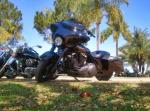
I have a 2008 FLHX street glide that has a fairly large vibration between 1200-1800 rpm's, mostly on deceleration
I have replaced the front motor mount with a GlidePro, Also I have checked that the exhaust bracket is free of defects and made sure that the floor board mount isnt coming in contact with the exhaust.
Yet I still get the vibration.
I had the bike dyno'd at the local Harley dealer and was told this was normal, although no other street glide I've noticed has half this much vibration.
I wanted to check the crankshaft runout (and anything else you guys suggest), but I'm not sure if you have to pull the cam plate to check it, or can you just pull the chain and gears and check runout from there?
Any help or suggestions?
I have replaced the front motor mount with a GlidePro, Also I have checked that the exhaust bracket is free of defects and made sure that the floor board mount isnt coming in contact with the exhaust.
Yet I still get the vibration.
I had the bike dyno'd at the local Harley dealer and was told this was normal, although no other street glide I've noticed has half this much vibration.
I wanted to check the crankshaft runout (and anything else you guys suggest), but I'm not sure if you have to pull the cam plate to check it, or can you just pull the chain and gears and check runout from there?
Any help or suggestions?

Tourer
Joined: May 2010
Posts: 450
Likes: 2
With the dial indicator that I have, yes you would have to pull the cam plate to check runout. Not a machinist, and am sure there are indicators available that you would not have to pull the plate, but not exactly sure. I should also mention that I have a 99, so checking runout was more of a formality while in there for the tensioners and cam swap.
Is there any other work done to your ride? Vibration only in 12-1800 range? I would figure that if the crank was causing your vibes, it would get worse with RPM's, not just in a certain range. Let me restate that; I am 99% certain that if the crank was the problem, it would get worse with RPM.
Is there any other work done to your ride? Vibration only in 12-1800 range? I would figure that if the crank was causing your vibes, it would get worse with RPM's, not just in a certain range. Let me restate that; I am 99% certain that if the crank was the problem, it would get worse with RPM.
No other work done to the bike that I know of. I just bought it in October. After the crankshaft runout check my next course is going to be to replace the rear mounts with the Glidepro system. Im up for any suggestions.
Tourer
Joined: May 2010
Posts: 450
Likes: 2
I would be looking at the tune of the motor since it only happens in that low rpm range. Motor mounts too, but would not figure that. As far as runout, well it won't hurt to look at it, but not likely.
Whats the chance that the dealer you bought the bike from is also the one who told you that the vibration was normal?
Whats the chance that the dealer you bought the bike from is also the one who told you that the vibration was normal?
Tourer
Joined: May 2010
Posts: 450
Likes: 2
For whatever it is worth, I recently put Andrews 26's in my bagger. Had vibes from about 1500 down to idle. A little adjusting to my Power Commander, and problem solved.
You really need to figure out what has been done to that motor. Give the guy you bought it from a call if at all possible. If you already have a tuner installed, aftermarket air cleaner, and whatever else are good things to know. Will save you some time and likely some money. Can tell from your picture that it is not all original, and usually a tuner, pipes and A/C are the first things done to the bike.
You really need to figure out what has been done to that motor. Give the guy you bought it from a call if at all possible. If you already have a tuner installed, aftermarket air cleaner, and whatever else are good things to know. Will save you some time and likely some money. Can tell from your picture that it is not all original, and usually a tuner, pipes and A/C are the first things done to the bike.
Yeah, it has a screaming eagle a/c, v&h 2into2 big radius pipes, SERT, (also used to have a v&h fuel Pack for whatever reason).
I had Harley remove the fuel pack and dyno/tune the bike with the SERT.
But still the vibes as mentioned above.
I had Harley remove the fuel pack and dyno/tune the bike with the SERT.
But still the vibes as mentioned above.
Trending Topics
Road Warrior
Joined: Jun 2009
Posts: 1,943
Likes: 3
From: NYC
1200 - 1800 is a pretty low operating RPM....you need to raise the bar on your shift points. I would red line anything below 2000 on a touring bike unless you have had your sprockets changed.
HD Forum Stories
The Best of Harley-Davidson for Lifelong Riders
Harley-Davidson Fat Boy Becomes a Dark, Decepticon-Inspired Custom
Verdad Gallardo
6 Weirdest Harley-Davidsons Ever Sold to the Public
Verdad Gallardo
7 Times Harley-Davidson Chucked Tradition Out the Window
Verdad Gallardo
7 Surprising Harley-Davidson Products that Are Not Motorcycles
Verdad Gallardo
8 Best Harley-Davidson Motorcycles Ever
Pouria Savadkouei
10 Worst Harley-Davidson Motorcycles Ever
Pouria Savadkouei
Killer Custom's Jail Break Is The Breakout That Refused to Blend In
Verdad Gallardo
Crazy Bunderbike Build Looks Amazing, But Is It Impossible to Ride?
Verdad Gallardo
Harley-Davidson Reveals Super Cool Cafe Racer Concept
Verdad Gallardo
Ultimate HDF Member
Joined: Aug 2007
Posts: 9,486
Likes: 4
From: Hico, TX (once home to Billy the Kid)
I try never to go below 2500 RPM unless I to come to a stop.

Thread
Thread Starter
Forum
Replies
Last Post
