When you click on links to various merchants on this site and make a purchase, this can result in this site earning a commission. Affiliate programs and affiliations include, but are not limited to, the eBay Partner Network.
Engine Mechanical TopicsDiscussion for motor builds, cams, head work, stripped bolts and other engine related issues. The good and the bad. If it goes round and around or up and down, post it here.
Thanks Ed but not necessary. Is there a way to bench test a regulator?
To test it off the bike you would have to be pretty creative due to how it's constructed. I have never bothered to, and just test on bike. 99% of the time the pressure loss is a line or the pump. I would bet your OEM regulator is fine. You can apply a little vacuum or little pressure to the vacuum port with just a mityvac to ensure the diaphragm is intact.
To test it off the bike you would have to be pretty creative due to how it's constructed. I have never bothered to, and just test on bike. 99% of the time the pressure loss is a line or the pump. I would bet your OEM regulator is fine. You can apply a little vacuum or little pressure to the vacuum port with just a mityvac to ensure the diaphragm is intact.
So, if I apply pressure or vacuum, the regulator should hold it if the diaphragm is intact? I am pulling the assembly out tommorrow and after a close inspection and all looks OK, I will order a pump. I have narrowed it down to two, Aeromotive 11541 or Quantum. Aeromotive does not list any Harley Davidson as a fit; I have an email in to confirm. Dimensionally it fits at 4.752", offset inlet and some HTT members have apparently used them.
So, if I apply pressure or vacuum, the regulator should hold it if the diaphragm is intact? I am pulling the assembly out tommorrow and after a close inspection and all looks OK, I will order a pump. I have narrowed it down to two, Aeromotive 11541 or Quantum. Aeromotive does not list any Harley Davidson as a fit; I have an email in to confirm. Dimensionally it fits at 4.752", offset inlet and some HTT members have apparently used them.
Thanks for the help.
I'll post a couple pictures. Do not use unregulated shop air. I would use air regulated below the regulator spec and dial up until it opens. I would advise against pressure that exceeds the regulator opening point by too much. This is an explanation of the system, not instructions on what to do. I am certain there are people who have posted videos of testing regulators with shop air.
#1 is the atmospheric reference port. This allows atmosphere (including boost with external regulators) to be applied to a regulator to change the spring pressure. This port is open to the spring and diaphragm. Applying a vacuum or pressure here will tell you if the diaphragm is intact and not leaking. A leak at the diaphragm would result in a fuel bleed through the port that would not hold pressure when turned off and a leak when running. If the leak was too big for the pump flow to overcome, it would be a low pressure when running situation. A hand pump like a mityvac is what I use here. The diaphragm is spec'd to see full system pressure up to opening point though. It will not tell you bypass pressure.
#2 is the fuel inlet. This is where you want to apply pressure here to see when it starts to bypass. You could put the regulator in the regulator housing and pressurize the fuel inlet (filter would have connected here) with regulated shop air, or if working with a complete assembly disconnect the fuel line from the pump to the filter and pressurize going into the filter. Using the regulator housing or assembly is the truest test of bypass pressure without the system in operation in the tank or otherwise in wet operation and using a fuel pressure gauge.
#3 is the fuel outlet/return/bypass. This is where the bypassed fuel returns to the tank.
Applying pressure to #1 or #2 checks diaphragm. You can use a mity-vac to apply pressure or vacuum to #1 as you're just checking for a broken diaphragm.
Applying pressure to #2 checks the diaphragm and valve inside the regulator. If doing this, #3 would need to be open to atmosphere and not seeing applied pressure. This is why we use a housing or the complete assembly. Making something up at home would be too time consuming.
NOTE: Looking at how these are assembled, one would assume you could apply pressure to #3 to see if it bypasses. I have not had luck with this. Applying vacuum here just pulls the valve closed.
NOTE - you're using air to check a wet system, it's not 100% the same as when it's in operation and the parts are wet, but I believe it will tell you what you need to know and would be a valid test for what you are trying to discern.
Last edited by Ed Ramberger; Mar 19, 2025 at 10:10 AM.
I may have found the problem. The FPF filter did not come with an o-ring so I guess I was supposed to use the o-ring on the OEM regulator which I did not do ; photos attached. Could this be the problem to fuel pressure not rising above 20psi and falling back to zero? That would be sweet, just put the o-ring on the filter and drop the assembly back in the tank.
I may have found the problem. The FPF filter did not come with an o-ring so I guess I was supposed to use the o-ring on the OEM regulator which I did not do ; photos attached. Could this be the problem to fuel pressure not rising above 20psi and falling back to zero? That would be sweet, just put the o-ring on the filter and drop the assembly back in the tank.
yes but you really should replace the oring if possible.
Last edited by Ed Ramberger; Mar 19, 2025 at 11:44 AM.
@djl Since you are taking this all apart again, be sure the plastic top hat shaped seals are under the canopy screws when you go back together.
Also, make sure the replacement regulator says 4bar or 400kPa. If your bike was tuned, any variance between the two will affect fueling - even if rated the same.
Last edited by Ed Ramberger; Mar 19, 2025 at 12:18 PM.
Since you are taking this all apart again, be sure the plastic top hat shaped seals are under the canopy screws when you go back together.
Some are damaged so ordered a new set. Quick disconnet upper oring is not the same. James gasket seems to be the "go to" oring for the aftermarket; it is blue, is that viton.
I may have found the problem. The FPF filter did not come with an o-ring so I guess I was supposed to use the o-ring on the OEM regulator which I did not do ; photos attached. Could this be the problem to fuel pressure not rising above 20psi and falling back to zero? That would be sweet, just put the o-ring on the filter and drop the assembly back in the tank.
7 Surprising Harley-Davidson Products that Are Not Motorcycles
Slideshow: The bar-and-shield logo shows up on far more than motorcycles, some of the company's most unexpected products have nothing to do with riding.
Slideshow: From the troubled AMF years to modern misfires, these bikes earned reputations for reliability issues, questionable engineering, or disappointing performance.
Crazy Bunderbike Build Looks Amazing, But Is It Impossible to Ride?
Slideshow: The Swiss custom shop has taken a Harley Softail and stretched it into something so long and low that it looks closer to a rolling sculpture than a conventional motorcycle.
Engraved Rebellion: Inside Bundnerbike's Glam Rock II
Slideshow: A standard cruiser becomes an intricate metal canvas in the hands of a Swiss custom house known for pushing Harley-Davidson platforms far beyond their factory brief.
Slideshow: Harley-Davidson's challenges aren't abstract; they show up in dropping shipments, shrinking dealer traffic, and strategic decisions that aren't yet translating into growth.



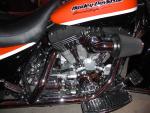





 ; photos attached. Could this be the problem to fuel pressure not rising above 20psi and falling back to zero? That would be sweet, just put the o-ring on the filter and drop the assembly back in the tank.