






M8 Engine Temps
Seasoned HDF Member
Joined: Dec 2005
Posts: 19,923
Likes: 8,027
From: poway

The Power Vision has two readouts for engine temp.
ET
and
Head Temp.
ET is the actual readout from the oem heat sensor.
Head temp is a calculated number based on a complicated algorithm. It can vary wildly in a 10 second period of time.
The actual sensor reading (ET) is what is valuable to look at when monitoring temperatures. Anything over 270F is compromising performance and engine longevity.
Here is a LINK to a written report, with some photos and videos in it, that you may find interesting/useful.
Below is a vid with just some of the info that is in the report linked above.
https://www.youtube.com/watch?v=rWOdQOtDv6A
ET
and
Head Temp.
ET is the actual readout from the oem heat sensor.
Head temp is a calculated number based on a complicated algorithm. It can vary wildly in a 10 second period of time.
The actual sensor reading (ET) is what is valuable to look at when monitoring temperatures. Anything over 270F is compromising performance and engine longevity.
Here is a LINK to a written report, with some photos and videos in it, that you may find interesting/useful.
Below is a vid with just some of the info that is in the report linked above.
https://www.youtube.com/watch?v=rWOdQOtDv6A
 I'm not sure that HD uses engine temp to derive timing and fueling. As I understand it they use the cylinder head temp. If not then why do they even bother to calculate it?? It seems to me that it makes more sense to use the CHT as it's the number that the chamber walls are calculated to see based one ET and motor load. It's an estimate of what's going on in the combustion chamber which is where you want to determine fuel and timing.
I'll agree on TCs that ET and oil temp will be the same at constant load. I've seen it using a thermocouple recording device which is accurate to 1 degree.
While you try to set hard limits on temps, it seems to me that it can be raised if using synthetic oil.. One of the ways I've found that tells me where the motor is running hot is pulling the valve covers and looking at the brownish build up on the insides.. Switching to synthetic reduces or even eliminates any buildup..

Stellar HDF Member


Joined: Apr 2012
Posts: 3,117
Likes: 1,193
From: Maryland
I’m not sure I agree with the statement that anything above 270 compromises longevity. Most M8’s (stock included) run well above 270 at speed in summers. You’re suggesting that every bike sold in the south is being damaged by those temps?
I realize you are marketing products, but your engine “damaging” temps are not realistic.
I realize you are marketing products, but your engine “damaging” temps are not realistic.
My '09 Nightster has a PV w/Target Tune., DK 636V intake, V&H SideShots exhaust and an external breather setup. The tune is from FM and it's a fair bit fatter than the original stock tune. Essentially, it's a stage 1. My experience, the Nightster can run anywhere between the 370s to the low 400s. Commonly, it will be in the low to mid 380s. When I get into slow speed situations - following slow traffic up hills in the mountains for example - it can creep up to the 390s to low 400s. The only way I might see the Nightster stay consistently under 375 (max mentioned in the video), is while riding in the winter.
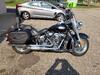
My '18 Heritage 114 is pretty much stock. It has the American Custom Exhaust mufflers (no CATs), a HD K&N filter, and a tune from FM that's fattened it up a tad. I don't have fangs on it. The Heritage ETs typically range in the 270s to low 300s (below 310). On a warm summer day, I will commonly see ETs in the low to mid 280s. The temp can creep up to the 290s or higher depending on what I'm doing (similar to the Nightster). Cruising 80 on the interstate on a hot day, the ETs might creep up into the low 300s. No matter what the ridding condition is, my oil temps (measured via oil temp gauge dip stick) always run between 200 and 210. I can't recall ever seeing the oil temps as high as 230. Similar to the Nightster, the only way I might see the Heritage consistently run at or below the target ET of 260 is while riding during winter.
Are the stated temperature targets realistic? Meh? All I know is that I've never been able to hit those targets.
My 2 cents.
Last edited by T^2; Aug 27, 2023 at 11:34 AM.
Road Warrior


Joined: Nov 2022
Posts: 1,541
Likes: 543
From: MN
No - engines aren't "damaged" by running hotter than liquid cooled engines. They don't maintain power as long and wear out faster. Otherwise liquid cooling would never have been deployed for engines at all. That's the entire point of liquid cooled engines - you pay the extra money for a more complex cooling system to retain engine power and longevity longer.
One would have to run full or accelerated life engine tests to determine just how much longer. I think what many members are saying is air cooled without fans is good enough and long enough for motorcycle application. All good. My input is it can be improved with fans - not that fans are required or necessary. That is all.
One would have to run full or accelerated life engine tests to determine just how much longer. I think what many members are saying is air cooled without fans is good enough and long enough for motorcycle application. All good. My input is it can be improved with fans - not that fans are required or necessary. That is all.
Road Warrior
Joined: Nov 2022
Posts: 1,541
Likes: 543
From: MN
All I can say is what I see.
My '09 Nightster has a PV w/Target Tune., DK 636V intake, V&H SideShots exhaust and an external breather setup. The tune is from FM and it's a fair bit fatter than the original stock tune. Essentially, it's a stage 1. My experience, the Nightster can run anywhere between the 370s to the low 400s. Commonly, it will be in the low to mid 380s. When I get into slow speed situations - following slow traffic up hills in the mountains for example - it can creep up to the 390s to low 400s. The only way I might see the Nightster stay consistently under 375 (max mentioned in the video), is while riding in the winter.
My '18 Heritage 114 is pretty much stock. It has the American Custom Exhaust mufflers (no CATs), a HD K&N filter, and a tune from FM that's fattened it up a tad. I don't have fangs on it. The Heritage ETs typically range in the 270s to low 300s (below 310). On a warm summer day, I will commonly see ETs in the low to mid 280s. The temp can creep up to the 290s or higher depending on what I'm doing (similar to the Nightster). Cruising 80 on the interstate on a hot day, the ETs might creep up into the low 300s. No matter what the ridding condition is, my oil temps (measured via oil temp gauge dip stick) always run between 200 and 210. I can't recall ever seeing the oil temps as high as 230. Similar to the Nightster, the only way I might see the Heritage consistently run at or below the target ET of 260 is while riding during winter.
Are the stated temperature targets realistic? Meh? All I know is that I've never been able to hit those targets.
My 2 cents.
My '09 Nightster has a PV w/Target Tune., DK 636V intake, V&H SideShots exhaust and an external breather setup. The tune is from FM and it's a fair bit fatter than the original stock tune. Essentially, it's a stage 1. My experience, the Nightster can run anywhere between the 370s to the low 400s. Commonly, it will be in the low to mid 380s. When I get into slow speed situations - following slow traffic up hills in the mountains for example - it can creep up to the 390s to low 400s. The only way I might see the Nightster stay consistently under 375 (max mentioned in the video), is while riding in the winter.
My '18 Heritage 114 is pretty much stock. It has the American Custom Exhaust mufflers (no CATs), a HD K&N filter, and a tune from FM that's fattened it up a tad. I don't have fangs on it. The Heritage ETs typically range in the 270s to low 300s (below 310). On a warm summer day, I will commonly see ETs in the low to mid 280s. The temp can creep up to the 290s or higher depending on what I'm doing (similar to the Nightster). Cruising 80 on the interstate on a hot day, the ETs might creep up into the low 300s. No matter what the ridding condition is, my oil temps (measured via oil temp gauge dip stick) always run between 200 and 210. I can't recall ever seeing the oil temps as high as 230. Similar to the Nightster, the only way I might see the Heritage consistently run at or below the target ET of 260 is while riding during winter.
Are the stated temperature targets realistic? Meh? All I know is that I've never been able to hit those targets.
My 2 cents.
Seasoned HDF Member
Joined: Dec 2005
Posts: 19,923
Likes: 8,027
From: poway
That's exactly what we experienced with air-cooled Onan OHV gasoline engines with fans. 270 head, 210 oil. (much cooler than flathead's, btw), and considered sufficient for air cooled engine life. The only question is how hot an air-cooled engine gets idling with no fan, and for how long it sits there like that. As long as the bike is moving the wind cooling is adequate. If you're stuck in traffice the EIMTS kicks in to try to cool the motor down. Clearly the MoCo recognized engine wear associated with excessive idling time.
I doubt ETMS cools the motor, it cools the riders.. Motor probably runs a little hotter because the front cylinder is having to pump the rear and maintain idle. I guess it does cool the rear cylinder
They are utilizing the mass of the drivetrain to absorb and try to radiate the heat.

Club Member

Joined: Dec 2014
Posts: 10,734
Likes: 3,755
From: SWFL

Well, I guess I’ll just have to bury my head in the sand and ride along with all the bikes that run to 100k in the southern heat without worrying that they are being damaged by normal operating temps HD designed them to run under.
Road Warrior
Joined: Nov 2022
Posts: 1,541
Likes: 543
From: MN
I own a Onan NHD 6500 gen set with 6600 hours on it.. I should measure the head temps..
I doubt ETMS cools the motor, it cools the riders.. Motor probably runs a little hotter because the front cylinder is having to pump the rear and maintain idle. I guess it does cool the rear cylinder They are utilizing the mass of the drivetrain to absorb and try to radiate the heat.
I doubt ETMS cools the motor, it cools the riders.. Motor probably runs a little hotter because the front cylinder is having to pump the rear and maintain idle. I guess it does cool the rear cylinder
They are utilizing the mass of the drivetrain to absorb and try to radiate the heat.EITMS was designed to cool the motor - I read about it. That is why the rear cylinder was selected - it is trapped from ambient air cooling front and back, at least the front of the front cylinder is open to air.
Club Member
Joined: Dec 2014
Posts: 10,734
Likes: 3,755
From: SWFL
That's exactly what we experienced with air-cooled Onan OHV gasoline engines with fans. 270 head, 210 oil. (much cooler than flathead's, btw), and considered sufficient for air cooled engine life. The only question is how hot an air-cooled engine gets idling with no fan, and for how long it sits there like that. As long as the bike is moving the wind cooling is adequate. If you're stuck in traffice the EIMTS kicks in to try to cool the motor down. Clearly the MoCo recognized engine wear associated with excessive idling time.
None of that bothers me. Everything has either Amsoil or Redline everywhere, which laughs at those temps, esp. with a 5000 mile change interval.
HD Forum Stories
The Best of Harley-Davidson for Lifelong Riders

7 Surprising Harley-Davidson Products that Are Not Motorcycles
Verdad Gallardo
8 Best Harley-Davidson Motorcycles Ever
Pouria Savadkouei
10 Worst Harley-Davidson Motorcycles Ever
Pouria Savadkouei
Killer Custom's Jail Break Is The Breakout That Refused to Blend In
Verdad Gallardo
Crazy Bunderbike Build Looks Amazing, But Is It Impossible to Ride?
Verdad Gallardo
Harley-Davidson Reveals Super Cool Cafe Racer Concept
Verdad Gallardo
Engraved Rebellion: Inside Bundnerbike's Glam Rock II
Verdad Gallardo
10 Motorcycles You Should Never Buy
Joe Kucinski
10 Things Harley-Davidson Needs to Fix in 2026
Verdad Gallardo
Stellar HDF Member
Joined: Apr 2012
Posts: 3,117
Likes: 1,193
From: Maryland
That's exactly what we experienced with air-cooled Onan OHV gasoline engines with fans. 270 head, 210 oil. (much cooler than flathead's, btw), and considered sufficient for air cooled engine life. The only question is how hot an air-cooled engine gets idling with no fan, and for how long it sits there like that. As long as the bike is moving the wind cooling is adequate. If you're stuck in traffice the EIMTS kicks in to try to cool the motor down. Clearly the MoCo recognized engine wear associated with excessive idling time.
Last edited by T^2; Aug 27, 2023 at 12:42 PM.
Club Member
Joined: Dec 2014
Posts: 10,734
Likes: 3,755
From: SWFL
If you’re seeing 390, you’ve got problems… I didn’t see anything close to that in 100 deg Fl weather while rings were 50 miles old on a new build.
Last edited by Mchad; Aug 27, 2023 at 12:29 PM.