


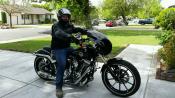


 Feb 13, 2015, 01:41 PM
Last edit by: IB Advertising
Everything Breakout! Find out everything you need to know! Some topics include:
• Customizing you bike
• Seats
• Risers
• And much more!
For more information check out these threads:More Threads
• Customizing you bike
• Seats
• Risers
• And much more!
For more information check out these threads:More Threads

The Everything Breakout Thread

Tourer
Joined: Aug 2014
Posts: 331
Likes: 0
From: East Texas

So at 1000 miles, my breakout went in for service and also to get checked for a motor issue. Apparently the rear cylinder is toast. A valve got stuck and the oil was bleeding off preventing it from getting proper lubrication. The motor is in pieces at the shop waiting for new parts to come in. Since it's all apart and all under warranty, I decided to go ahead and drop some cash on getting the heads ported and polished, new cams. They said they need to put in adjustable push rods due to clearing issues when they raise the compression. As of right now, I'm going with the S&S 510C cams. Anybody have any experience with these? Are they good to go or should I be getting a different cam? I want more power but I'm mainly looking to bump up the torque.

Outstanding HDF Member
Joined: Jun 2014
Posts: 3,185
Likes: 189
From: 90210
So at 1000 miles, my breakout went in for service and also to get checked for a motor issue. Apparently the rear cylinder is toast. A valve got stuck and the oil was bleeding off preventing it from getting proper lubrication. The motor is in pieces at the shop waiting for new parts to come in. Since it's all apart and all under warranty, I decided to go ahead and drop some cash on getting the heads ported and polished, new cams. They said they need to put in adjustable push rods due to clearing issues when they raise the compression. As of right now, I'm going with the S&S 510C cams. Anybody have any experience with these? Are they good to go or should I be getting a different cam? I want more power but I'm mainly looking to bump up the torque.
I've been looking into a cam upgrade myself, and that one I don;t ever see mentioned. Usually the 204, 205 or 255 cams (others will chime in, I'm sure).
That said- please be clear on your understanding of "compression" - there are two compression events you need to be aware of when selecting a cam:
1. your static compression ratio (CR) (simple formula based ratio of swept chamber volume to the volume above the piston @ TDC)
2. your dynamic (operating) compression ratio (DCR) - which is the actual running compression of the motor- this is different due to the cam intake close event occurring as the piston is coming up the cylinder from BDC.
When selecting a camshaft understanding the dynamic compression ratio it will provide to your motor is everything. Static ratio by itself is meaningless. The cam dictates when the intake closes and your compression starts to build- so a cam with an earlier intake close will build more compression than a cam with a later intake close (there's a lot more to it than this but I'm keeping it overly simple).
Anyway, this is very summary info - there is actually a whole science to this and quite a bit to know. there's a good basic read here on CR vs DCR:
http://kennedysdynotune.com/dynamic-compression-ratio/
If you are only going to port / polish and drop in cams, then the easy route would be to wait on feedback from other members here and go with the cam that is popular and proven to work. If you are set on the S&S cam, be absolutely sure to call S&S and discuss your motor specs with them first so you know what you will end up with.
My point is- don't choose a cam based only on the CR (static) compression numbers. The most important one is the DCR (dynamic) ratio.
Best of luck with this and I hope it turns out to your benefit- I'd be doing the same exact thing as you in this situation.
I'm in the process of deciding which cam to go with myself. Really like the SE 204 if staying with a SE cam. Another cam with very little info to find, that looks tempting is the Red Shift 527. This cam is very close to the SE 204 with just a touch more lift at .525 vs. the .508 lift on the SE 204. Those are the two I'm thinking on if I don't do any headwork. There is a lot of cams to think about, its somewhat fun and mind numbing trying to decide what cam to pick.

Outstanding HDF Member
Joined: Jun 2014
Posts: 3,185
Likes: 189
From: 90210
Also I'm not sure why the need for adjustable pushrods with "increase in compression"- that doesn't make a lot of sense. Are you sure these guys are knowledgeable enough to consult with? seems suspect.
Whoa- really sorry to hear that, and you were just about done breaking her in! I have to say you have a good attitude and sure, why not make lemonade out of it right?
I've been looking into a cam upgrade myself, and that one I don;t ever see mentioned. Usually the 204, 205 or 255 cams (others will chime in, I'm sure).
That said- please be clear on your understanding of "compression" - there are two compression events you need to be aware of when selecting a cam:
1. your static compression ratio (CR) (simple formula based ratio of swept chamber volume to the volume above the piston @ TDC)
2. your dynamic (operating) compression ratio (DCR) - which is the actual running compression of the motor- this is different due to the cam intake close event occurring as the piston is coming up the cylinder from BDC.
When selecting a camshaft understanding the dynamic compression ratio it will provide to your motor is everything. Static ratio by itself is meaningless. The cam dictates when the intake closes and your compression starts to build- so a cam with an earlier intake close will build more compression than a cam with a later intake close (there's a lot more to it than this but I'm keeping it overly simple).
Anyway, this is very summary info - there is actually a whole science to this and quite a bit to know. there's a good basic read here on CR vs DCR:
http://kennedysdynotune.com/dynamic-compression-ratio/
If you are only going to port / polish and drop in cams, then the easy route would be to wait on feedback from other members here and go with the cam that is popular and proven to work. If you are set on the S&S cam, be absolutely sure to call S&S and discuss your motor specs with them first so you know what you will end up with.
My point is- don't choose a cam based only on the CR (static) compression numbers. The most important one is the DCR (dynamic) ratio.
Best of luck with this and I hope it turns out to your benefit- I'd be doing the same exact thing as you in this situation.
I've been looking into a cam upgrade myself, and that one I don;t ever see mentioned. Usually the 204, 205 or 255 cams (others will chime in, I'm sure).
That said- please be clear on your understanding of "compression" - there are two compression events you need to be aware of when selecting a cam:
1. your static compression ratio (CR) (simple formula based ratio of swept chamber volume to the volume above the piston @ TDC)
2. your dynamic (operating) compression ratio (DCR) - which is the actual running compression of the motor- this is different due to the cam intake close event occurring as the piston is coming up the cylinder from BDC.
When selecting a camshaft understanding the dynamic compression ratio it will provide to your motor is everything. Static ratio by itself is meaningless. The cam dictates when the intake closes and your compression starts to build- so a cam with an earlier intake close will build more compression than a cam with a later intake close (there's a lot more to it than this but I'm keeping it overly simple).
Anyway, this is very summary info - there is actually a whole science to this and quite a bit to know. there's a good basic read here on CR vs DCR:
http://kennedysdynotune.com/dynamic-compression-ratio/
If you are only going to port / polish and drop in cams, then the easy route would be to wait on feedback from other members here and go with the cam that is popular and proven to work. If you are set on the S&S cam, be absolutely sure to call S&S and discuss your motor specs with them first so you know what you will end up with.
My point is- don't choose a cam based only on the CR (static) compression numbers. The most important one is the DCR (dynamic) ratio.
Best of luck with this and I hope it turns out to your benefit- I'd be doing the same exact thing as you in this situation.
Last edited by cdonis; Mar 11, 2015 at 07:03 PM.
Outstanding HDF Member
Joined: Jun 2014
Posts: 3,185
Likes: 189
From: 90210
I've heard good things about redshift cams, and Woods cams- but I don;t see many guys on the forum here running them or posting about them. I'd be concerned if it would be an "optimal" drop in for easy upgrade vs going with the SE 204/205 cams. If I were doing pistons, milling the heads / zero decking everything, opening up the intake and exhaust valves, then I'd be looking for the optimal matching cam.
The goal is to get the optimal cam for current mechanical setup- you don't want a higher lift cam than the valves / intake / exhaust can efficiently flow. Opening the valve further does not necessarily mean it will flow more.
I think in this respect, nothing else on the motor changed, the SE cams are probably a better fit and less to think about. I'm absolutely sure a Redshift or Woods cam will work perfectly as good as any SE cam as long as the correct one is selected - but you have to do the mechanical homework .
.
The goal is to get the optimal cam for current mechanical setup- you don't want a higher lift cam than the valves / intake / exhaust can efficiently flow. Opening the valve further does not necessarily mean it will flow more.
I think in this respect, nothing else on the motor changed, the SE cams are probably a better fit and less to think about. I'm absolutely sure a Redshift or Woods cam will work perfectly as good as any SE cam as long as the correct one is selected - but you have to do the mechanical homework
.
Last edited by LA_Dog; Mar 11, 2015 at 07:02 PM.
Outstanding HDF Member
Joined: Jun 2014
Posts: 3,185
Likes: 189
From: 90210
Thinking further- I would contact Woods or TMan cams and ask them what they suggest- Both these places are legit and excellent products.
Redshift, I have wanted to use them in the past but never could reach anyone knowledgeable to discuss performance- those cams are for builders who understand cam / engine design theory and will purchase based strictly on the cam specs and their own calculated performance values.
Or you can go the easier route and get one of the popular SE cams, based on simple member feedback from others doing this type of mild upgrade. I guess I'm sort of steering you in that direction and away from the 510 cam. I don't particularly like SS cams anyway, they tend to show wear a lot sooner than others.
At least call Woods or TMan if you are set on looking at aftermarket alternatives, if for nothing more than a good source of information. Myself, I will be either getting an SE cam, Woods or TMan cam, mainly because all three are heavily focused on optimal performance for Twin Cam HD motors and drop-in cam upgrades (e.g. no other major engine work, just the typical upgrade path of cam / intake / exhaust / ecu flash).
Redshift, I have wanted to use them in the past but never could reach anyone knowledgeable to discuss performance- those cams are for builders who understand cam / engine design theory and will purchase based strictly on the cam specs and their own calculated performance values.
Or you can go the easier route and get one of the popular SE cams, based on simple member feedback from others doing this type of mild upgrade. I guess I'm sort of steering you in that direction and away from the 510 cam. I don't particularly like SS cams anyway, they tend to show wear a lot sooner than others.
At least call Woods or TMan if you are set on looking at aftermarket alternatives, if for nothing more than a good source of information. Myself, I will be either getting an SE cam, Woods or TMan cam, mainly because all three are heavily focused on optimal performance for Twin Cam HD motors and drop-in cam upgrades (e.g. no other major engine work, just the typical upgrade path of cam / intake / exhaust / ecu flash).
Last edited by LA_Dog; Mar 11, 2015 at 07:24 PM.
Tourer
Joined: Aug 2014
Posts: 331
Likes: 0
From: East Texas
Hey buck +1 on the redshift 527 . I seen way too many builders talking about the 204 and adding 1.75 rockers to get a little more lift, not to say that 204 isnt a great kick in the *** especially for the guy wanting to stay with SE cams. You gettin close to pulling the trigger yet
HD Forum Stories
The Best of Harley-Davidson for Lifelong Riders

7 Surprising Harley-Davidson Products that Are Not Motorcycles
Verdad Gallardo
8 Best Harley-Davidson Motorcycles Ever
Pouria Savadkouei
10 Worst Harley-Davidson Motorcycles Ever
Pouria Savadkouei
Killer Custom's Jail Break Is The Breakout That Refused to Blend In
Verdad Gallardo
Crazy Bunderbike Build Looks Amazing, But Is It Impossible to Ride?
Verdad Gallardo
Harley-Davidson Reveals Super Cool Cafe Racer Concept
Verdad Gallardo
Engraved Rebellion: Inside Bundnerbike's Glam Rock II
Verdad Gallardo
10 Motorcycles You Should Never Buy
Joe Kucinski
10 Things Harley-Davidson Needs to Fix in 2026
Verdad Gallardo
There is so much more to a cam than lift, and that (so much more) has more of an effect on the cams characteristics once installed than the lift itself. As already stated you can read until your eyeballs bleed on this stuff. But finding someone who has already done a combo and has posted the results good or bad is a great help.
Last edited by cdonis; Mar 11, 2015 at 07:23 PM.
Yes, I've got in touch with GMR Performance in Fort Worth to do my install and tune. He can do whatever I decide, be it headwork, go 107 or anything for that matter. Steve at GMR really knows his stuff and even has his own cams. I really think for now, I'm just going to stay with a bolt in cam. I've been all over the board trying to pick one. I've just got so many irons in the fire as I'm looking to build a new house also and just waiting to get the go on that. Once I know where I stand with that, I'll move forward with the cams. But I'm stoked on getting my bike with some aftermarket cams, even more than getting a new home built... lol ..... its true. I don't even think about the house but think about cams all day everyday.