When you click on links to various merchants on this site and make a purchase, this can result in this site earning a commission. Affiliate programs and affiliations include, but are not limited to, the eBay Partner Network.
Go to facebook and join this group: Click on files and type in the year of your bike. Scroll down and find an Electrical diagnostic manual and copy it to your hard drive.
I made the write up below as something easy to reference. Hope it helps.
Harley Davidson Charging System description and testing
Description:
The charging system consists of 3 major parts:
1- An Alternator that generates single phase or three phase alternating current, (AC).
The Alternator has 2 parts:
Rotor:
Attached to the primary side of the crankshaft. The Rotor has a series of permanent magnets and rotates around the Stator at engine speed.
Stator:
Attached to the crank case and has a series of wound wire coils. The Rotor fits over the stationary stator. As the Rotor spins around the Stator the rotating magnetic fields induce Alternating Current in the stationary coils. The Stator’s coils are arraigned so the AC output is either single or three phase.
2- Voltage Regulator, (VR), rectifies the Alternating Current, (AC), from the Stator to Direct Current,(DC), and limits the voltage output to a value close to 14.5 V DC.
3- Battery, a 12V rechargeable storage device used to supply power to the bikes electrical circuits.
As shown in the schematic the charging system includes insulated conductors and connectors carrying current from the stator to the VR through the main fuse to the starter and on to the battery positive. The VR negative lead and the battery negative lead are both connected to Chassis ground.
This system can be checked with a few easy tests using a digital or analog Volt–Ohm Meter.
Testing:
Connectors and cables should be checked and cleaned first. Loose and corroded connectors, terminals and grounds can cause high resistance, impeding current flow. Check cables for broken or rubbed insulation and check continuity to make sure the conductor is not broken inside the insulation.
Coating connectors with dielectric grease will keep moisture out and reduce corrosion.
Use the schematics in the HD Electrical Diagnostic or Service manual to determine the location of additional connectors.
Battery testing:
First check and clean battery terminals, Battery cables and ground connections. To check cables, disconnect one end and Ohm out, wiggle while testing. Cables can and will corrode and the evidence can be concealed under the insulation.
If you are unsure of the battery’s condition charge it fully and take it to an auto parts store and have it load tested.
Voltmeter test:
Connect voltmeter positive to positive terminal on battery and voltmeter negative to battery negative terminal.
12.7 v = 100% charge
12.6 v = 75%
12.3 v = 50%
12.0 v = 25%
11.8 v = 0%
Watch the battery voltage when you start the bike, if a fully charged battery falls below 9.6 volts it’s time to replace it.
If a well charged battery runs down if the bike sits for a short time perform a current draw test. Set your meter to read 10 amps current. Pull your main fuse and insert the meter leads. Here’s a list of components and what current they will draw in milli amps, 1/1000 of an amp) from the 2015 manual:
LHCM 0.5
RHCM 0.5
Speedometer/ IM 0.5
Regulator 1.0
ABS 1.0
BCM 1.0
ECM 1.0
Security Siren 20.0
Radio 0.5
Amplifier 0.5
CB Module 0.5
If the Battery passes all tests check the charging system.
Charging System Testing:
Volt meter set to DCV 20V scale or higher.
With the bike in neutral and voltmeter attached to the battery, start the engine and rev to 3,000 rpm. If the voltage measures 13V – 14.7V the charging system is operating properly. If less than 13V test the Stator first. If Greater than 15.5V test the Voltage Regulator.
Stator testing
Turn the bike off and disconnect the Stator from the Voltage Regulator.
Testing a 3 phase Stator, (A single phase stator is tested in the same manner but the plug will only have 2 sockets).
The end of the connector from the stator has 3 sockets. Set your meter to ohms and connect one lead to the battery negative. With the other lead make contact with the conductors inside each socket. You are checking for a grounded coil winding, each socket should show an open circuit to ground, no continuity.
Now take both meter leads and check resistance between each of the three sockets, 1-2, 2-3 and 1-3. The resistance should be 0.1 – 0.3 ohm.
Next check the Stator’s AC output. Set the meter to ACV 100V scale. With the Stator unplugged from the VR and the bike in neutral, start the bike. Run the bike at 2,000 rpm and check the Stator output between sockets 1-2, 2-3 and 1-3. The voltage should read approximately 32-46 Volts AC, for the 50 amp Stator. Stators with other Amp ratings will be similar.
If the Stator continuity tests to ground and Phase to Phase are good but the output is not the Rotor may be bad.
One other indication that the stator may be bad is if your primary oil smells like a burnt circuit board.
Voltage Regulator Testing
Voltage readings of 15.5V and higher:
Test wire from VR negative to battery negative, if less than 0.5 ohm replace Voltage Regulator. If resistance is more than 0.5 ohm check ground connection for corrosion and wire for damage. If the output is less than 13V from the Voltage Regulator to the battery and the Stator output is good, disconnect the output cable from the VR to the Battery. Check continuity between the Voltage Regulator Positive wire and the battery Positive and the negative wire and battery negative. Repair or replace cable if needed. If the cables are good and the Stator tested well replace the Voltage Regulator.
I printed off your notes, thank you!
I wasn't able to find the files on FB.
I would go with cycle electric. Going with cheap probably ain't helping.
Put your meter on the battery, rev the bike up, should get around 14.4dc ish. Are you getting that?
Unplug the stator, with meter on AC, rev it up to 4k RPMM or so, should get around 80 VAC+. Around 20 volts per 1k RPM. At this point don't be precise. Just rev it up high.
Will do!
Last edited by dwhit6419; Jun 4, 2025 at 09:10 AM.
Put your meter on the battery, rev the bike up, should get around 14.4dc ish. Are you getting that?
Unplug the stator, with meter on AC, rev it up to 4k RPMM or so, should get around 80 VAC+. Around 20 volts per 1k RPM. At this point don't be precise. Just rev it up high.
Will do!
You don't have to get super technical. If it goes much over 14.4 that may be a sign of cheap volt reg, or cheap meter, But the stator output can be measured crudely IMO. Just see you can get 80volts or so. I think I tool mine up to 100. Wouldn't hurt to hold around 2500-3k, riding speeds and see 50-60 volts. Its around 20 volts per 1k rpm, varies some by year and model. May be 25 volts.
So I just did testing with a little better idea of what I was doing. Here's what I got for information.
-battery was at 12.9 volts after setting all night
-continuity was 0.00 for all three measurements
-checking for ground the meter didn't move off 0.L
-AC volts at idle were around 20 and at 4,000 RPMs roughly 65 to 70
Codes that I pulled were
-p0562
-61006 and 61007
Hopefully these make some sense. I did try to check the battery with it idling and high RPMs and they went to 13.6 and 13.9 but then I realized I hadn't bolted down the voltage regulator so I don't know if the lack of a ground would make a difference. I did get 14.4 the other day when I checked it.
a P0562 code on a Harley-Davidson indicates a low voltage problem in the charging system. Troubleshooting involves checking the battery, alternator, voltage regulator, wiring, and electrical drains. A professional diagnosis may be necessary to pinpoint the exact cause and repair.
The B1006 code in a Harley-Davidson indicates high battery voltage, usually caused by the battery voltage exceeding 16V for at least 5 seconds.
The Harley-Davidson code B1007 indicates an ignition line overvoltage on the instruments. This means the voltage in the ignition circuit is exceeding the expected level, potentially causing issues with the motorcycle's electrical components.
So as I was looking these up I noticed a couple of threads where guys had this same problem after installing LED load equalizer. This spring before I rode I put all new LED lights all around along with the load equalizer to get rid of the fast blinking. Basically the same codes came up as I've gotten. I think there may be a problem with load equalizers being junk.
The voltage regulator should never let you get to 16 if working, I don't understand why LEDS matter. Write the codes down, and then clear them. You don't know when they came in.
I might charge the battery, then go for short ride staying close to home watch for check engine light. It will disappear if not up, but will be stored.
Problem is may be intermittent. But 16 volts does indicate good idea to replace volt reg. Question now is how is you charging system?
Slideshow: Jason Momoa's latest restoration project blends 1920s Harley-Davidsons with modern electric technology, creating some of the most unusual hybrid motorcycles ever built.
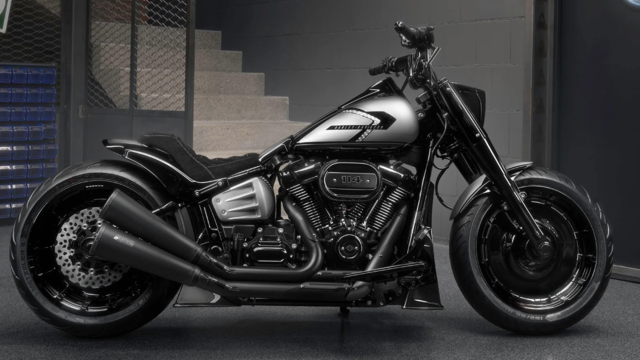
Harley-Davidson Fat Boy Becomes a Dark, Decepticon-Inspired Custom
Slideshow: Killer Custom's latest build relies on styling changes rather than performance upgrades, giving the cruiser an entirely different personality.
7 Surprising Harley-Davidson Products that Are Not Motorcycles
Slideshow: The bar-and-shield logo shows up on far more than motorcycles, some of the company's most unexpected products have nothing to do with riding.
Slideshow: From the troubled AMF years to modern misfires, these bikes earned reputations for reliability issues, questionable engineering, or disappointing performance.
Crazy Bunderbike Build Looks Amazing, But Is It Impossible to Ride?
Slideshow: The Swiss custom shop has taken a Harley Softail and stretched it into something so long and low that it looks closer to a rolling sculpture than a conventional motorcycle.